Close Menu
Metals Weekly
    TRENDING -
    • Chile sets quarterly record in environmental permitting with mining projects totaling US$17.3bn
    • Peru election highlights lack of plans to tackle illegal mining despite growing environmental crisis
    • How China’s Sulphuric Acid Ban Impacts Mining Operations
    • Over 300 acres of Arkansas national forest eyed for quartz mining
    • Pogo at 20: Looks ahead to golden future
    • Indonesia’s Reefs Face Increased Threat From Mining
    • Venezuela hopes to lure back international miners, but it’s a risky business
    • Namibia Critical Metals hires veteran rare earths specialist for Lofdal development
    Metals Weekly
    • Home
    • Critical Materials
    • Environment
    • Global Policy
    • Mining
    Metals Weekly
    Home»Headline News»Simple bath readies lithium-metal anodes for long-range EVs

    Simple bath readies lithium-metal anodes for long-range EVs

    Headline News 3 Mins Read
    Facebook Twitter Pinterest LinkedIn Tumblr Reddit Telegram Email
    Simple bath readies lithium-metal anodes for long-range EVs
    Share
    Facebook Twitter LinkedIn Pinterest Email

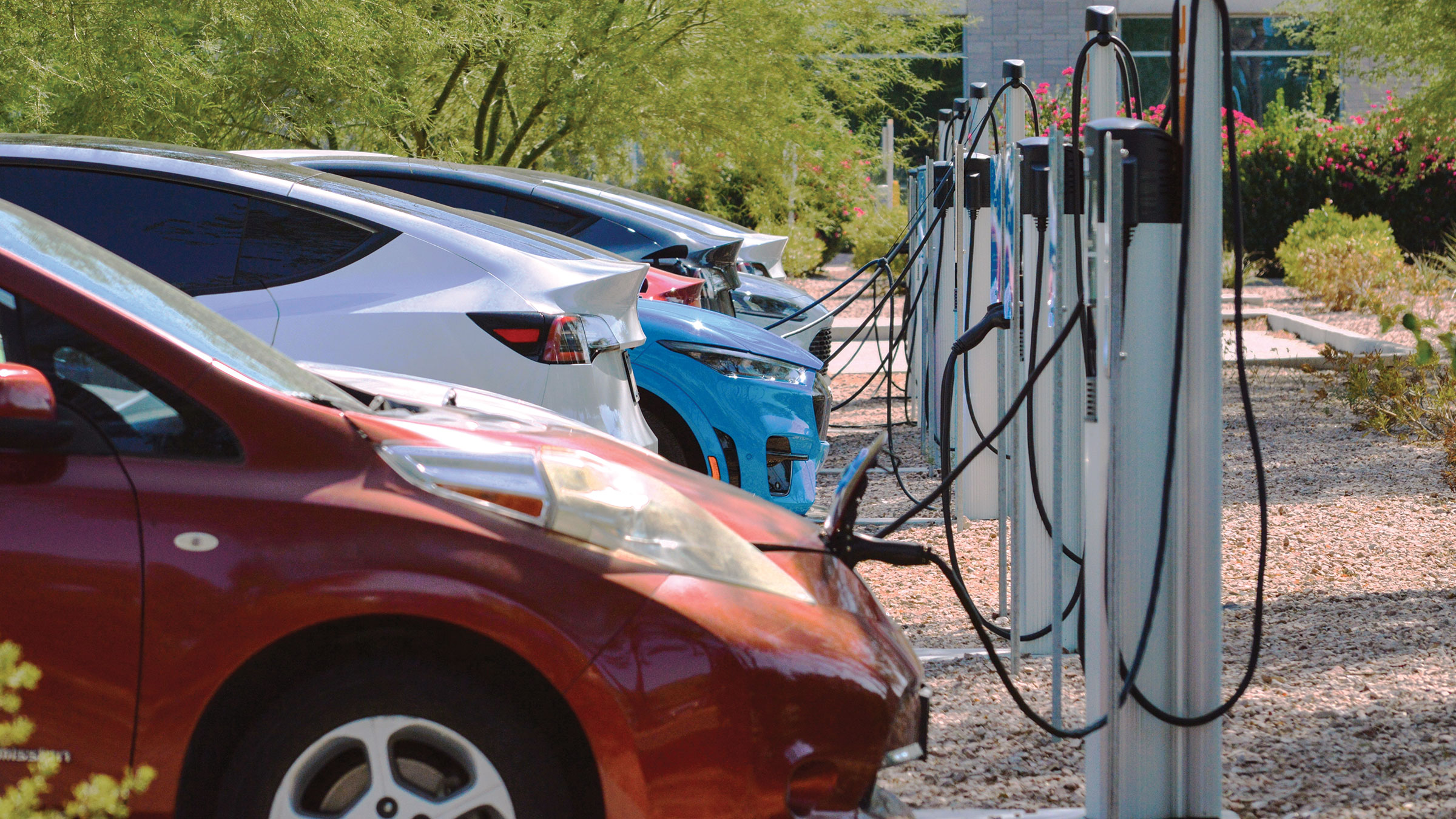
    Batteries with anodes made of lithium metal promise electric vehicles (EVs) that go twice as far between charges as cars powered by today’s batteries, which rely on graphite anodes. But lithium-metal anodes have been held back because, over the course of charge cycles, they sprout tiny spikes called dendrites that can pierce an insulating film and cause dangerous short circuits.

    Researchers have now found a way to keep those pesky dendrites from forming: soaking lithium foils for 20 min in a 1% water etching solution (Watt 2026, DOI: 10.1007/s44503-026-00006-0). Just like a warm bath soothes and settles, this chemical bath stabilizes the lithium-metal foil, says Jiaxing Huang, a materials scientist at Westlake University. The treatment could be a “simple drop-in solution” for the production of lithium-metal batteries, he says.

    Dendrites form because films of lithium, like most metals, tend to be polycrystalline, composed of tiny crystal grains with random orientations. “The different facets have different atomic density and different chemical reactivity,” Huang explains. So as the battery charges and discharges, lithium deposits and collects faster at the more reactive sites, leading to dendrites at those locations.

    This lithium plating would be uniform on a single crystal of lithium, but growing the metal in that form is expensive and cumbersome. So Huang and his colleagues turned to the next best thing—they converted the polycrystalline surface to one that is quasicrystalline, with all the crystal grains having the same orientation.

    The inspiration came from Huang’s decade-old work on controlling the shape of metal nanocrystals. “A common trick to do beautiful shape control,” he says, is to etch less-stable crystal facets so they lose some atoms and rearrange into a more stable crystal form. “The principle is not super fancy,” he says.

    The researchers applied this principle to lithium-metal batteries. “Water is a fantastic etchant for lithium,” he says. But lithium reacts explosively with pure water. So they added 1% water to dimethyl sulfoxide and immersed a lithium-foil anode in the solution.

    The solution corrodes the two less-stable facets on the surface, and the underlying lithium atoms rearrange until all the facets eventually take on the stable (110) crystal orientation. Lithium now plates much more uniformly. Coin-sized lithium iron phosphate batteries that the researchers made with the washed lithium-metal anodes worked for over 2,000 charge cycles without failing because of dendrite formation.

    Younan Xia, a nanomaterials researcher at Johns Hopkins University, says this is “a brilliant idea to effectively address a major issue in lithium-based batteries.” The technique will need to work on electrode areas hundreds or thousands of times larger to be used practically, he says. “If the treatment can be further shortened to minimize the production cost, I think this technology will find immediate use in the commercial process.”

    Share. Facebook Twitter Pinterest LinkedIn Tumblr Email

    Related Posts

    Peru election highlights lack of plans to tackle illegal mining despite growing environmental crisis

    How China’s Sulphuric Acid Ban Impacts Mining Operations

    Venezuela hopes to lure back international miners, but it’s a risky business

    Don't Miss

    Chile sets quarterly record in environmental permitting with mining projects totaling US$17.3bn

    Global Policy 3 Mins Read

    Three mining projects worth US$17.32 billion (bn) entered Chile’s environmental evaluation system during the first…

    Pogo at 20: Looks ahead to golden future

    Water crisis in Capirona due to illegal mining in the Ecuadorian Amazon

    From digging coal to selling noodles? China’s mining workers face change

    Top Stories

    As Zambia Pushes New Mining, a Legacy of Pollution Looms

    Fluorspar mining put Crittenden County on the map 100 years ago. Its importance to AI tech is driving interest in the area again

    Copper price resumes losses as Iran war continues to batter metals

    One of Alaska’s flagship mines soon could draw energy from the sun

    Our Picks

    Zambians pay price amid Copperbelt mining boom

    Zambia mine regulator lifts suspension of operations at Mopani’s Mufulira mine

    Zambia dismisses US health warning after toxic spill in copper mining area

    Don't Miss

    US backs Altona’s Mozambique rare earths project

    US looks to draw private capital back into mining

    Trump expands critical minerals list to copper, met coal, uranium

    Weekly Newsletter

    Subscribe to our weekly Newsletter to keep up to date on the latest news in the metals, minerals and mining industry

    Copyright © 2025 - Metals Weekly. All Rights Reserved.

    Type above and press Enter to search. Press Esc to cancel.