
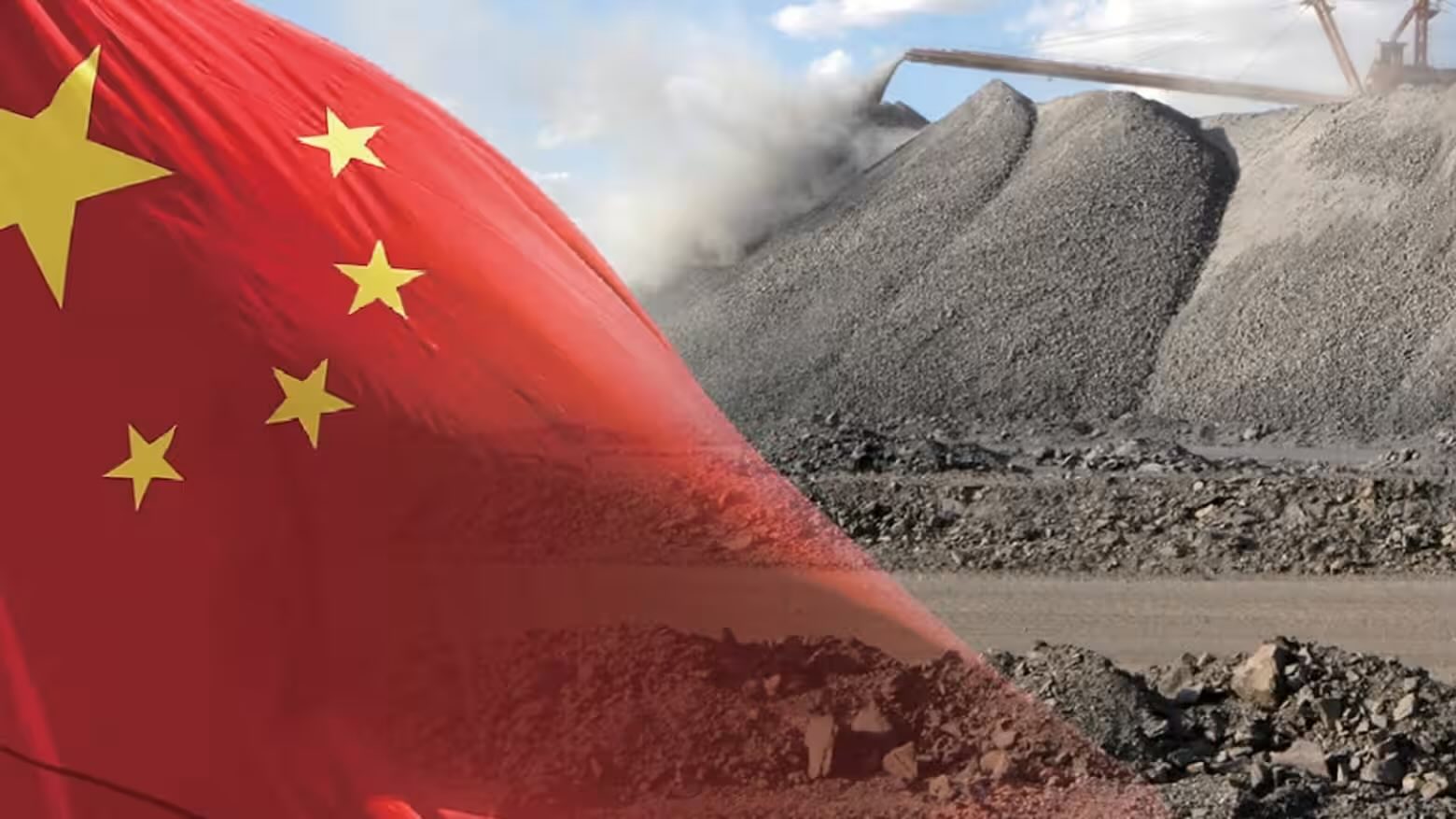
Beijing has shocked Washington with export restrictions on minerals used in most electronics
China is dramatically tightening its control over the rare earth minerals crucial to making high-tech products, in what US Treasury Secretary Scott Bessent called “a global supply chain power grab”.
Beijing’s latest flexing of international economic muscle comes just weeks before Xi Jinping is due to meet Donald Trump in South Korea. The US president has hit back by threatening 100% tariffs on all products from China but it’s clear Beijing’s “chokehold on rare minerals” will be its “key bargaining chip” in the upcoming trade talks with Washington, said the BBC.
What are rare earths?
Rare earths are a group of 17 metallic elements with similar characteristics. They are key – and largely irreplaceable – components in electronic products, robotics and green technologies. Despite their name, they are abundant in the Earth’s crust but they’re difficult and hazardous to extract and purify.
“You may not be familiar” with the names of these elements, said Ayesha Perera, the BBC‘s Asia editor, but “you will be very familiar with the products that they are used in”. Yttrium and europium, for example, are used in the manufacture of television and computer screens, cerium is used for polishing glass and refining oil, and neodymium is used to make the strong magnets in loudspeakers, computer hard drives, EV motors and jet engines.
Rare earths are also widely used in the semiconductors that are the building blocks of our digital world. Almost anything with an on/off switch will have dozens, even hundreds, of semiconductors inside.
What has China done?
China has a virtual monopoly on extracting and, especially, refining rare earths. According to the International Energy Agency, it controls 61% of production and 92% of processing. This means it has the capacity to decide which companies in the world can and cannot receive supplies of rare earths.
Beijing already had restrictions in place on the less common “heavy” rare earths that are crucial to defence industries but its latest move will require all foreign companies to have the Chinese government’s approval for export of even small quantities of all rare earths – and those companies must explain what the intended use is. Beijing has been clear export licenses may well not be granted, particularly for those related to semiconductors or artificial-intelligence development.
Chinese nationals and Chinese companies will also be banned from working with foreign companies on the extraction and processing of rare earth minerals without government permission.
Some of these new restrictions are already in place, with others due to come into force in December.
What does this mean?
These new restrictions “mark a nearly unprecedented export control” that could “disrupt the global economy”, giving China “more leverage” in trade talks and “ratcheting up pressure on the Trump administration”, said The Wall Street Journal.
As well as being “an escalation” in the US-China trade war, it “threatens the supply chain” for the semiconductors that are “the lifeblood” of the world economy – powering phones, computers, electric vehicles, solar panels and the data centres used to train AI models.
Beijing, however, has accused Washington of “stoking panic” and making “grossly distorted” remarks on the matter.