

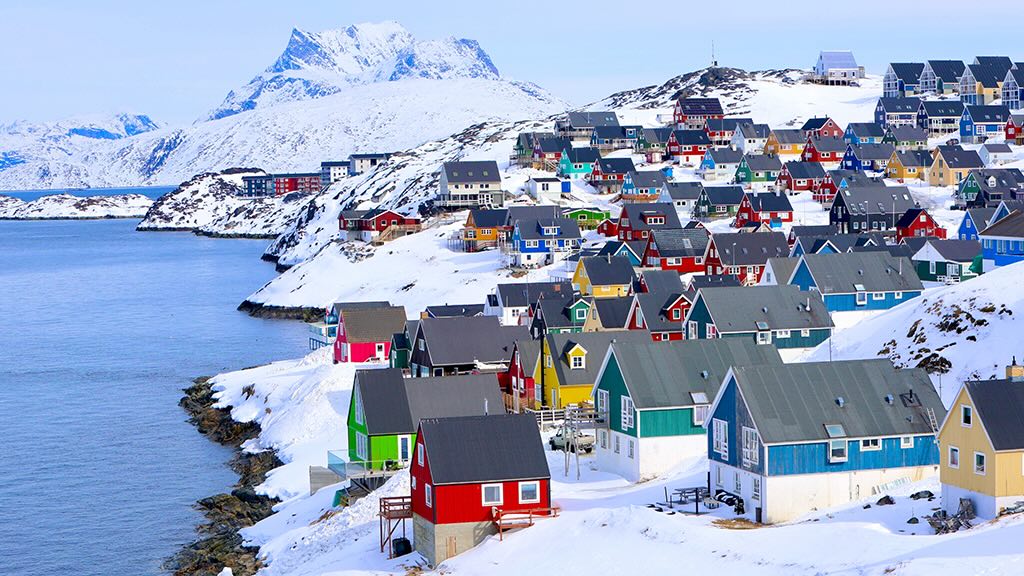
NUUK — Greenland’s harsh environment, lack of key infrastructure and difficult geology have so far prevented anyone from building a mine to extract the sought-after rare earth elements that many high-tech products require. Even if U.S. President Donald Trump prevails in his effort to take control of the Arctic island, those challenges won’t go away.
Trump has prioritized breaking China’s stranglehold on the global supply of rare earths ever since the world’s number two economy sharply restricted who could buy them after the United States imposed widespread tariffs last spring. The Trump administration has invested hundreds of millions of dollars and even taken stakes in several companies. Now the president is again pitching the idea that wresting control of Greenland away from Denmark could solve the problem.
“We are going to do something on Greenland whether they like it or not,” Trump said recently.
But Greenland may not be able to produce rare earths for years — if ever. Some companies are trying anyway, but their efforts to unearth some of the 1.5 million tons of rare earths encased in rock in Greenland generally haven’t advanced beyond the exploratory stage.
Trump’s fascination with the island nation may be more about countering Russian and Chinese influence in the Arctic than securing any of the hard-to-pronounce elements like neodymium and terbium that are used to produce the high-powered magnets needed in electric vehicles, wind turbines, robots and fighter jets among other products.
“The fixation on Greenland has always been more about geopolitical posturing — a military-strategic interest and stock-promotion narrative — than a realistic supply solution for the tech sector,” said Tracy Hughes, founder and executive director of the Critical Minerals Institute. “The hype far outstrips the hard science and economics behind these critical minerals.”
Trump confirmed those geopolitical concerns at the White House.
“We don’t want Russia or China going to Greenland, which if we don’t take Greenland, you can have Russia or China as your next door neighbor. That’s not going to happen,” Trump said.
A difficult place to build a mine
The main challenge to mine in Greenland is, “of course, the remoteness. Even in the south where it’s populated, there are few roads and no railways, so any mining venture would have to create these accessibilities,” said Diogo Rosa, an economic geology researcher at the Geological Survey of Denmark and Greenland. Power would also have to be generated locally, and expert manpower would have to be brought in.
Another concern is the prospect of mining rare earths in the fragile Arctic environment just as Greenland tries to build a thriving tourism industry, said Patrick Schröder, a senior fellow in the Environment and Society program at the Chatham House think-tank in London.
“Toxic chemicals needed to separate the minerals out from the rock, so that can be highly polluting and further downstream as well, the processing,” Shröder said. Plus, rare earths are often found alongside radioactive uranium.
Besides the unforgiving climate that encases much of Greenland under layers of ice and freezes the northern fjords for much of the year, the rare earths found there tend to be encased in a complex type of rock called eudialyte, and no one has ever developed a profitable process to extract rare earths from that type of rock. Elsewhere, these elements are normally found in different rock formation called carbonatites, and there are proven methods to work with that.
“If we’re in a race for resources — for critical minerals — then we should be focusing on the resources that are most easily able to get to market,” said David Abraham, a rare earths expert who has followed the industry for decades and wrote the book “The Elements of Power.”
This week, Critical Metals’ stock price more than doubled after it said it plans to build a pilot plant in Greenland this year. But that company and more than a dozen others exploring deposits on the island remain far away from actually building a mine and would still need to raise at least hundreds of millions of dollars.
Producing rare earths is a tough business
Even the most promising projects can struggle to turn a profit, particularly when China resorts to dumping extra materials onto the market to depress prices and drive competitors out of business as it has done many times in the past. And currently most critical minerals have to be processed in China.
The U.S. is scrambling to expand the supply of rare earths outside of China during the one-year reprieve from even tougher restrictions that Trump said Xi Jinping agreed to in October. A number of companies around the world are already producing rare earths or magnets and can deliver more quickly than anything in Greenland, which Trump has threatened to seize with military power if Denmark doesn’t agree to sell it.
“Everybody’s just been running to get to this endpoint. And if you go to Greenland, it’s like you’re going back to the beginning,” said Ian Lange, an economics professor who focuses on rare earths at the Colorado School of Mines.
Focusing on more promising projects elsewhere
Many in the industry, too, think America should focus on helping proven companies instead of trying to build new rare earth mines in Greenland, Ukraine, Africa or elsewhere. A number of other mining projects in the U.S. and friendly nations like Australia are farther along and in much more accessible locations.
The U.S. government has invested directly in the company that runs the only rare earths mine in the U.S., MP Materials, and a lithium miner and a company that recycles batteries and other products with rare earths.
Scott Dunn, CEO of Noveon Magnetics, said those investments should do more to reduce China’s leverage, but it’s hard to change the math quickly when more than 90% of the world’s rare earths come from China.
“There are very few folks that can rely on a track record for delivering anything in each of these instances, and that obviously should be where we start, and especially in my view if you’re the U.S. government,” said Dunn, whose company is already producing more than 2,000 metric tons of magnets each year at a plant in Texas from elements it gets outside of China.
By – https://canada.constructconnect.com/dcn/news/resource/2026/01/greenlands-harsh-environment-and-lack-of-infrastructure-have-prevented-rare-earth-mining