

Anger is growing over alleged safety violations in the wake of China’s worst mining disaster in more than 15 years.
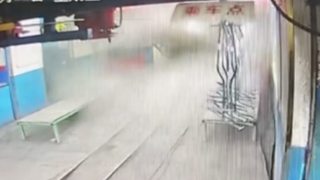
At least 82 people were killed and more than 120 injured after an explosion on Friday at the Liushenyu coal mine in Shanxi province, the heart of China’s huge mining industry.
For many in China, the tragedy harks back to the 2000s, a period of regular, deadly coal mining disasters, which is widely thought to have been left in the past.
Those concerns are now reignited and playing out on China’s tightly-controlled internet, with people calling for justice and questioning how this happened: “It’s so heartbreaking, so many precious lives lost. When will we truly put safety first?”
Authorities say the cause of the disaster is still under investigation, but initial findings show Tongzhou Group, the company operating the privately-owned coal mine had committed “serious illegal violations”.
At a news conference on Saturday, they pledged to conduct a “rigorous” investigation and “severely punish” those found responsible.
Tongzhou Group has not made a public statement so far, and the BBC has been unable to reach them for comment.
China’s state media reported that the people running Tongzhou Group have been put under “control measures”, though it’s unclear what that means. The company has also been ordered to halt work at all four coal mines it currently operates in Shanxi province.
Authorities have not specified the safety violations they discovered at Liushenyu coal mine. State media, however, highlighted various issues at the site.
Reports claim that some workers did not bring mandatory tracking devices into the mines, and blueprints provided by the Liushenyu coal mine to authorities did not match the conditions at the mine, complicating rescue efforts.
State media also reported that the number of people in the mine at the time of the explosion was double that listed in the company’s official count.
“Why are there more than 100 unregistered workers appearing out of the blue?” a Weibo user questioned. “Was it to exceed production limits? To reduce costs? Or to conceal the number of workers during an accident?”
Tongzhou Group has reportedly received two administrative penalties in 2025 for safety violations. In 2024 the Liushenyu mine was named by the Chinese National Mine Safety Administration in a nationwide list of coal mines with “severe hazards”, state media reported.
“This incident not only exposes the superficiality of local daily supervision and the low cost of violations, leading to repeated violations by the company,” another Weibo user wrote.
This is among hundreds of thousands of posts and comments discussing the tragedy.
In the case of previous disasters, criticism of the government has usually been scrubbed off the internet in China. This time, much of the anger is directed at Tongzhou Group, rather than the authorities.
In the 2000s, deadly accidents were common in coal mines across China, occurring so regularly that they were rarely reported by large news outlets unless the death toll was at least in the dozens.
In more recent years, there has been a concerted effort by the government to clean up the industry by bringing in international mine safety experts, strengthening enforcement of regulations and, crucially, shutting down coal mines that are illegal or flout safety practices.
“China’s gradually improving state of coal mine safety cannot be disrupted, much less reversed,” Hu Xijin, former chief editor of the Global Times, wrote on Weibo hours after the blast.
“There’s still much room for improvement in coal mine safety, and plugging these gaps is of utmost urgency.”
Rescue efforts at the mine are still ongoing, with hundreds of personnel deployed to search for at least two missing people, state media reported, with their family members waiting outside the mine for news.
A man who hasn’t been able to contact his brother since the blast told AFP he did not dare to tell his parents that his brother was missing. He also said he wasn’t sure what to believe.
“They say two people are missing, but who knows if that’s accurate? We honestly don’t know.”