

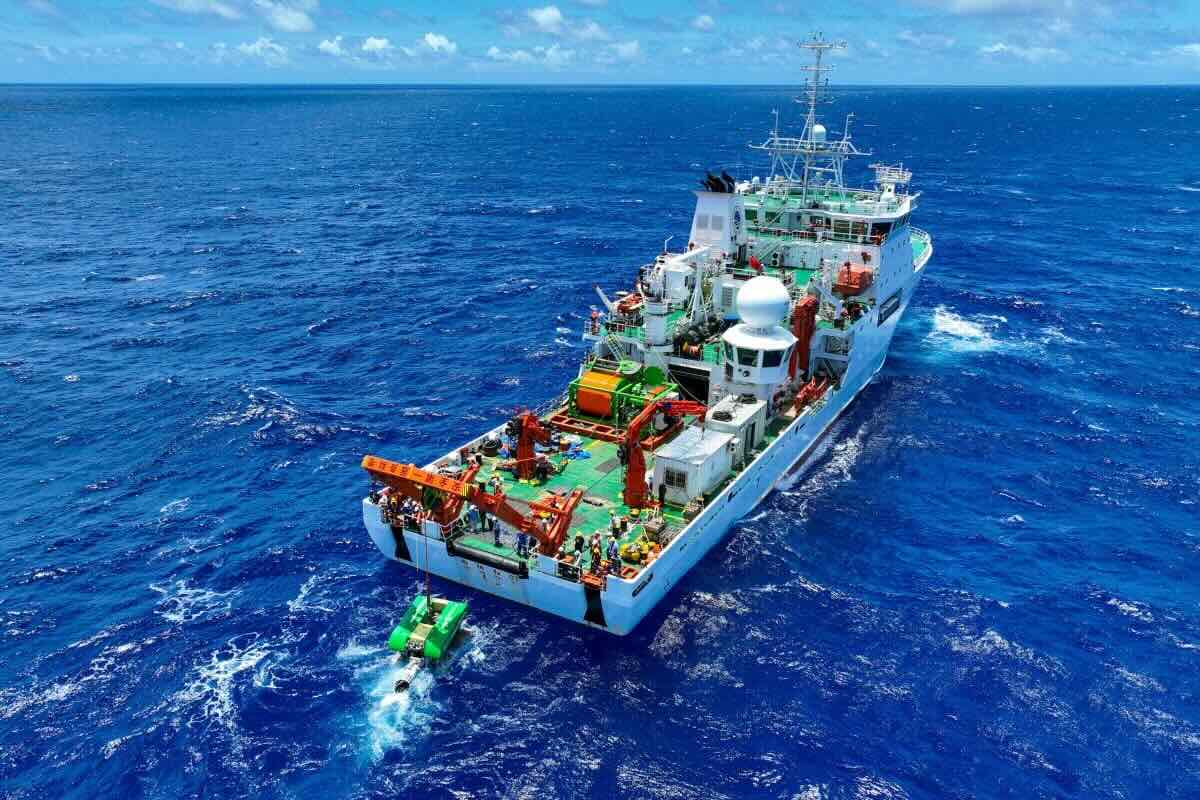
In an article published on Friday in Study Times – a newspaper run by the Communist Party’s Central Party School – Wu Changbin, director of the ministry’s China Deep Ocean Affairs Administration, said China could increase its voice and competitiveness in the field by playing a more active role in global ocean governance and developing its own advanced equipment.
“During this critical window when international rules for deep-sea activities are still taking shape, China – which has the widest range of international seabed resource types and the largest number of mining areas – should take a more proactive role in consultations on the international maritime order,” Wu said.
He said the country should be deeply involved in talks on exploitation rules, conduct in-depth research on core issues, and “play a key guiding role” in the early formation of a regulatory framework.
The world’s seabeds are believed to hold a range of critical minerals such as cobalt, nickel and copper, which are vital to technologies from electric vehicles to steel production.
Many countries are eyeing the valuable deposits, but legal ambiguity clouds commercial exploitation.
Under the United Nations Convention on the Law of the Sea (Unclos), resources in international waters are deemed to belong equally to all countries, regardless of their geographic position or technological abilities.
Unclos requires a general mining code before commercial seabed mineral exploitation can begin, but its finalisation by the UN’s International Seabed Authority (ISA) has been stalled by environmental concerns.
Amid the impasse, Washington announced in April that it would fast-track the commercial exploitation of seabed resources in not only its exclusive economic zone but also international waters. The US is not a full ISA member and has yet to ratify Unclos.
In the article on Friday, Wu said mineral-rich seabed areas “are set to become new arenas of geopolitical competition, as major powers strengthen their underwater presence and control capabilities”.
He said the US was seeking “to tighten global resource control through technological monopolies … and geopolitical maneuvering”.
For example, US President Donald Trump issued an executive order in April directing US government agencies to streamline the process for granting exploration licenses and mining permits in areas beyond America’s national jurisdiction.
Soon after, the US branch of Canadian firm The Metals Company applied for various licences to explore and mine the Pacific Ocean’s deep seabed.
Analysts have warned that Washington’s unilateral approach risks setting a precedent for other nations to bypass the ISA framework.
To date, the ISA has granted more than 30 exploration licenses with Chinese state-owned enterprises and research institutions holding five of them – the highest total among Unclos member states.
Wu, from the oceanic administration, wrote that China should increase efforts to develop deep-sea technology.
“The goal is to overcome technological bottlenecks, build an independent and controllable technology chain, reduce external dependence, and establish a comprehensive system of technical standards – fundamentally improving China’s voice and competitiveness in international arenas,” he said.
The measures would include establishing major national projects and integrating resources to focus on breakthroughs in exploration technologies.
Meanwhile, Beijing should strengthen its technological reserves for the green development of deep-sea resources, and develop technologies for deep-sea environmental monitoring, assessment, protection and restoration.