

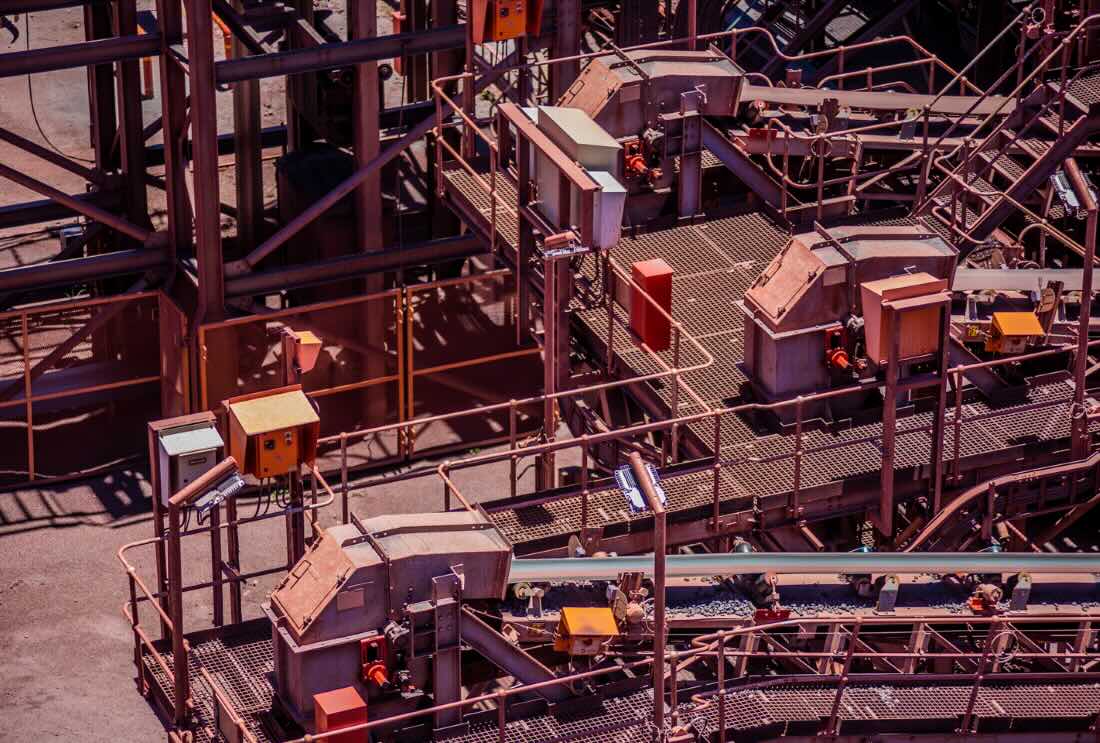
As mining operations place increasing pressure on plant throughput, equipment longevity and environmental control, transfer point design is becoming a far more strategic component of materials handling systems. According to Dewald Tintinger, Technical Director at Weba Chute Systems, poorly engineered chute systems can have a disproportionate impact on plant performance, influencing everything from material flow consistency and belt loading to dust generation, spillage and accelerated wear on downstream equipment.
“A transfer point should never be treated as a static piece of infrastructure,” Tintinger says. “It is an engineered flow control solution that plays a direct role in throughput stability, maintenance intervals and overall plant reliability.” He notes that, in modern processing plants, transfer points are increasingly recognised as critical control points within the broader materials handling circuit. When material is not managed correctly between conveyors, screens, crushers or stockpile systems, the consequences can quickly extend beyond the chute itself.
“Inconsistent flow patterns can lead to uneven belt loading, mistracking, excessive dust and spillage, and accelerated wear on liners, idlers and conveyor belts,” he explains. “These issues inevitably translate into increased maintenance requirements and, in many cases, costly production interruptions.”
Tintinger emphasises that effective chute design begins with a detailed understanding of the material characteristics and the operational environment in which the system will function. Factors such as particle size distribution, moisture content, bulk density, abrasiveness and material cohesiveness all play a significant role in determining how ore behaves through a transfer point. “There is no one-size-fits-all solution,” he says. “Every application must be engineered around the specific flow behaviour of the material as well as the plant’s throughput requirements and space constraints.”
A key aspect of engineered transfer point design is ensuring that material is loaded centrally and consistently onto the receiving conveyor. Incorrect material trajectory or uncontrolled discharge velocities can cause off-centre loading, resulting in belt edge damage, excessive idler wear and compromised conveyor performance. “Correct belt loading is fundamental to conveyor health,” Tintinger says. “By controlling the flow path and discharge velocity of the material, we can significantly reduce wear and improve the overall reliability of the conveying system.”
He adds that chute design also has an increasingly important role to play in helping mines meet environmental and safety objectives. Effective control of dust and spillage at source contributes to improved housekeeping, safer working conditions and reduced environmental risk. “Dust and spillage are not simply housekeeping issues; they are often symptoms of poor flow management,” he says. “By engineering the transfer point correctly, these risks can be mitigated at source rather than managed downstream.”
As mines continue to pursue higher levels of operational efficiency and plant uptime, transfer point design is moving from a maintenance concern to a strategic engineering priority.
“Ultimately, every transfer point must support predictable, controlled and efficient material flow,” Tintinger concludes. “When this is achieved, the benefits are seen across the plant in reduced downtime, lower maintenance costs and improved throughput performance.”
Engineered transfer points play growing role in plant performance optimisation