

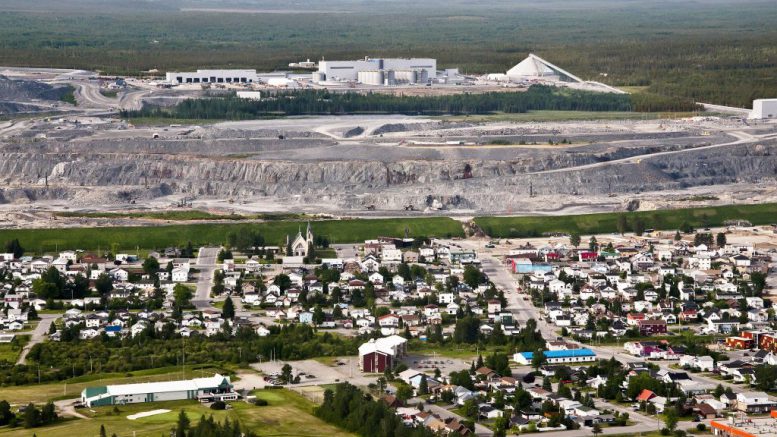
Quebec’s mining sector is at once thriving and uncertain, a duality that reflects the global forces reshaping commodities and the local policies that aim to manage them.
The province has long prided itself on being one of Canada’s mining powerhouses, with deep roots in gold, iron and base metals. Today it is attempting to rebrand itself as a hub for critical minerals that feed the auto sector’s push toward electrification. But the province faces a harder road than anticipated.
The most glaring setback has been the collapse this year of Northvolt’s plans for a multi-billion-dollar battery plant near Montreal. The company was held up as a crown jewel of Quebec’s battery supply chain strategy, promising to connect local lithium and graphite output with downstream processing and assembly.
Its failure underscores how difficult it is to lock in industrial users when the economics of EVs remain fluid and when government subsidies alone cannot sustain projects in the face of global competition.
Even Quebec’s aluminum industry, long a pillar of its resource economy, faces uncertainty as American tariffs threaten to undercut the advantage of cheap hydropower.
Critical mineral currents
Still, the shift toward lithium and graphite is real, and it has diversified a mining economy long synonymous with gold and iron ore. Companies are drilling across the Abitibi for spodumene and developing graphite deposits along the North Shore. The provincial government has rolled out incentives and funding to attract downstream processing, hoping to create a vertically integrated sector that appeals to automakers.
The logic is clear: Quebec has abundant hydropower, a skilled workforce, and proximity to the U.S. market. Yet the volatility of these commodities raises a caution flag. Lithium prices soared during the early stages of the EV boom, only to collapse as new supply met a slower-than-expected take-up in sales.
Graphite has seen similar swings, with Chinese producers dominating exports and manipulating flows through quotas and tariffs. For miners in Quebec, the promise of critical minerals is undeniable, but so too are the risks of being whipsawed by geopolitics and Chinese policy.
Good as gold?
Gold, by contrast, remains Quebec’s stalwart. With prices now setting records above $3,800 per oz., producers in the Abitibi and James Bay regions are enjoying windfalls. Agnico Eagle’s Canadian Malartic, Eldorado’s Lamaque, and a host of juniors drilling new zones show that Quebec remains one of the world’s great gold camps.
But the question lingers: how long can the boom last? Gold’s surge is being driven by extraordinary factors — geopolitical instability, central bank buying, and investor demand amid doubts about fiat currencies. These are powerful forces, but they are also unpredictable. If interest rates shift or global tensions ease, the metal could just as easily lose its lustre.
Quebec’s miners know this history well, having seen cycles of prosperity and collapse before. The challenge is to seize today’s high prices to strengthen balance sheets and advance projects, while avoiding the overreach that so often follows a bull market.
Policy proving ground
On the policy front, Quebec has distinguished itself as one of Canada’s more efficient jurisdictions for permitting. The province has a long mining history and a regulatory framework that is comparatively clearer than those in Ontario or British Columbia, where projects have languished.
Yet even here, companies complain of delays, particularly in securing environmental approvals.
That frustration may be easing somewhat judging by how the CEOs of Osisko Metals and Troilus Gold are greeting federal help on their large projects.
Mining politics
Quebec’s new Minister of Natural Resources, Jean-François Simard faces several challenges beyond the Northvolt vacancy. There’s the province’s fall in a global ranking and a premier accused of being out of touch with mining regions by the outgoing minister who promptly resigned from the ruling party. But the premier has pledged to cut environmental red tape as he tries to boost flagging support for elections due within exactly a year from now.
Quebec’s mining sector today is emblematic of the wider industry’s paradoxes. It offers promise as a North American alternative to Chinese-dominated supply chains, but faces the reality that markets for lithium and graphite are not nearly as stable as for gold or copper.
Gold may carry the province through the current cycle, but the real test will be whether Quebec can translate its critical minerals ambitions into a durable, competitive industry.
https://www.northernminer.com/environment/editorial-quebecs-mining-crossroads/1003883223/