

In the name of increased nickel demand, primarily for electric vehicles, Indonesia’s Marine Protected Areas enter the crosshairs of industry.
As the global economy and all its good conscience makes strides in shifting toward renewable energy, so too does it put increased demand on natural resources.
Industry and ecotourism have a funny way of working both hand in hand and in opposition in a game of give and take.
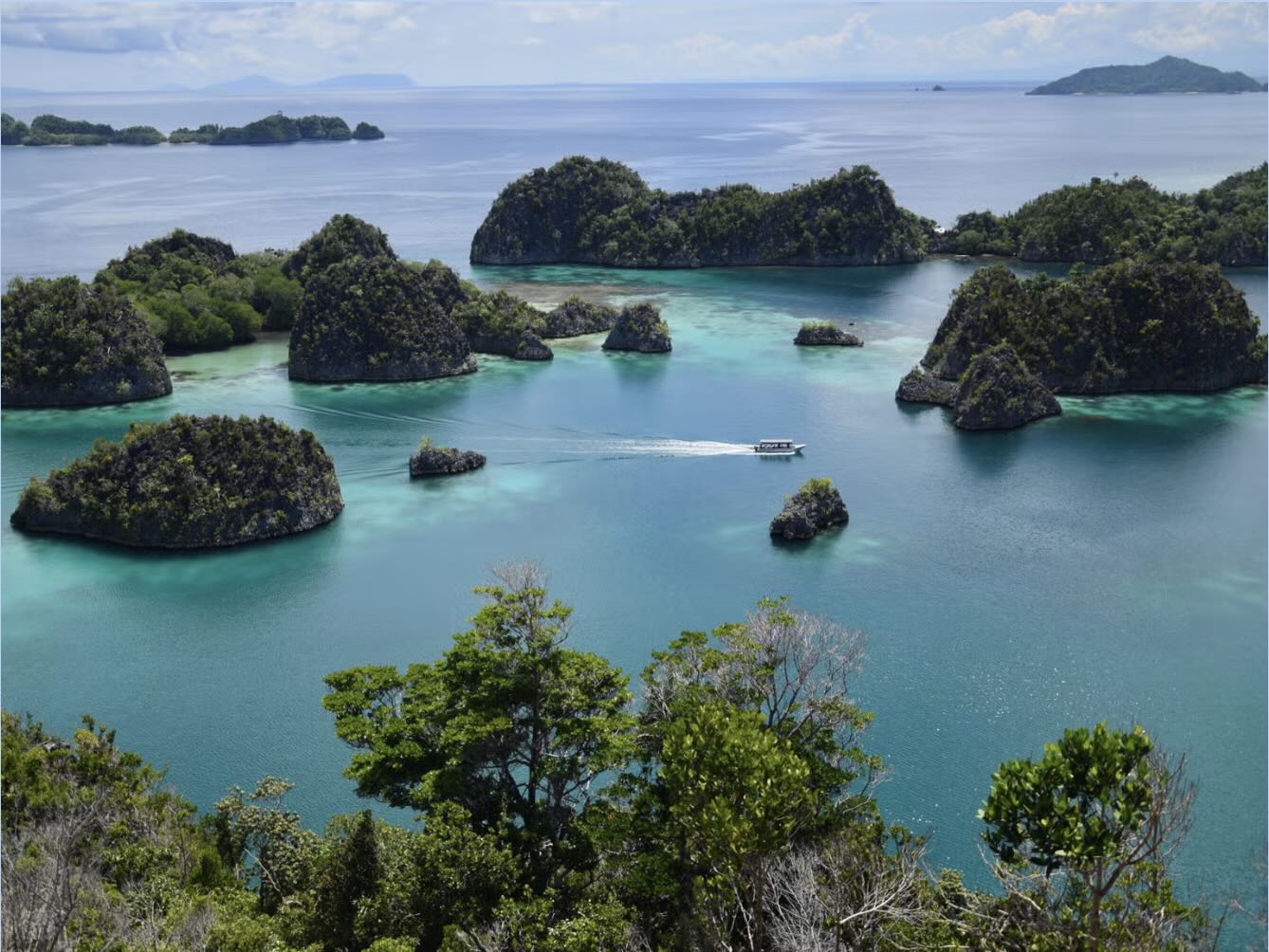
A most recent case in point is Indonesia’s Raja Ampat region. Having rapidly recovered from less-than-environmentally-friendly fishing practices (dynamite, open floodgates to the international commercial fishing fleet), mining (more dynamite), and deforestation, it’s been labeled a great success story in conservation, with a recent declaration that between roughly 2007 and 2024, the 10 marine protected areas (MPAs)—covering roughly 5 million acres of reef, seagrass beds, and mangroves—have seen a rise in fish biomass by 109%, according to a Misool Foundation report (Misool being one of the protected islands).
Today, thanks and no thanks to its rich deposits of nickel—a common but critical element used for, among other things, keeping the hippie-dippy agenda of a “greener” world afloat by going into batteries for electric vehicles. Of course, unearthing that metal and transporting it to and fro is an even greater complexity. Around and around we go within the paradox of keeping this big old blue marble twirling.
As it happens, the U.S. Geological Survey estimates that Indonesia holds about 43% of the world’s reserves of the non-precious metal that finds itself in such high demand.
And so, as Raja Ampat has become a if not the premier dive destination on planet Earth, and quietly an offbeat outpost for the quieter set among the peripatetic surf-traveler, the Indonesian government has just granted new nickel-mining concessions on three northern Raja Ampat islands, including more than one within a declared UNESCO Global Geopark and several others near popular dive sites.
Local communities have grown tense, and following “public outcry” in 2025, four concessions were walked back, the Associated Press reports.
Still, others remain. “The heavy machinery, excavators, bulldozers—they’re still there (in the islands),” Timer Manurung, director of the Indonesian environmental group Auriga Nusantara, told the AP, putting forth that “no one is taking responsibility for repairing the damage already done.”
Mining will always be mining. The environmental risks of nickel mining, particularly in steep, volcanic, tropical-rain-fed islands, is heavy runoff straight into Mother Ocean.
“In the end, it will cause coral reefs to die,” said Syafri Tuharea, the head of the Raja Ampat Marine Conservation Area.
What with being put on the map so heavily over the last two decades and the flurry of dive-tourists who’ve flocked there to spend small fortunes on accommodations and a handful of plunges—and to say nothing of the $40-per-person national park entry fee—you might think revenue from the tourism boon more than makes up for the loss in mining-associated revenue.
It is a drop in the bucket when the market for metals beckons. And there’s further paradox: “Our data shows that in 2024, there were 218 tourist ships,” Tuharea said. “Can you imagine how many square meters of coral reef will be destroyed because of the anchors?”
Indeed, the very tourism generated to protect what is regularly now referred to as the most biologically diverse coral reef ecosystem on earth—Raja Ampat bears about 75% of the world’s hard coral species and more than 1,700 species of fish—is wreaking its own havoc.
Considerations are being made to limit tourism traffic and place restrictions on boat numbers.
You just can’t win without blood on your hands. Unless, of course, you make like John John. The whole world over might be all the better for it.
By – https://www.surfer.com/news/indonesia-reefs-face-increased-threat-mining