

Fast-tracking clearances for critical minerals may ease supply risks, but without stronger transparency and community safeguards, it risks undermining sustainability and public trust
In March 2026, India’s Ministry of Mines initiated the seventh tranche of auctions for the rights to explore and mine critical mineral blocks under the Mines and Minerals (Development and Regulation) Amendment Act, 2023 (MMDR Act), which empowers the government to exclusively auction concessions for such minerals.
India has designated around 30 minerals as ‘critical’, classifying them as essential for economic development in Part D of the First Schedule to the MMDR Act. However, the successful operationalisation of these blocks following auction depends on securing environmental clearances, a process that recent policy measures have sought to streamline and expedite.
Critical minerals are indispensable for advancing India’s clean energy transition and strengthening national security; their extraction entails significant environmental and social impacts, including ecological degradation and the displacement of local communities.
While facilitating environmental clearances is necessary to scale up exploration and reduce supply risks, meaningful reform must also address deeper challenges in the clearance process—including inadequate community engagement, weak impact assessments, and limited transparency—while drawing on relevant international practices to make the process more inclusive and sustainable.
Underlying Challenges in Critical Mineral Mining
1. Environmental Degradation and Lack of Community Consent
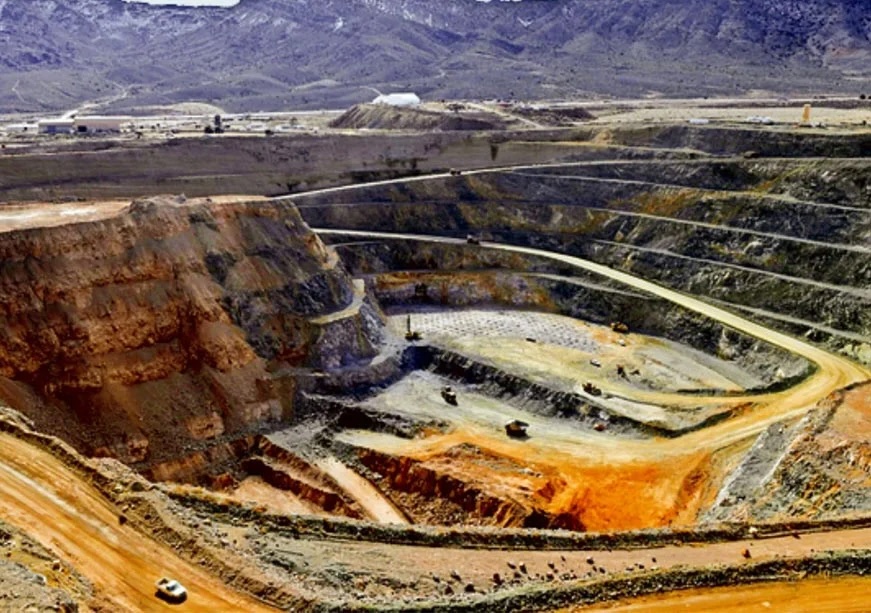
Critical mineral extraction comes with environmental and social risks. Lithium refining consumes large volumes of water, while rare earth mining generates up to 2,000 tonnes of toxic and radioactive waste per tonne of output, along with millions of tonnes of wastewater. Additionally, cobalt and nickel extraction often leads to the displacement of local communities and degradation of fragile ecosystems.
In India, these deposits are largely located in the states of Odisha, Chhattisgarh, Jharkhand, and Arunachal Pradesh, where tribal communities and ecological sensitivities are significant. These communities depend on forests and natural resources for their survival, making them particularly vulnerable to the impacts of mining operations.
To balance the imperative of securing such minerals with environmental and social safeguards, public consultations under the Environmental Impact Assessment (EIA) framework, operationalised by the EIA Notification, 2006, play a central role by providing affected communities with a formal platform to raise concerns about social and environmental costs such as land acquisition, displacement, resource depletion, and pollution that must inform environmental clearances and mitigation plans. Consultations follow the submission of a draft EIA report, with the applicant requesting the relevant State/UT Pollution Control Board to conduct them. The compiled responses are then forwarded to the Central Government for appraisal.
Given the time-consuming process of obtaining clearances, the Ministry of Environment, Forest and Climate Change issued an Office Memorandum in September 2025 to ease the process by removing the ‘Public Consultation’ requirement for all mining projects involving critical minerals, given their geographic concentration and the supply risks posed by India’s heavy import reliance.
While this step may expedite the clearance process, it risks undermining public trust unless accompanied by credible alternative participatory safeguards. Communities, whose lives and livelihoods are adversely affected, are likely to continue asserting their right to a clean and healthy environment, grounded in the constitutional guarantee of the right to life under Article 21.
This is evident in the unrest in Odisha in December 2025, where protests erupted over the arrests and intimidation of villagers opposing land acquisition for Vedanta Pvt. Ltd.’s bauxite mining project in the absence of prior community consent, as the formal requirement for public consultation had been removed. As of April 2026, these protests are still active, highlighting the limitations of bypassing participatory processes.
The trade-offs in advancing critical mineral exploration must not come at the expense of ecosystems and communities, underscoring the need for India to adopt a more balanced, environmentally sustainable, and socially inclusive approach.
2. Quality of EIA Reports and Lack of Transparency
Under the earlier environmental clearance framework, all EIA reports for mining projects involving critical minerals were submitted on the PARIVESH portal, and some were appraised at the state level. This created potential conflicts of interest as state governments functioned both as beneficiaries of mineral auction revenues and as regulators responsible for granting environmental clearances.
The revised framework creates a dedicated category for critical mineral projects and mandates that their clearances be appraised solely by the Central Government. This marks a step in the right direction, as it fast-tracks the clearance process for these projects while mitigating potential conflicts of interest.
However, efforts are also required to address the deeper structural weaknesses that continue to undermine the credibility, transparency, and effectiveness of the EIA process. For instance, the Comptroller and Auditor General (CAG) has flagged inconsistencies in environmental clearance databases and a lack of reliable information-sharing mechanisms even within regulatory bodies. Additionally, the quality and credibility of EIA reports themselves continue to be compromised: evidence shows frequent submission of incomplete or outdated data, non-compliance with Terms of Reference, low-quality, often plagiarised reports, that fail to capture site-specific risks, thereby raising questions about the credibility of the process that recent reforms seek to expedite.
hese concerns are compounded by a systemic lack of transparency and public accountability in the clearance process. Environmental Impact Assessment (EIA) reports, Expert Appraisal Committee deliberations, and compliance records are often unavailable, inaccessible, or difficult for affected communities and civil society actors to interpret. Additionally, project- and clearance-related details previously available on the PARIVESH portal are no longer readily accessible in the public domain and may now be obtained only upon request under the Right to Information Act.
The experience of uranium mining by the Uranium Corporation of India Limited in Jaduguda illustrates the consequences of such obscurity. For decades, local Adivasi populations have faced environmental and health risks linked to radiation and leakage from tailing ponds, in the absence of baseline studies and continuous public health monitoring. Despite independent findings indicating elevated radiation exposure, critical health assessments have remained undisclosed, with information frequently withheld on grounds of national security.
Taken together, these inconsistencies underscore the urgent need for India to strengthen transparency, accountability, and the integrity of its environmental assessment process.
Global Lessons for India
India has taken important steps to prioritise critical mineral exploration, but socio-ecological challenges persist. These concerns are not unique to India and are common to countries globally that are scaling up critical mineral development. In this context, international experience could offer meaningful insights as India continues to enhance its clearance frameworks.
1. Social Inclusion and Benefit-Sharing Mechanisms
Canada’s clearance framework includes an ‘Early Planning Phase’, in which public participation begins even before formal impact assessments and involves Indigenous groups, local communities, and relevant jurisdictions in providing inputs on the proposed project, while identifying concerns that shape project design. By integrating community inputs at the outset, this approach not only builds trust and awareness among local communities but can also reduce the time and resources otherwise spent on redesigning projects after formal consultations or responding to conflicts that emerge post-approval.
This is complemented by legally binding relationship agreements, such as Impact and Benefit Agreements between companies and Indigenous communities, which establish frameworks for cooperation and ensure that local populations share the benefits of mining. A similar approach is also present in Australia’s Critical Mineral Strategy (2023–2030), which emphasises that the sector’s growth must be driven by and benefit First Nations communities through initiatives such as local investment opportunities, employment and skill-building, with stronger partnerships seen as essential to building public confidence to ensure continuity of projects.
2. Enhancing Data Quality and Transparency
The United Kingdom has introduced the Economic Crime and Corporate Transparency Act, 2025, which imposes criminal liability and heavy fines on companies that fail to prevent the submission of false environmental data to regulatory authorities for the acquisition of environmental permits. This approach shifts the burden onto companies to ensure the accuracy and reliability of data relating to environmental and social risks.
Canada’s Indigenous Community-Based Climate Monitoring Program supports Indigenous-led projects that monitor climate and environmental change using both Indigenous Knowledge Systems and Western science. Given that many of India’s ecologically sensitive mining sites overlap with Adivasi and forest-dwelling communities, adopting similar approaches could help incorporate grounded, site-specific ecological knowledge into EIA processes, thereby improving both accuracy and legitimacy.
Lastly, the Impact Assessment Registry in Canada provides public access to all EIA-related documents, concerns raised during public consultations, and the Authority’s final decision statement, except confidential information such as the project proponent’s financial statements. This approach enhances transparency and trust among the affected communities, while safeguarding commercially sensitive information of project proponents.
Conclusion
Without addressing structural gaps—including inadequate community engagement, opacity in decision-making, and weak EIA credibility—procedural acceleration risks compounding governance failures rather than resolving them. As India fast-tracks critical mineral development to secure supply chains, the legitimacy of its environmental clearance regime will depend on restoring transparency, strengthening participation, and improving data integrity. Only by embedding these safeguards can India ensure that the pursuit of critical minerals advances both sustainability and public trust.