

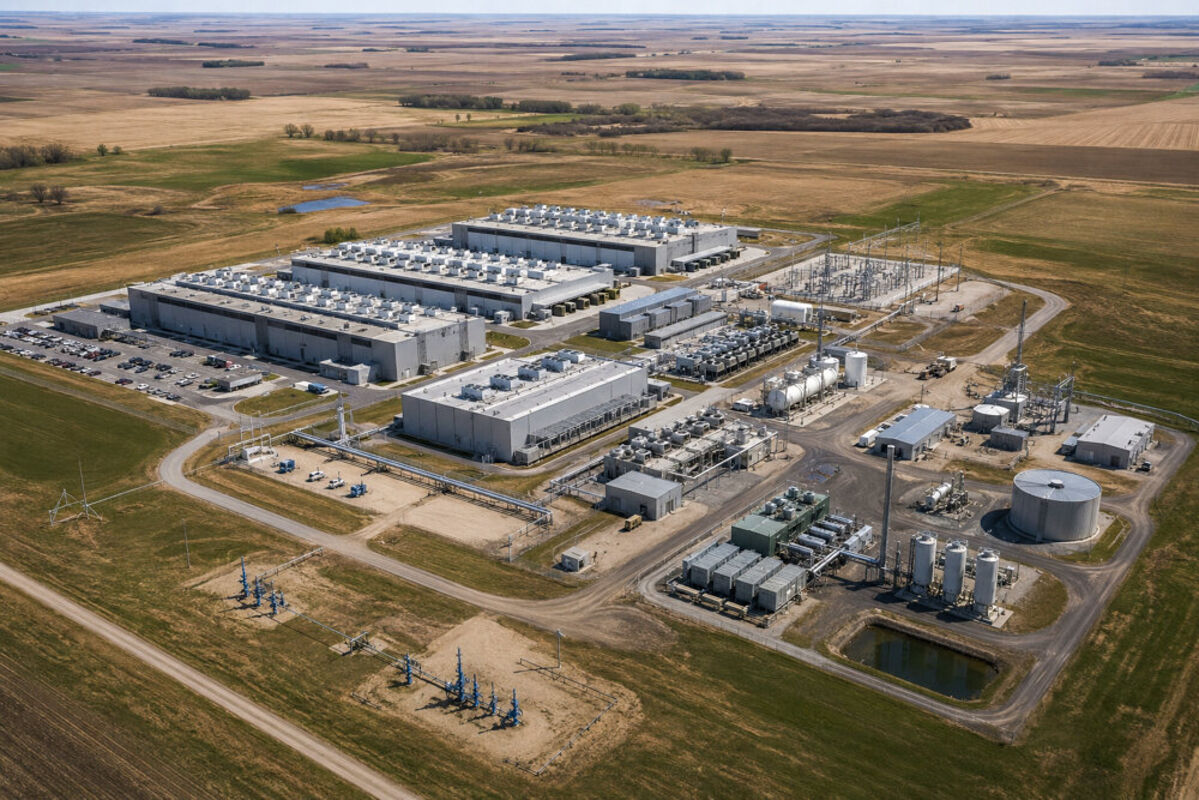
Looking to test whether Canada’s first confirmed subsurface natural hydrogen system could help meet the power and cooling demands of artificial intelligence infrastructure, MAX Power Mining Corp. has entered into a memorandum of understanding with TerraVolt Energy LLC and two partners to evaluate an integrated energy and data center model tied to potential future Lawson development in southern Saskatchewan.
Classified under a color-coded shorthand that ties each form to its production method and carbon footprint, hydrogen is commonly produced as black hydrogen from coal gasification, gray hydrogen from natural gas without carbon capture, blue hydrogen from natural gas with carbon capture, or green hydrogen from water electrolysis powered by renewables.
Absent from that original list is white hydrogen – a natural form of the clean-burning fuel that occurs underground in pure form, requiring no manufacturing process whatsoever.
Because natural hydrogen tends to seep and disperse, long-term accumulation had previously been viewed as geologically implausible, and for decades it drew little serious exploration attention.
In recent years, discoveries in Mali, France, and elsewhere have demonstrated that the right geological conditions can in fact trap natural hydrogen underground – and in January 2026, MAX Power confirmed Canada’s first such subsurface discovery at its Lawson well in southern Saskatchewan.
Stretching 475 kilometers (295 miles) across southern Saskatchewan, the Genesis Trend hosts MAX Power’s roughly 1.3-million-acre (521,000 hectares) permitted natural hydrogen land package, covering ground the company considers prospective for large-volume accumulations.
According to previously released results, the Lawson discovery well encountered a gas system containing hydrogen concentrations of up to 286,000 parts per million, or 28.6%, along with helium above the main hydrogen zone.
Seeking to better define the scale of that discovery, high-resolution 3D seismic imaging later mapped a 14.2-square-kilometer (5.5 square miles) structurally elevated area called Lawson Central within a broader 28-square-kilometer (10.8 square miles) prospective zone known as the Lawson Complex.
With that subsurface framework taking shape, MAX Power’s MOU with TerraVolt, EcoTech Building Solutions, and Carbon Neutral Growth Fund will evaluate whether natural hydrogen, modular power systems, sustainable building infrastructure, and produced brine waters from potential future Lawson development can be integrated into AI and high-performance computing infrastructure.
Energy model takes shape
With water vapor the only emission from burning hydrogen, using it to generate electricity for data centers could address one of the concerns tied to the rapid buildout of AI infrastructure.
Designed around the idea of placing modular power and computer systems at or near the energy source itself, the model being explored by the partners would investigate whether natural hydrogen and associated brines from potential future Lawson development could support on-site power generation, cooling, water treatment, and infrastructure applications for data centers.
Under the MOU, the parties intend to evaluate natural hydrogen production integrated with on-site power generation, use of Lawson brine waters for cooling and infrastructure applications, hydrogen handling and storage, modular systems for AI data centers and high-performance computing, and phased deployment models tied to future development milestones.
If successful, the use of brine waters for cooling would address another major data center concern – water usage.
“Lawson confirmed far more than just the presence of natural hydrogen,” said MAX Power CEO Ran Narayanasamy. “It confirmed the potential foundation for a new category of integrated energy and infrastructure development centered around clean, scalable baseload power generation. As artificial intelligence and digital infrastructure growth accelerate globally, pressure on power systems and cooling infrastructure continues to intensify. Our focus is on understanding how all facets of the Lawson system may contribute to future commercialization pathways through technical validation, infrastructure integration, and practical deployment strategy. This MOU is an important step in that direction.”
Managing and developing a power portfolio exceeding 12 gigawatts, enough to power approximately 10 million average homes, TerraVolt is an advanced AI infrastructure and distributed energy systems company focused on next-generation data center development, resilient computing infrastructure, and scalable energy systems.
Using AI-driven optimization, the company works to reduce energy consumption, minimize unplanned downtime, and improve operational efficiency.
“Artificial intelligence infrastructure is rapidly evolving into one of the largest new consumers of electricity and industrial cooling capacity globally,” said Steven Lund, CTO of TerraVolt Energy. “Future AI deployment will increasingly require scalable energy systems capable of supporting resilient, distributed compute infrastructure outside traditional grid constraints. We believe MAX Power’s Lawson Natural Hydrogen system together with associated produced brine waters presents a compelling opportunity to evaluate an integrated model combining clean baseload power generation, advanced cooling infrastructure, and modular AI deployment directly at the source of energy production.”
Beyond power generation, the collaboration will evaluate whether associated brine waters at Lawson and other potential natural hydrogen deposits being explored by MAX Power in Saskatchewan can support cooling, water treatment, and infrastructure applications for future AI data center systems.
Built around closed-loop water management concepts, the framework is designed to recycle and repurpose a substantial portion of operational water requirements while supporting potential long-term industrial and community infrastructure applications.
Bringing the building component into the model, EcoTech Building Solutions will contribute experience in prefabricated construction, advanced building systems, and energy-efficient, non-combustible building systems for industrial, commercial, and AI infrastructure projects.
In parallel with the MOU, MAX Power and TerraVolt have submitted an application under Innovation, Science and Economic Development Canada’s Sovereign AI Compute Infrastructure Program as part of the Canadian Sovereign AI Compute Strategy.
Following the May 29 closing of a $25 million private placement with mining financier Eric Sprott, which increased his ownership position in MAX Power to 19%, the company said it is finalizing plans for an expanded near-term follow-up drill program designed to validate commerciality at the Lawson Complex.
As follow-up drilling and commercial evaluation move ahead, the MOU extends Lawson into a new question for Saskatchewan’s emerging natural hydrogen sector: whether the same subsurface system being tested for energy production can also support the power, cooling, and water needs of AI infrastructure.