

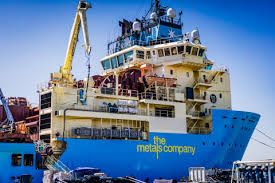
TMC the metals is moving from a focus on permitting to building commercial infrastructure, with the Allseas agreement tying regulatory progress to an actual offshore collection system. The stock last closed at $5.91, with the share price up 13.9% over the past week, 36.2% over the past month and 88.2% over the past year. Over three years, the return is about 7x, while the five year figure shows a decline of 40.3%, and year to date the stock is down 12.8%.
For investors tracking early stage resource projects, this contract sets clearer expectations around how TMC the metals plans to turn its resource rights into operational capacity. The focus now shifts to execution on procurement, engineering and system build out with Allseas, as well as how timelines and costs evolve as commissioning in 2027 approaches.
Stay updated on the most important news stories for TMC the metals by adding it to your watchlist or portfolio. Alternatively, explore our Community to discover new perspectives on TMC the metals.
The Allseas agreement gives TMC the metals a clearer path from permits to a working production chain in the Clarion Clipperton Zone. The contract sets out a full offshore system, including two tracked collector vehicles at more than four kilometers depth, the Hidden Gem production vessel, a riser and Launch and Recovery Systems, and ship to ship transfer for transport to shore. With concept and basic engineering for several long lead components already completed and subcontract awards targeted by the end of the third quarter of 2026, investors now have a more defined sequence of technical and procurement milestones to watch.
The targeted nameplate capacity of 3 million wet tonnes per year ties directly to TMC the metals’ preliminary feasibility study for the NORI Area D project, so this is the hardware that would underpin that development plan. For a pre revenue company, having a specialist offshore contractor responsible for procurement, integration and operations may help address execution risk, but it also concentrates dependence on a single industrial partner. Competitive context will matter too, as miners such as BHP, Rio Tinto and Vale focus on onshore critical metals projects while TMC the metals pursues deep sea nodules as an alternative source.
How This Fits Into The TMC the metals Narrative
- The move from pilot tests to a contracted commercial system directly supports the narrative that seabed nodules can shift from exploration to permitted, large scale production under U.S. law.
- The reliance on permits, cost control and timely commissioning could still challenge the narrative if regulatory conditions, environmental obligations or financing needs are tighter than assumed.
- The detailed role of Allseas in funding and recovering some costs from future production, and the specific 3 million wet tonnes capacity configuration, may not be fully reflected in earlier narrative assumptions.
Knowing what a company is worth starts with understanding its story. Check out one of the top narratives in the Simply Wall St Community for TMC the metals to help decide what it is worth to you.
The Risks and Rewards Investors Should Consider
- ⚠️ TMC the metals remains pre revenue and analysts have flagged 5 key risks, including dependence on permits, environmental approvals and fresh capital while the offshore system is built.
- ⚠️ The company has negative shareholders’ equity and has recorded losses, so delays, higher than expected costs or changes in Allseas’ funding terms could lead to further dilution or increased leverage.
- 🎁 Analysts expect strong earnings growth over time, and the Allseas contract gives a clearer operational route that aligns with those longer term production assumptions.
- 🎁 The agreement comes shortly after NOAA found TMC the metals’ consolidated application fully compliant, so regulatory progress and commercial build out are now developing in tandem.
What To Watch Going Forward
From here, focus on how quickly TMC the metals and Allseas move from basic engineering to binding subcontracts, particularly for the riser, Launch and Recovery Systems and umbilicals. Watch for updates on NOAA’s certification, Environmental Impact Statement and any permit conditions that could limit seafloor operating areas or production rates. Cost estimates for the full offshore chain, and any changes in how much Allseas funds upfront versus what is repaid from future production, will matter for future dilution and balance sheet risk. Investors may also want to track how other resource companies such as BHP, Rio Tinto and Vale respond to deep sea mining as an alternative source of critical metals.