

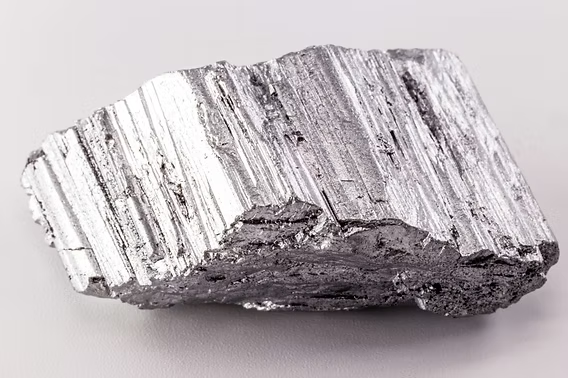
Introduction: The Essential Role of Neodymium in Modern Life
Neodymium (Nd), a critical rare-earth element, is an indispensable component in the development of high-strength magnets used in wind turbines, electric vehicles, and advanced defense technologies. Yet, as neodymium mining pushes deeper to meet the world’s clean energy ambitions, its environmental impacts become ever more significant, especially with global focus converging on sustainability by 2026 and beyond.
Beyond discussions centered around mining, metallurgy, and geopolitics, it is crucial to examine the ripple effects of neodymium extraction across agriculture, forestry, water quality, soil health, and regional infrastructure. In this blog, we present a detailed, evidence-based exploration of the environmental impacts of neodymium mining in 2025, while shedding light on emerging management strategies, technological advancements, and sustainable reclamation plans essential for global stewardship moving into 2026 and beyond.
Mining Neodymium: Supply Chain, Context, and Regional Relevance
Strong demand for neodymium—especially to supply wind turbines, electric vehicles, and critical defense applications—positions neodymium mining at the strategic heart of global innovation. Nd is primarily extracted from light rare-earth ores such as bastnäsite, monazite, and xenotime-bearing deposits.
The most common mining methods include open-pit mining and surface extraction, which dominate the supply chain. Complex processing is followed by multi-stage chemical separation techniques to obtain high-purity Nd oxide. From mine to magnet, these operations generate impacts that ripple through local communities, agricultural and forestry economies, water tables, and infrastructure networks—making robust management plans and responsible stewardship essential as we move into 2025 and 2026.
Environmental Footprint: 7 Powerful Impacts & 2025 Outlook
- Water Quality and Usage: Excessive water withdrawal and contamination from processing and tailings
- Soil Health: Heavy metals, radionuclide leaching, and soil structure disturbance near mining sites
- Agricultural Productivity: Decreased crop yields from dust, water competition, and altered nutrient cycles
- Forestry & Land Fragmentation: Habitat loss, reduced tree cover, and erosion impacts
- Land Utilization: Conversion of landscapes and loss of productive zones
- Tailings & Waste Management: Risk of seepage, dust, and long-term land contamination
- Reclamation Success: Restoration and recovery efforts, including phytoremediation and reforestation
Agriculture: Soil Health, Water Use, and Land Reclamation
The downstream effects of neodymium mining on agriculture are broad, directly affecting soil health, crop yields, irrigation routines, and the long-term productivity of regional lands. In 2025, the challenge intensifies as competition for water and land escalates due to both mining operations and agricultural expansion.
Soil Quality: Metals, pH, and Microbial Communities
- Tailings and waste rock near neodymium mines often contain elevated levels of rare-earth elements and trace metals (e.g., thorium, uranium from monazite). If containment is poor, these can leach into soil, altering its pH, cation exchange capacity, and microbial health, which are crucial for crop productivity.
- Amendments such as lime, organic matter, and targeted nutrients are commonly required to restore soil structure and productivity before land can be safely returned to farming.
Water Use: Competition & Quality
- Ore processing requires significant water withdrawal. In regions with irrigation-dependent agriculture, this can affect crop yields and overall land value.
- Closed-loop water systems, robust effluent treatment, and regular monitoring are essential to protect local groundwater and surface water used for crops and livestock.
Land Reclamation: Restoring Use for Agriculture
- Phytoremediation—using plants to absorb and mitigate heavy metals—and organic amendments help restore soil to a state fit for agricultural use, but careful monitoring is essential, especially where cumulative heavy metals and radionuclides are present.
- Only after comprehensive risk assessment and evidence of restored productivity can these lands be returned to local communities and agricultural economies.
Forestry Dynamics & Land Use: Fragmentation and Recovery
Large-scale neodymium mining often takes place in forest-rich zones, with direct impacts on timber and non-timber economies, habitat connectivity, and regional climate resilience. With the world’s forests already under pressure from climate change and agricultural conversion, maintaining ecosystem services and biodiversity is a growing concern among communities, regulatory bodies, and environmental groups heading into 2026.
- 🌲 Habitat Fragmentation: Open pits and haul roads divide forest patches, affecting wildlife and plant distribution
- 🌾 Soil Erosion: Clearing vegetation on slopes increases runoff and soil loss
- 🌄 Biodiversity Loss: Reduction in native species and gene pools if fragments remain isolated
- 🌿 Non-timber Forest Products (NTFPs): Local populations lose access to mushrooms, medicinal plants, and wild foods
- 🚜 Progressive Rehabilitation: Phased reclamation during ongoing mining helps reduce long-term loss
Reforestation and Phased Reclamation
Leading reclamation plans now focus on:
- Native species replanting adapted to changing local climate.
- Phased rehabilitation—reforesting disturbed zones as soon as each mining section completes extraction.
- Engineering solutions, such as hydrological modelling for sediment control, stabilize slopes and reduce stream siltation.
- Buffer plantings—trees and shrubs—to filter dust and provide wildlife corridors.
Infrastructure, Energy, and Regional Development
Every neodymium mine inevitably drives infrastructure development: roads, rail, power lines, and water supply upgrades often change the local landscape as much as mining itself. These new assets can bring both opportunities and challenges for surrounding agricultural and forestry economies.
- Market Access: Improved roads and rails can help regional producers get timber and crops to market faster and more profitably.
- Irrigation Efficiency: Modernized power and water infrastructure enables better irrigation management, supporting higher crop yields.
- Rural Electrification: Mining-supported electricity grids supply communities with power for cold storage, irrigation pumps, and small-scale food/agro-processing.
However, energy demands of ore processing are intense, emphasizing the need for low-carbon power sources and robust community engagement to maximize shared benefits.
Tailings, Dust, and Environmental Management Plans
Effective management of tailings, dust, and effluents is vital for controlling the environmental footprint of neodymium mining. In 2025 and beyond, companies are compelled by both regulation and community scrutiny to adopt advanced practices:
- Zero-Discharge Water Facilities: Prevent process water and contaminants from re-entering rivers and aquifers.
- Lined Tailings Impoundments: Safeguard soils and groundwater against leaks and spillages.
- Routine Dust Control: Application of dust suppressants, wetting agents, and strategic vegetation establishes a barrier for adjacent agriculture and forestry land.
- Regular Environmental Monitoring: Use satellites, drones, and automated sensors to detect, analyze, and report environmental changes in near-real time.
Sustainable, Non-Invasive Mineral Detection
With the escalating environmental and regulatory pressures facing neodymium mining, satellite-based solutions are redefining global best practices. Farmonaut represents a transformation in how we identify, quantify, and de-risk mineral exploration projects in the 21st century.
Benefits of Farmonaut’s Satellite-Based Mineral Detection
- Non-Invasiveness: No ground disturbance in early mineral prospecting, avoiding unnecessary damage to soils, water, and forest cover.
- Speed & Cost Savings: Analysis windows reduced from months or years to days—with up to 85% cost reduction for regional-scale projects.
- Comprehensive Intelligence: Detailed reports pinpoint mineral-rich zones, structure, alteration halos, and prospectivity heatmaps, equipping operators for smarter, more sustainable decisions.
See sample deliverables with Farmonaut’s Satellite-Based Mineral Detection. - Supports ESG Compliance: By narrowing exploration and minimizing exhaustive drilling, we help operators align with evolving environmental, social, and governance standards.
Proactive Monitoring and Community Stewardship
As regulatory frameworks in 2025 and 2026 increasingly require environmental transparency, food safety assessments, and rehabilitation pledges, best practices now include:
- Continuous Monitoring: Routine sampling of soils, water, crops, and nearby ecosystems to detect rare-earth element uptake and ensure food safety.
- Community Engagement: Synchronizing mining schedules with critical agricultural and forestry activities, reducing land-use conflict, and promoting cooperative stewardship.
- Transparent Reporting: Disclosure of impacts, plans, and environmental progress to local and regional stakeholders.
- Post-Mining Reclamation: Detailed, multi-phased plans integrating local species, economic alternative land uses (such as pastures, agroforestry, or ecotourism), and ongoing soil/water monitoring.
These steps, underpinned by modern mineral intelligence and environmental data, set a strong precedent for sustainable mining governance moving forward.