

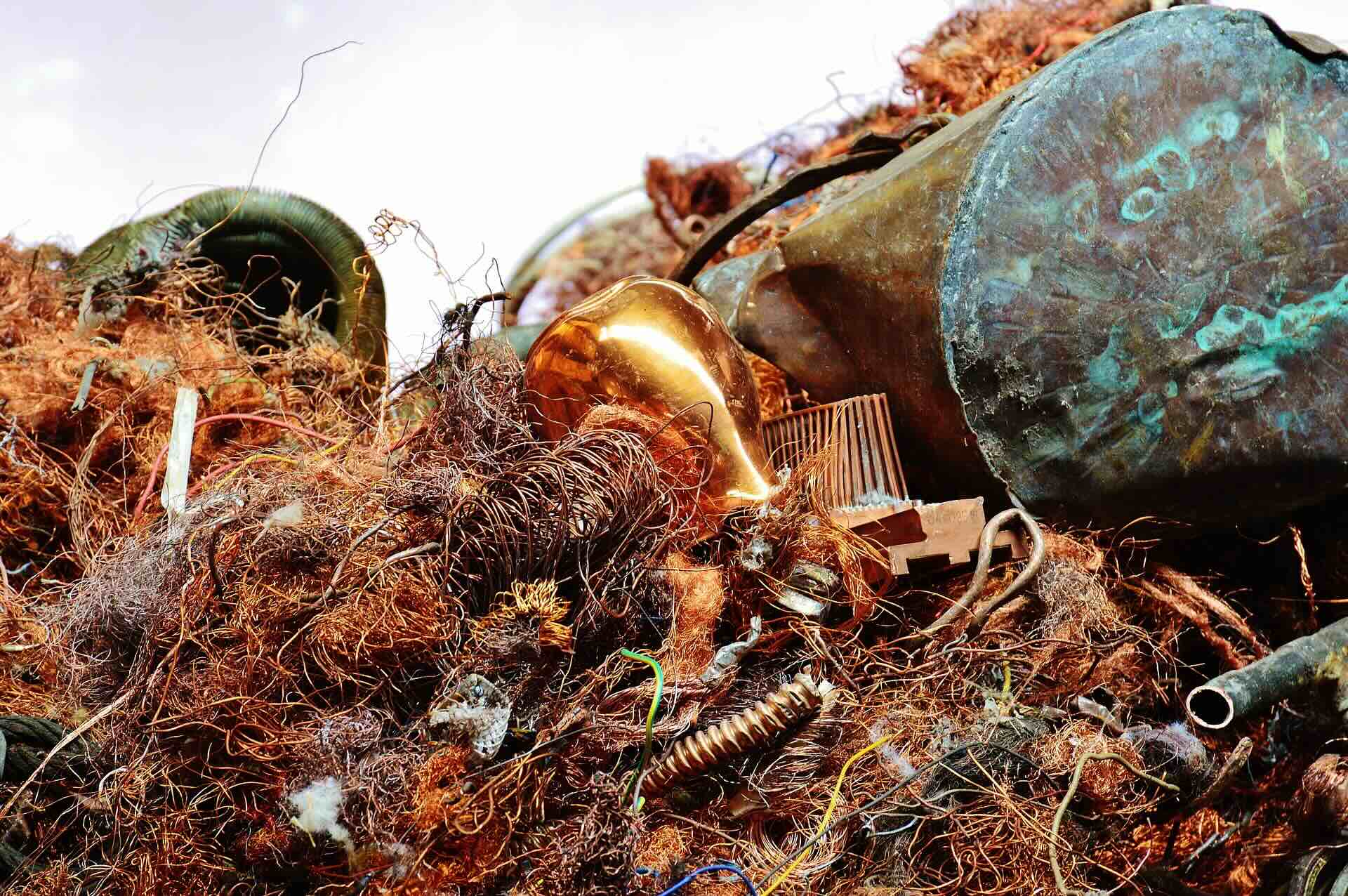
Malaysia’s copper scrap market has remained struggles in recent years, with both upstream traders and downstream smelters under increasing pressure. According to SMM, this situation is closely related to the government’s intensified import supervision since 2021, particularly the stringent inspection regime enforced by SIRIM (Standards and Industrial Research Institute of Malaysia). Unless import standards are revised or clearance procedures streamlined, Malaysia risks losing its competitiveness and influence within the Southeast Asian recycled metals market.
1.Industry Struggles Under Policy Tightening
Malaysia’s copper scrap market has remained struggles in recent years, with both upstream traders and downstream smelters under increasing pressure. According to SMM, this situation is closely related to the government’s intensified import supervision since 2021, particularly the stringent inspection regime enforced by SIRIM (Standards and Industrial Research Institute of Malaysia). The tightened controls have significantly reshaped the flow of metal scrap trade across Southeast Asia.
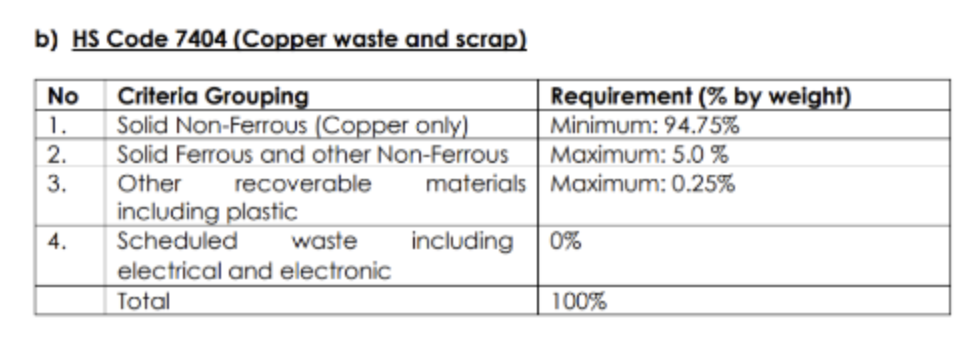
Under the current SIRIM regulations, imported copper scrap must contain a minimum of 94.75% copper, with other ferrous and non ferrous not exceeding 5% and other recoverable materials below 0.25%. In addition, imports of scheduled electronic waste (SW110) are strictly restricted. SW110 includes electronic components, industrial equipment, or manufacturing residues containing or contaminated with hazardous substances such as discarded computers, televisions, mobile phones, and electronic production residues.
SIRIM also enforces a strict radiation threshold: the dose rate at any point on the packaging must not exceed “background value + 0.25 µSv/h.”Compared with the common international limit of “no more than twice the background level,” Malaysia’s standard is far more stringent. Industry participants note that the threshold is set unrealistically low, as natural background levels fluctuate, and measurement errors caused by handheld devices and environmental factors may lead to compliant shipments being wrongly rejected. This increases both operational costs and the risk of forced re-export for importers.
3.Tighter Inspections Drive Trade Diversion and Regulatory Evasion
While the new import standards have strengthened Malaysia’s environmental image, they have also greatly increased import costs and re-export risks. Due to SIRIM’s complex inspection procedures, the entire process often takes about two weeks to complete which significantly raising inventory, storage, and demurrage expenses.
As a result, many traders have shifted operations to countries with more flexible policies and faster customs clearance, such as Thailand, Vietnam, and the UAE. These countries have been actively attracting metal recycling investment in recent years. Their looser regulations and more efficient logistics have gradually turned them into new hubs for copper scrap processing and transshipment. Consequently, Malaysia’s domestic copper scrap supply has sharply declined, worsening raw material shortages.
Meanwhile, to preserve profit margins, some traders have resorted to “circumvention routes”, including transshipment through third-country ports or misdeclaration of cargo categories to avoid inspection. This has led to a resurgence of illegal imports, false declarations, and uncertified metal scrap entering the market, creating greater enforcement pressure on authorities. In July 2025, Malaysian customs had uncovered a major smuggling case involving 125 tons of scrap copper worth RM 5 million (approximately RMB 8.4 million).
4.Shrinking Production Capacity and Plunging Imports
Under the dual pressure of raw material shortages and tightened regulations, many small and medium-sized recycling and smelting enterprises have been forced to cut production, suspend operations, or even shift to other industries especially in industrial hubs such as Selangor, Penang, and Johor. If the shortage continues, Malaysia’s overall secondary metal production capacity may further contract.
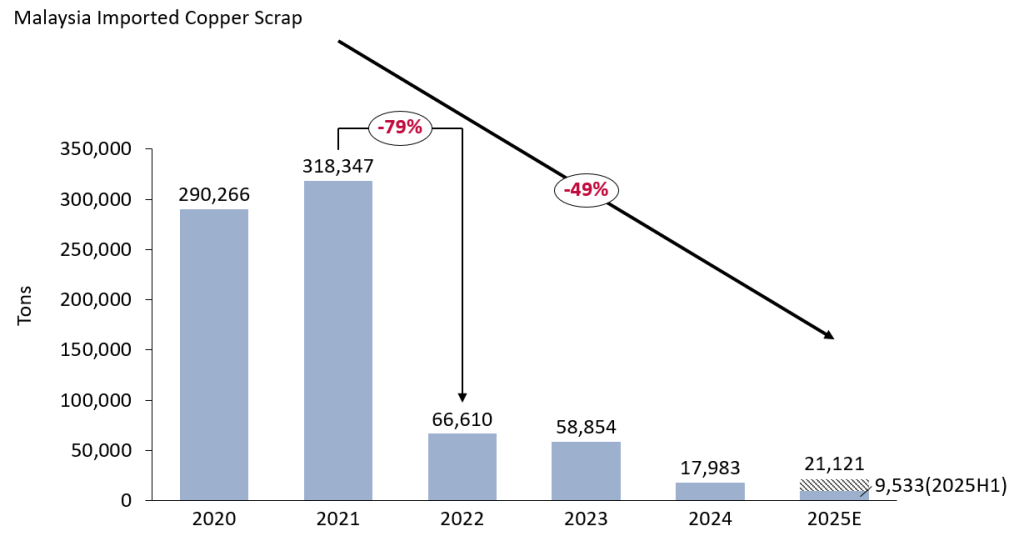
According to WITS (World Integrated Trade Solutions) data, Malaysia’s copper scrap imports plunged from 318,347 tons in 2021 to 66,609 tons in 2022, a sharp 79% year-on-year decline following the full implementation of SIRIM’s standards. Imports have remained depressed since then, totaling only around 17,000 tons in 2024 which is the lowest level in five years.
In the first half of 2025, Malaysia imported 9,533 tons of copper scrap. Despite the ongoing strict standards, escalating U.S. and China trade tensions have prompted some Chinese traders to consider Malaysia as a transshipment point, rerouting certain copper scrap cargoes through the country. SMM expects Malaysia’s total scrap copper imports in 2025 to see a modest rebound to around 21,000 tons, driven mainly by these rerouting flows.
5.Outlook for 2026: Prolonged Weakness with Limited Short-Term Recovery
From a policy perspective, the Malaysian government shows no sign of relaxing import controls in the near term. Officials have repeatedly emphasized the need to prevent Malaysia from becoming a “regional dumping ground for waste”, signaling a continued commitment to strict import management.
Given the government’s persistent stance against waste metal imports, SMM believes Malaysia is unlikely to make major policy adjustments in the short run. Overall, the country’s scrap copper market remains caught between policy suppression and supply tightening. Unless import standards are revised or clearance procedures streamlined, Malaysia risks losing its competitiveness and influence within the Southeast Asian recycled metals market.