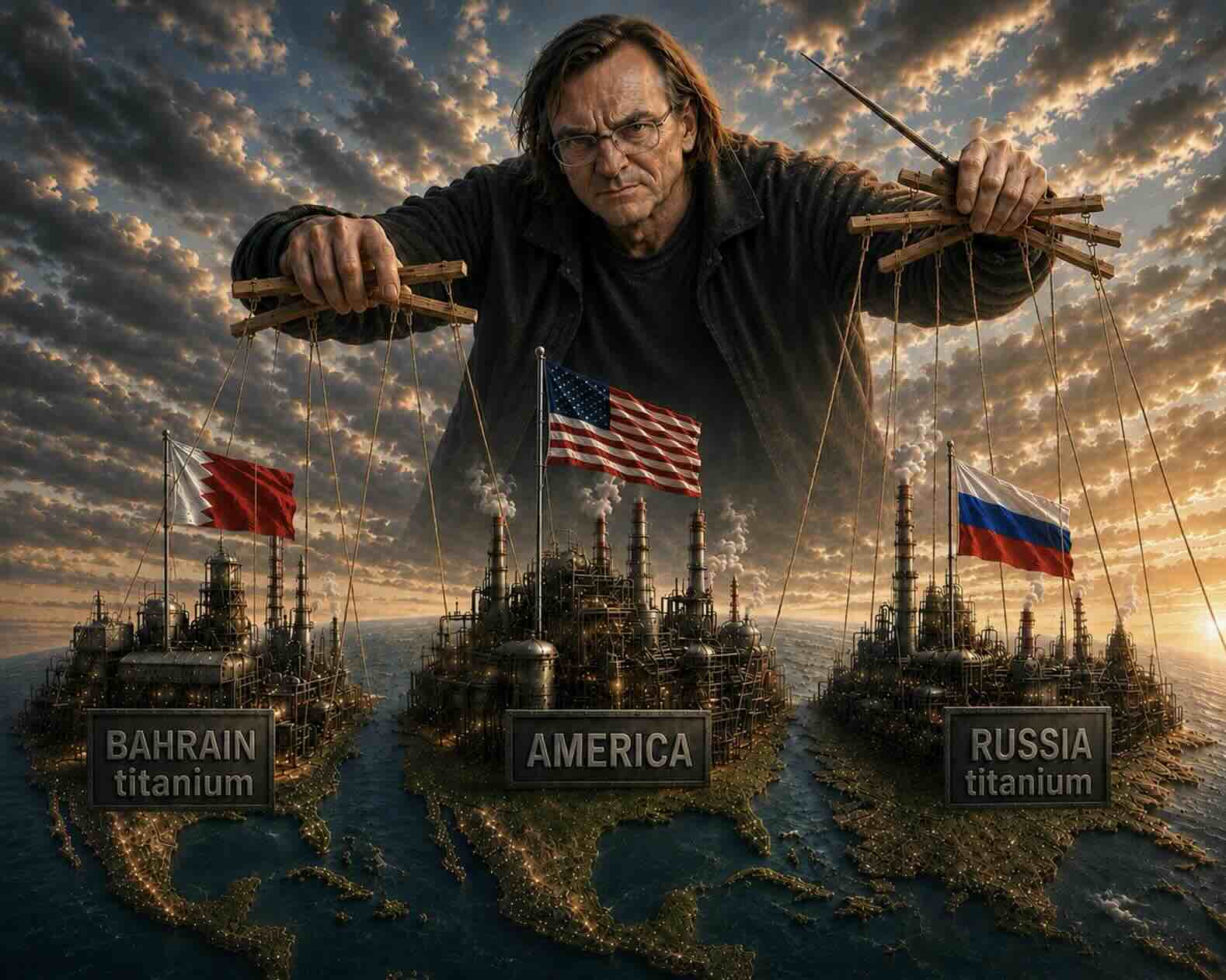
US Banks To Be Subpoenaed in Global Fraud Probe
THE SCHEME
The allegations center on a series of titanium transactions that investigators describe as a circular supply chain scheme. According to court filings, the financial fraud began in 2013, when VSMPO CEO Mikhail Voevodin approved titanium transactions with Igor Raykhelson that investigators say were designed to defraud the company. Under the alleged arrangement Voevodin sold titanium chips to Raykhelson’s company – Interlink, which were then exported to intermediaries in Switzerland and Estonia where investigators say, “the titanium underwent no meaningful processing. Instead, it was reclassified on paper as titanium alloy charge, repackaged, and then sold back to the same Russian supplier at prices up to ten times higher than the original cost. The only changes made were new paperwork and new packaging. “The metal never changed,” investigators wrote. “Only the documents did.”
VSMPO contends that transactions involving titanium initially sold for approximately $21.6 million ultimately generated roughly $245 million in downstream sales.
Billions of rubles had been siphoned-off, converted to dollars, and vanished through foreign shell companies. By the time the scheme was fully mapped-out, the picture was clear – and staggering. Nearly $100 million was stolen. The money flowed into opaque offshore entities created and operated by members of Raykhelson’s immediate family.
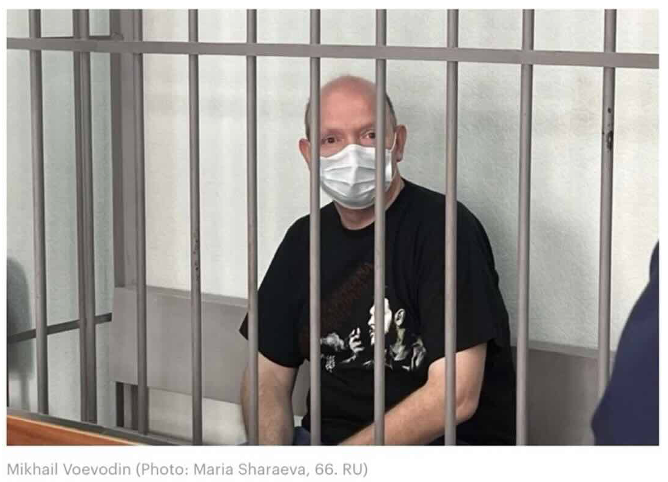
Russian authorities arrested the former chief executive, Mikhail Voevodin, in Moscow in June 2025 and his criminal case is currently pending. In 2020, Voevodin had reached a settlement agreement with VSMPO and paid 1.7 billion rubles in restitution. The Russian government is now pursuing criminal charges against Voevodin – and Raykhelson.
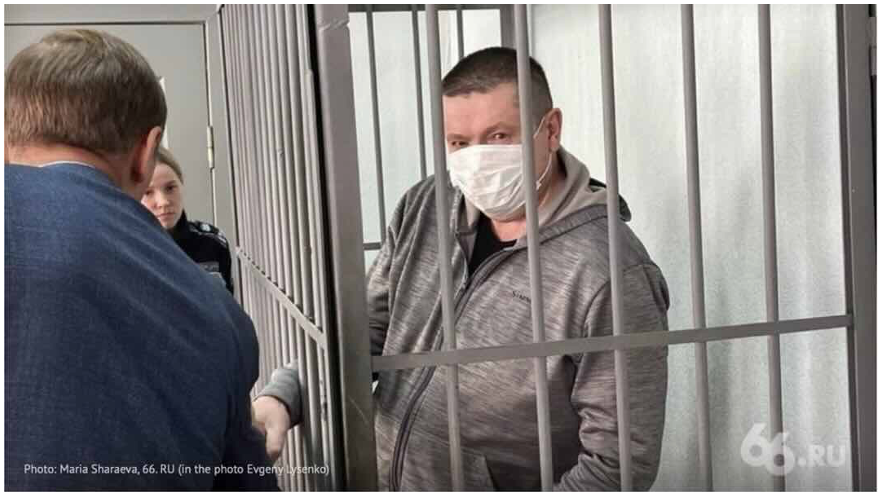
Igor Raykhelson is a fugitive from Russia, living lavishly abroad.
THE SHADOW OWNERS
On official documents, Interlink Switzerland was owned by Raykhelson’s wife, Ekaterina Astashova. But when investigators dug deeper, Igor appeared to control the company. Emails, internal communications, and corporate records showed that it was Igor Raykhelson who made decisions, Igor who negotiated deals, Igor who appeared at meetings as “chairman,” and Igor who approved the contracts. Yet he left almost no direct footprint in Interlink’s ownership structure, except for the corporate documents and bank transfers tied to his family members.
THE NEW YORK CONNECTION
As Russian authorities traced the money, the trail led to Manhattan.
Federal filings allege that Raykhelson’s son, Joshua Raykhelson, registered multiple U.S. companies to his New York apartment – including Interlinks U.S. affiliate, and a Texas-registered Interlink Metals Corporation. Investigators believe these entities played a key role in moving and shielding illicit funds through the U.S. financial system.
In 2018, Interlink quietly reestablished a U.S. subsidiary. The registered address was Joshua Raykhelson’s New York apartment. Later, when that entity tapered off its activity, another was created: Ray Ti LLC, which was also registered to Joshua. Then a Texas corporation was registered in 2025, Interlink Metals Corporation – again headed by Joshua, and again linked to his New York residence. The timing seems suspicious. Just days after Interlink filed its legal opposition in the U.S. courts, Swiss records show that Interlink Switzerland transferred partial ownership of a titanium plant in Bahrain – to Joshua’s newly created Texas entity. To investigators, that looked less like coincidence and more like choreography to hide assets.
Other movements of the stolen money remain more difficult to track – which is why international investigators have filed the petition in New York federal court to ascertain where the money went – and who currently controls it.
THE FEDERAL COURT WEIGHS IN
In a detailed 41-page Report and Recommendation issued on May 26, 2026, in the Southern District of New York, U.S. Magistrate Judge Valerie Figueredo recommended that VSMPO-AVISMA Corporation be allowed to pursue broad discovery from major U.S. financial institutions and entities connected to the Raykhelson network. The proposed discovery targets include JPMorgan Chase, Morgan Stanley, the Federal Reserve Bank of New York, the Clearing House Payments Company (CHIPS), Interlink Metals & Chemicals Inc., and Joshua Raykhelson.
VSMPO seeks wire-transfer records, account-opening documents, beneficial ownership records, transaction data, and testimony that it contends could help identify the movement of funds through the U.S. financial system. Court filings state that VSMPO believes Interlink-affiliated entities ultimately accumulated between $90 million and $110 million from the transactions.
Perhaps most importantly, the court filing reveals the extraordinary scope of the discovery effort. VSMPO seeks records relating to more than fifty individuals and entities allegedly connected to the titanium transactions, including wire-transfer data, account-opening records, beneficial ownership information, transaction histories, and internal banking communications dating back to October 2013. The purpose, according to the application, is to trace the movement of funds through the U.S. financial system, identify recipients of allegedly misappropriated money, and support restitution claims in the ongoing Russian criminal proceedings.
The ruling could open the door to a substantial volume of banking, wire-transfer, and corporate records that investigators believe may shed further light on where the money ultimately went and who controlled the network of companies involved in the largest titanium heist in history.