

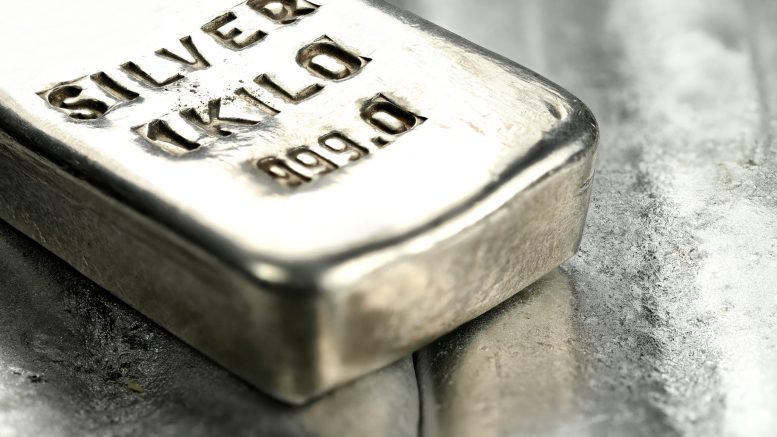
Silver is caught between its industrial usage and its monetary reputation, as surging demand from solar panels and electronics tightens physical supply while investors continue to treat it as a precious metal tied to gold.
Industrial demand accounts for just over half of annual silver consumption, around 57% in 2026 estimates, up from around 50% five years ago, according to the Silver Institute’s World Silver Survey. The shift follows consecutive years of structural supply deficits and periods of tightening visible inventories across major trading hubs, including the COMEX in New York and the London Bullion Market Association (LBMA) system.
Five years ago, half of silver went to investment demand, Peter Krauth, editor of Silver Stock Investor, told The Northern Miner. “Today, you only have a third available to go to one of those three categories of jewelry, silverware, or physical coins and bars.”
The tightening market helped fuel a sharp rally earlier this year, as renewed investor buying collided with strong industrial demand. “When it comes back in a big way as it did last year, you get a squeeze [and] a big price reaction,” Krauth said.
Silver briefly traded above $121 per oz. in late January before correcting. By mid-May, it was around $88 per oz., more than double long-term historical averages, before higher inflation and bond yields drove the price to around $75 an oz. near press time.
However, despite compressed physical balances, silver continues to be priced primarily through financial markets that are only loosely connected to industrial consumption. Futures trading in New York and London remains the dominant mechanism for price discovery, leaving short-term positioning and macro sentiment to drive much of the daily movement.
Competing role
Bart Melek, global head of commodity strategy at TD Securities, said he sees the metal’s dual nature as structural, and it drives both its appeal and volatility. “I call it a hybrid,” Melek told The Northern Miner. “It’s between a monetary and an industrial metal.”
That duality leaves silver uniquely exposed to the current macro environment. The white metal’s investment case has traditionally been tied to rate cuts, a weaker U.S. dollar and easier monetary conditions. However, with U.S. inflation remaining above target and rate-cut expectations pushed further out, that support has faded.
Melek said exchange-traded fund holdings have fallen sharply since the start of the year, dropping from a peak of 869 million oz. of silver to around 790 million oz.
“When I look at it, we’re about 9% lower in ETF holdings,” Melek said, adding that speculative positioning in futures markets has also pulled back.
The deeper risk is high inflation coinciding with weak economic growth, a scenario that would pressure both sides of silver’s dual identity demand base simultaneously. Industrial uses such as electronics, catalysts and solar applications are cyclical, with consumption tied closely to economic momentum.
“If we have an economy that’s not particularly robust, all those uses including jewelry – people without jobs aren’t buying a lot of jewelry – things might slow down” he said. TD Securities’ March outlook forecasts an average price of $75.75 per oz. for 2026.
“Exposure is not what it was,” Melek said. “Investors have a little less appetite, the tightness isn’t there, and I think we are not 100% confident that we’re going to get a situation where we have a big deficit.”
Complicated picture
Where Krauth sees more influence on price is not in daily futures trading, but in how physical demand shows up across regions.
He points to recurring gaps between Western benchmark prices and physical markets in Asia, particularly India, where silver can trade at a premium driven by duties, currency moves and seasonal buying. Those premiums tend to widen when supply tightens and local demand strengthens.
“I really believe the influence in pricing is going to shift east,” Krauth said. “They’re much bigger precious metals consumers and buyers.”
India’s position as a major silver importer adds to that sensitivity, while new infrastructure such as the India International Bullion Exchange is aimed at strengthening local pricing mechanisms alongside established global benchmarks.
There may also be a demand shift in India from gold to silver as the government enacts restrictions on buying bullion to maintain foreign exchange which is needed to buy oil since 90% of its needs are imported. Higher prices because of the Iran war are hurting finances.
Colliding ideologies
For Krauth, the broader implication is that silver increasingly behaves like two markets layered on top of one another. Industrial demand creates a steadily rising floor, driven by solar panels, electronics and electrification. Investment demand remains more cyclical and sentiment-driven, but now competes for a smaller pool of freely available metal.
That imbalance helps explain why renewed investment demand can trigger outsized moves in silver prices.
For miners, that dynamic cuts both ways, amplifying upside when investment flows collide with tight physical supply, but also heightening downside risk when they reverse.
Silver remains a relatively small corner of the global mining sector, with far fewer large pure-play producers than gold. Krauth said that scarcity can intensify capital flows during bull markets, as investors seek leverage to higher prices, a dynamic that keeps miners exposed to both sides of silver’s volatility.
“We’re going to continue to live this identity crisis,” Krauth said.
By – https://www.northernminer.com/news/sterlings-identity-crisis/1003891914/