

From a 1916 postal scheme to wartime mine restarts, Alaska’s tungsten story follows a century of shifting demand and opportunity.
In the winter of 1916, as war raged across Europe and the demand for strategic metals sent prices soaring, two Fairbanks miners devised an extraordinary plan to move their newfound wealth out of Alaska – sending 50 tons of mineral concentrate, reportedly worth $140,000, through the U.S. mail to a buyer in Pittsburgh, a proposal so unusual it eventually reached the halls of Congress and revealed just how valuable a metal long overshadowed by gold had suddenly become: tungsten.
Unlike gold or silver, tungsten never owed its worth to beauty or rarity alone, but to the remarkable properties that made it useful in places where ordinary metals could not endure.
Dense, exceptionally hard when combined with carbon, and capable of withstanding temperatures that would melt every other metal, tungsten became an important ingredient in the tools and machinery of a rapidly industrializing world.
First isolated in 1783 by Spanish brothers Juan José and Fausto Elhuyar, the gray-white metal would spend much of the next century finding its place in industry. By the early 1900s, it was helping strengthen steel used in cutting tools, while its ability to withstand extreme heat made it valuable in electric light bulbs and other emerging technologies.
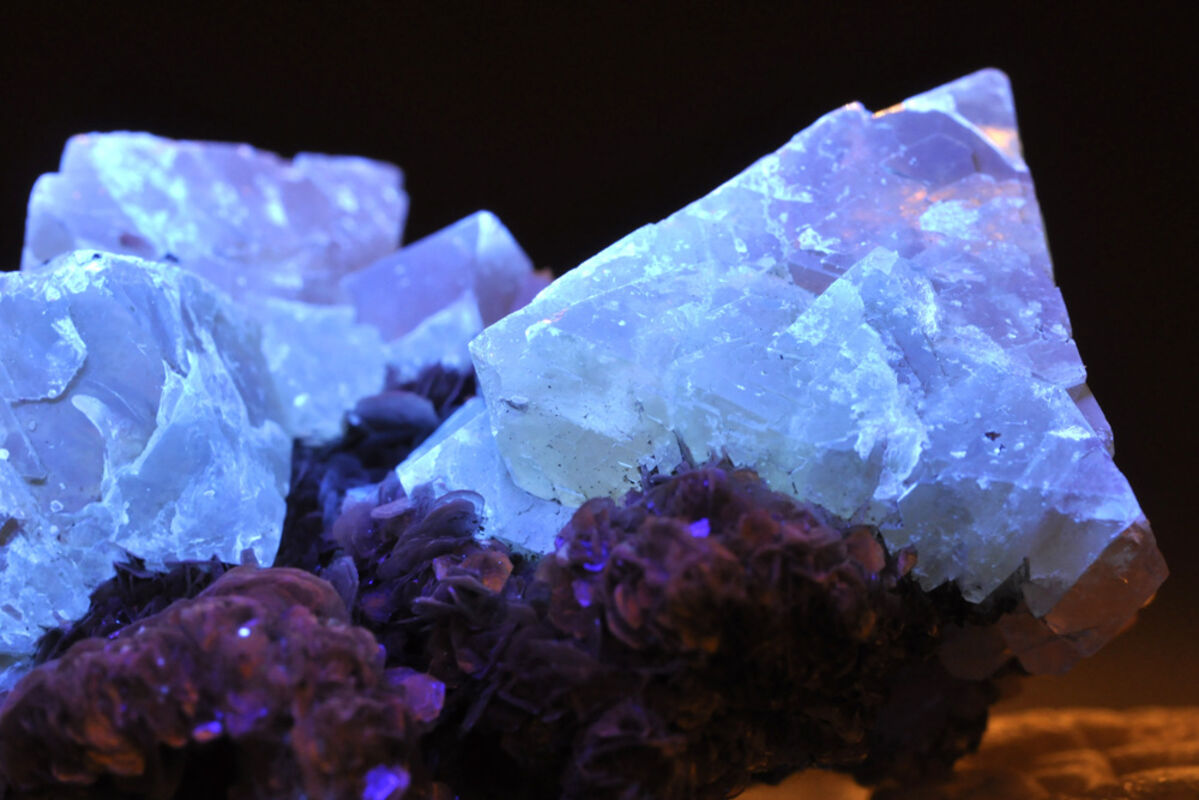
Though tungsten itself rarely occurs in nature as a native metal, it can be recovered from minerals such as scheelite and wolframite, found in hard-rock deposits and, in some places, the gravels washed from them.
For miners accustomed to searching for gold, those same streams and rocky hillsides sometimes held another kind of opportunity – one whose value depended less on the gleam of the ore than on the demand waiting beyond the mine.
And few forces could change that demand more suddenly than war.
As nations expanded their arsenals and industrial capacity, tungsten became increasingly sought after for the hardened steels, machinery and armaments needed to sustain them, making deposits once considered little more than geological curiosities worth a closer look.
In Alaska, where gold had already drawn prospectors into remote valleys and mountain ranges, the metal’s shifting fortunes would give rise to an overlooked chapter of mining history – one shaped as much by world events and the struggle to move ore to market as by what lay in the ground.
The first tungsten rush
On the eastern flank of Gilmore Dome, roughly 15 miles northeast of Fairbanks, the discovery of scheelite in 1915 would give one of the territory’s established gold miners an unexpected new pursuit.
Having made his living in the Fairbanks goldfields, Michael “Wise Mike” Stepovich, a Balkan immigrant, turned his attention to scheelite after hearing that the mineral had been found in the district’s placer gravels.
Following reports of scheelite in the hills above Gilmore Creek, Stepovich helped develop a tungsten-bearing lode discovered in 1915 by Albert Johnson, according to the U.S. Geological Survey, opening one of Alaska’s earliest commercial tungsten ventures.
Between 1915 and 1918, miners sank two inclined shafts roughly 325 feet apart on adjoining claims, carving their way beneath Gilmore Dome in a demanding effort that would eventually expand to some 2,000 feet of underground workings through later periods of mining.
By 1918, those early workings had yielded roughly 300 tons of hand-sorted ore, along with about 10 tons of high-grade scheelite concentrate – a remarkable return from a deposit that had begun attracting miners only three years earlier.
Yet as difficult as extracting the material was, getting it to market presented another problem.
Using mule-drawn carts, Stepovich hauled ore to a small gravity mill on Fairbanks Creek, then shipped the finished material along the Little Chena and Chena rivers to Fairbanks. From there, riverboats carried it down the Tanana and Yukon to St. Michael, where ocean-going ships completed the journey to a buyer in Tacoma, Washington.
But while Stepovich relied on Alaska’s waterways to move his tungsten, two other Fairbanks miners were preparing to take advantage of a transportation network that operated even when the rivers froze.
In January 1916, after reportedly receiving an order from a Pittsburgh chemical firm offering $2,800 per ton for tungsten concentrate delivered during the winter, Johnson & Ewers turned to a rather unconventional freight service – the United States Post Office.
Rather than wait for spring, the pair planned to purchase $12,000 in postage and begin delivering 4,800 pounds of concentrate each week to the Fairbanks post office, where it would enter the winter mail system bound for the East Coast.
Unfortunately for the dog-team contractors responsible for carrying mail between Fairbanks and Cordova, the arrangement presented a considerable problem.
Having based their winter contracts on expected loads of just 200 to 300 pounds per trip, the carriers now faced the prospect of hauling thousands of pounds of mineral concentrate through the Alaska wilderness, while the newspaper account estimated that the federal government would incur $122,600 in delivery costs against just $12,000 in postage.
With one of the world’s densest metals threatening to overwhelm a mail service accustomed to ordinary parcels, the irony was apparently not lost on those reporting the unusual arrangement.
“If anybody wants to become unpopular with the mail carriers, all they have to do is mention the word ‘tungsten,'” the newspaper remarked.
Reaching the halls of Congress that February, the episode caught the attention of Rep. Halvor Steenerson, who raised questions about the financial burden of using government mail contracts to transport commercial freight.
Although the proposed 50-ton shipment remains unconfirmed, U.S. Geological Survey geologist Alfred H. Brooks documented that some tungsten ore had indeed traveled by parcel post that winter, estimating the Fairbanks district’s entire 1916 production at 38,780 pounds of concentrate from three mines.
By 1917, with additional tungsten prospects being developed around Fairbanks, Stepovich purchased a secondhand crushing mill from Colorado, hauling the equipment toward his workings by sleigh behind 12 mules.
Yet with the end of World War I in 1918 came a collapse in tungsten prices, leaving Stepovich to abandon his hard-rock operation and return to gold mining, while Alaska’s first promising tungsten rush faded almost as quickly as it had begun.
Tungsten’s second chance
For more than a decade after Alaska’s first tungsten rush faded, the old workings at Gilmore Dome stood as a reminder of fortunes tied to events far beyond the territory. Even a brief return by Stepovich in 1931, when he recovered about 10 tons of concentrate, ended the following year as prices fell once more.
With another war spreading across Europe, however, the metal was again attracting attention from miners, companies, and a federal government increasingly concerned about securing domestic supplies.
Near Hyder in Southeast Alaska, the Riverside Mine was among the first to respond. Long worked for gold, silver and base metals, the property underwent renewed development by San Francisco-based J.H. Scott Co. in 1940, with its mill modified the following year to recover the scheelite earlier operators had largely passed over.
By 1942, that renewed interest had reached the old Stepovich workings.
Having spent decades building a livelihood around Fairbanks, Wise Mike was facing a different kind of wartime disruption. According to the Alaska Mining Hall of Fame, the War Department requisitioned his gold-mining equipment for military construction projects, prompting him to leave Alaska for California.
Rather than abandon the tungsten deposit altogether, Stepovich leased his Gilmore Dome claims to Cleary Hill Mines Co., which began reopening the old workings in April 1942 while sinking a new inclined shaft and testing the ground surrounding them.
Under manager R. E. Wyer, the company had explored hundreds of feet of the deposit by that September, drawing the attention of federal geologists and mining engineers who returned repeatedly to examine nearby tungsten prospects.
Still, the problems of working in Alaska had hardly disappeared since Stepovich’s mule-drawn ore carts.
Using an existing gold-mine camp and mill instead of building new facilities, Cleary Hill initially faced a 19-mile road haul between its tungsten workings and processing plant. During the summer of 1943, crews cut six miles of new road to shorten that journey to eight miles, though winter conditions still required tire chains for much of the year.
Without permanent winter accommodations at the tungsten mine, workers were carried back and forth by bus, while ore was trucked to the mill and the resulting concentrate delivered to a federal purchasing depot in Fairbanks.
From October 1943 to May 1944 alone, roughly 800 tons of ore were milled into 38.5 tons of concentrate containing nearly 50% tungsten trioxide, according to the U.S. Bureau of Mines, with the output sold to the government’s Metals Reserve Co.
Far to the southeast, Riverside contributed its own share, employing between four and 27 workers during the wartime period and drawing federal investigators who drilled more than 4,600 feet in search of additional ore.
As territorial mining officials observed in their 1944 report, “A greater diversity of minerals has been produced in Alaska during the present war period than ever before.”
Yet even before the fighting ended, the balance was beginning to shift.
With wartime restrictions on gold mining beginning to ease, Cleary Hill suspended tungsten operations in June 1944 and returned to mining and milling gold at its nearby property, a reversal recorded by territorial officials without a definitive explanation for the decision.
At year’s end, Riverside remained Alaska’s only operating tungsten lode mine, and although scheelite production there continued into the postwar years, the territory’s second rush was already taking a different course.
An unfinished chapter
Although the great wartime demand had begun to fade, Alaska’s tungsten story was far from finished.
At Riverside, scheelite recovery continued until 1946, after which the mine returned primarily to producing lead, zinc and copper concentrates, while renewed federal interest during the Korean War brought another period of tungsten exploration and small-scale production across the territory.
On the western Seward Peninsula, the Lost River district had attracted prospectors searching for tin as early as 1902, but subsequent investigations revealed extensive deposits containing tungsten, fluorite and other valuable minerals.
With government support under the Defense Production Act, mining resumed at Lost River in 1951, producing roughly 51,000 tons of tin-bearing ore before operations ended in September 1955. Although the associated tungsten remained largely undeveloped, further exploration through the 1970s established the district as one of Alaska’s more substantial potential sources of the metal.
Elsewhere, the smaller operations that had once characterized Alaska’s tungsten industry continued to make occasional appearances.
Returning to the hills around Gilmore Dome, Vincent Monzuella produced several tons of scheelite concentrate from the Yellow Pup lode in 1981, stockpiling additional high-grade ore for later processing, while placer-gold operations in the Iditarod district had continued shipping tungsten concentrates during the preceding decades.
Yet despite these scattered efforts, no enduring tungsten industry emerged, with the difficulties of developing remote deposits and the availability of foreign supplies continuing to weigh against commercial production.
More than a century after Stepovich began mining tungsten at Gilmore Dome, however, the circumstances that once made Alaska’s tungsten valuable are again attracting national attention.
According to the U.S. Geological Survey’s 2026 mineral commodity report, the U.S. recorded no domestic tungsten mine production in 2025, while China accounted for approximately 67,000 of the 85,000 metric tons produced worldwide.
With tungsten now designated a critical mineral and concerns over foreign supply chains renewing interest in domestic resources, Alaska’s historical deposits remain a potential source of a metal increasingly important to manufacturing, aerospace and national defense.
Whether those resources can support future mining remains uncertain, particularly where remoteness, infrastructure, and development costs have frustrated generations of earlier attempts.
But for a territory whose tungsten fortunes have repeatedly risen and fallen with events far beyond its borders, the possibility of another chapter remains – not because the metal has changed, but because the world around it continues to do so.