

Mineral wealth, research expertise, and industry support helped Alaska university secure an up to $160M NSF innovation award.
While the University of Alaska Fairbanks may not have had the financial resources of larger universities competing for up to $160 million under the National Science Foundation’s Regional Innovation Engines initiative, it brought three major advantages to the table – Alaska’s extraordinary critical mineral endowment, established mineral research programs, and, perhaps most importantly, the backing of Alaska Native organizations and a mining industry equipped to help develop, test, and deploy the cutting-edge technologies the federal initiative aims to accelerate.
“The strength of our proposal reflected the strength of those relationships,” NSF Critical Minerals Accelerator Engine in Alaska CEO Lee Ann Munk told Mining News in an email. “Alaska already has many of the essential components of an innovation ecosystem; the Engine provides the platform to connect and sustain them.”
Those advantages helped propel the UAF-led Engine into the select group of 12 teams chosen from a national competition that began with 294 initial applications. The award provides $15 million over the first two years, with the potential for another $145 million over the next decade if the Alaska-led coalition meets NSF’s performance milestones.
With the NSF Critical Mineral Accelerator Engine in Alaska now fueled by the initial award, UAF and its partners are gearing up to advance technologies that could unlock additional value from the state’s vast critical mineral wealth – from artificial intelligence-assisted mineral exploration and biological extraction methods to innovative technologies for recovering, processing, and purifying minerals essential to America’s economic and national security.
While advancing cutting-edge mineral technologies is central to the Engine’s mission, its ambitions extend well beyond research and development.
By connecting researchers, mining companies, technology developers, investors, workforce organizations, and Alaska communities, the Engine aims to accelerate the commercialization of innovations while preparing Alaskans for the jobs and business opportunities they could create.
Together, these interconnected efforts could transform Alaska’s mineral wealth and mining expertise into a critical minerals innovation center that strengthens domestic supply chains while creating lasting economic opportunities in the 49th State.
“This award is for Alaska and the benefit of all Alaskans,” said Munk.
UAF’s strategic advantage
When UAF applied for an NSF Regional Innovation Engines award, its competitive edge did not lie in the size of its research budget or access to the international consultants available to better-funded institutions. Instead, its advantage was the ability to assemble a coalition that brought mineral resources, operating mines, scientific expertise, innovative technology developers, and discovery-to-deployment experience to the table.
Mark Lambert, the Engine’s executive director of commercialization, recently characterized UAF’s success as “punching above its weight” in a national competition against institutions with substantially greater resources.
Munk attributes the success to Alaska Native organizations, mining companies, technology developers, national laboratories, educators, communities, policymakers, and the University of Alaska uniting around a shared opportunity.
That support did not materialize overnight.
The Engine builds upon a foundation established by the Alaska Critical Minerals Collaborative, a joint effort involving UAF’s Geophysical Institute and Institute of Northern Engineering that sought to accelerate critical mineral production through partnerships between industry, academia, and government.
These relationships align with the objectives of the NSF Regional Innovation Engine, which is designed to bring researchers, industry, investors, and communities together to accelerate innovation and regional economic growth.
“Today, our network includes more than 50 partners,” Munk told Mining News. “I believe that combination distinguished us: strong scientific leadership, committed state and federal support, dedicated partners, and a clear pathway from Alaska’s mineral potential to national benefit.”
Rich resources, strong partners
UAF’s solid foundation in critical minerals research and its ability to assemble a strong coalition of mining and mining-related expertise are not happenstance.
The university’s hillside campus overlooks Fairbanks, a Gold Rush city that has been a hub for precious and critical metal production for more than 125 years, and sits in the heart of a state that hosts occurrences of 56 of the 60 minerals deemed critical to America’s economic and national security.
These include antimony, bismuth, copper, cobalt, graphite, gallium, germanium, nickel, platinum group metals, rare earth elements, and silver used in batteries, electronics, power infrastructure, medical equipment, aircraft, and defense systems.
Alaska’s ability to feed critical minerals into American supply chains is not simply a future aspiration. The 49th State is already home to the nation’s largest critical mineral-producing operations.
That mine, Red Dog, has been delivering zinc and lead concentrates containing valuable silver and germanium from Northwest Alaska into domestic and international mineral supply chains for more than three decades.
And, pending successful development and permitting of the Red Dog Mine Life Extension project, the operation could continue contributing to America’s critical mineral supplies deep into the 21st century.
Teck Resources Ltd., which operates Red Dog, is among the UAF Accelerator Engine partners, as is NANA Regional Corp., the Northwest Alaska Native corporation that owns the land hosting the extremely rich deposits that have supplied the world with minerals for nearly four decades.
Lance Miller, NANA’s vice president of natural resources, helped develop UAF’s winning NSF proposal and serves as chair of the Engine’s External Advisory Board.
His mining industry experience brings an understanding of the operational, economic, and technological challenges that can determine whether innovative mineral recovery methods make the transition from promising research to commercial applications.
“Alaska has the geology and mineral resources,” he told Mining News. “The challenge is developing the technologies, workforce, partnerships, and commercial capabilities needed to responsibly turn those resources into economic value.”
To address that challenge, the Engine’s collaborators also include companies seeking to transform Alaska’s rich resources into the next generation of critical mineral mines in the U.S.
These include Trilogy Metals Inc., a 50% owner of the copper-rich Arctic and Bornite projects in Northwest Alaska’s Ambler Mining District; Graphite One Inc., which is developing an all-American graphite supply chain anchored by its Graphite Creek deposit north of Nome; Nova Minerals Corp., which is pursuing an Alaska antimony supply chain; and Alaska Silver Corp., which is advancing a gallium-enriched silver-zinc-lead project about 300 miles west of Fairbanks.
Northern Star Resources Ltd., which operates the Pogo gold mine in Interior Alaska, and Alaska Energy Metals Inc., which is exploring a large nickel-copper-cobalt deposit in the Alaska Range, are also Engine partners.
These projects represent the proverbial tip of the iceberg when it comes to Alaska’s critical mineral potential.
Participation of the companies advancing those projects provides the Engine with real Alaska mining problems to solve, industry expertise, and a clear and credible pathway to move new technologies out of the lab and into the field.
Driving mining tech
The UAF Critical Mineral Accelerator Engine and its partners plan to develop technologies across the breadth of the mineral supply chain – from discovery to delivery.
“Our priorities begin with industry-defined problems across discovery, recovery, and production: turning waste into wealth, mining more metal and less rock, and advancing groundbreaking exploration technologies for Alaska’s remote terrain,” Munk said.
On the discovery end, the Engine is excited about advancing an emerging watershed exploration method that combines traditional geological understanding with new geochemical approaches, including metal isotope signatures in watersheds, to discover subsurface copper, zinc, and lead mineralization across Alaska’s vast and varied geological terrains.
The project also intends to advance AI-enabled technologies that can accelerate mineral exploration, characterization, and deposit delineation.
Given the millions of geological, geochemical, geophysical, and other data points generated across Alaska’s mineral-rich landscape over decades, exploration is an area where the computational power of AI could have an enormous impact.
That computational power can be used to bring together fragmented historical and modern exploration records, including drill logs, geochemical sampling results, and geophysical surveys, into integrated datasets that allow geologists to draw new insights from information already collected.
AI also excels at identifying patterns and relationships that may not be readily recognizable through conventional geological interpretations, potentially helping exploration companies identify overlooked prospects and more efficiently delineate existing deposits.
For Alaska, where generations of mineral explorers have accumulated vast quantities of information while searching for gold, copper, silver, zinc, and other historically valuable metals across a vast and rugged landscape, these technologies could provide new insights into critical mineral potential in previously explored areas.
“Alaska’s remote exploration challenges demand approaches that help companies identify promising targets more efficiently and make better decisions about where to focus fieldwork and drilling,” Munk said.
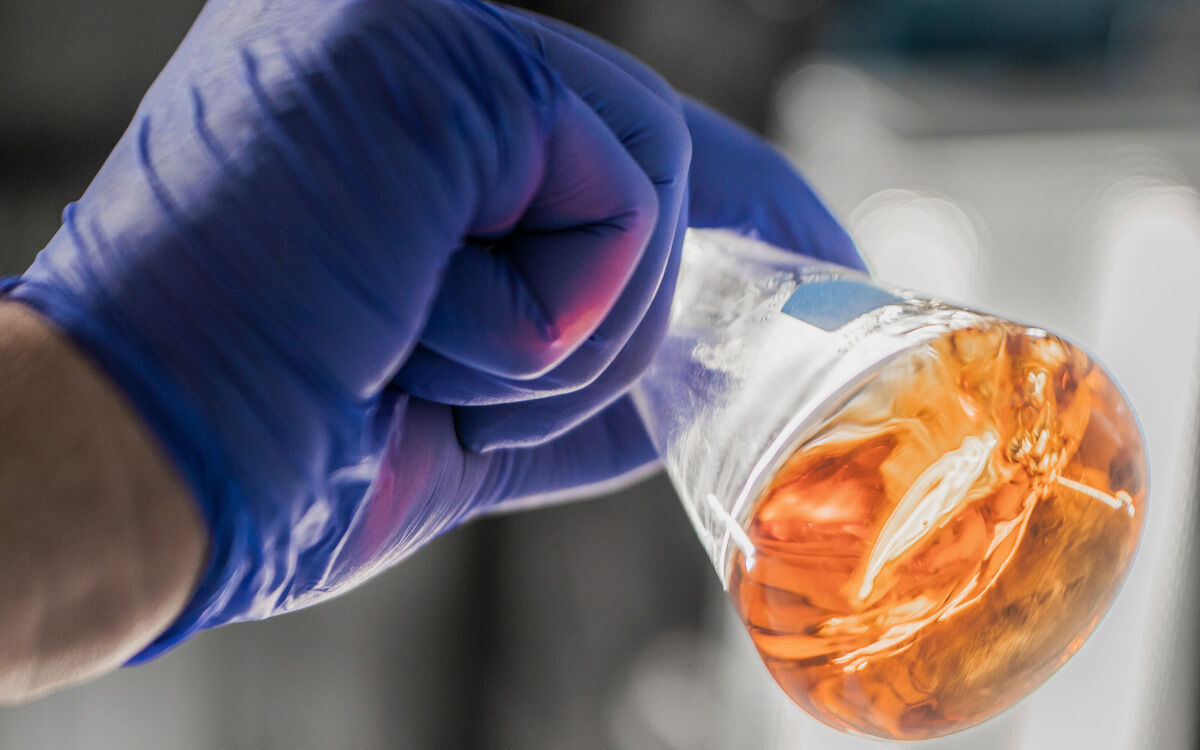
Another area of research and commercialization expected to be pursued is the use of microorganisms to extract metals from newly mined ores and materials left behind by previous mining.
Endolith, an Engine partner, is pioneering biomining technologies designed to improve copper recovery from low-grade ores that are difficult or uneconomic to process using conventional methods.
“Endolith uses microbes, trained with AI, to adapt in real time to those tough ores,” Endolith founder and CEO Liz Dennett said during a 2025 Critical Conversations interview with Mining News.
Dennett, who grew up in Alaska before working as a NASA astrobiologist and founding a mining biotechnology company, illustrates the innovative technology expertise being brought into the UAF-led coalition.
Endolith’s approach combines biological processes with advanced data analysis to develop microbial systems capable of improving metal recovery under changing conditions.
Such technologies could potentially improve the economics of lower-grade deposits, increase the amount of metal recovered from existing operations, and reduce the valuable mineral resources left behind during conventional processing.
Early projects, lasting capacity
While AI-assisted exploration and biomining represent promising avenues at the cutting edge of mining technologies, one of the most immediate opportunities may be recovering additional critical mineral value from operations already mining and processing ore.
The same mineral deposits that host primary metals such as copper, gold, and zinc often contain smaller but potentially supply-chain-significant quantities of other critical minerals.
Historically, these byproduct metals were frequently overlooked or left unrecovered because their concentrations were too low, recovery technologies were too expensive, or market conditions did not justify the additional processing required.
With growing concerns about America’s heavy reliance on foreign suppliers, particularly China, there is renewed interest in recovering additional metals from existing mining operations and the tailings left behind by decades of mineral production.
The UAF Engine intends to be at the forefront of developing technologies that could turn these historically overlooked mineral resources into valuable new sources of domestic supply.
This is more than a theoretical opportunity.
Munk says researchers are already investigating opportunities to recover critical minerals from materials associated with the Red Dog and Pogo mines.
At Pogo, the potential for recovering bismuth and tellurium alongside the gold illustrates the opportunities that advanced mineral characterization and processing technologies could help evaluate.
The gallium associated with silver-zinc-lead mineralization at Alaska Silver’s Illinois Creek project offers another example, though at a different stage of the mining cycle.
If economically viable recovery technologies can be developed and incorporated into future mining operations, minor metals that might otherwise be lost during processing could become additional products and revenue streams.
Together, these examples demonstrate how Alaska’s existing mines and emerging mineral projects could benefit from technologies capable of recovering more value from ore already being mined or deposits moving toward development.
However, developing a technology capable of recovering previously overlooked minerals is only part of the challenge.
To make a meaningful difference in America’s critical mineral supply chains, these innovations must ultimately prove they can recover metals reliably, efficiently, and economically on a commercial scale.
From research to revenue
Mining tech commercialization is another strategically important facet of the Critical Mineral Accelerator Engine.
While universities have long been at the forefront of scientific discoveries, the path from a laboratory breakthrough to commercial viability and deployment is often long, expensive, and fraught with technical and financial challenges.
For the mining industry, where new technologies must perform reliably under demanding operating conditions while meeting stringent recovery, cost, safety, and environmental requirements, the barriers to commercialization can be especially high.
The UAF Engine aims to bridge that gap by bringing researchers, mining companies, entrepreneurs, and investors together to develop technologies with practical applications and commercial potential.
Lambert, who serves as executive director of commercialization, brings experience building businesses, evaluating emerging technologies, and connecting innovative companies with the investment capital needed to advance their development.
The coalition assembled around the Engine also includes venture capital and entrepreneurial organizations such as Cantos, Nomadic Venture Partners, and Launch Alaska.
These organizations bring expertise and investment connections that could help move promising technologies beyond the laboratory and toward commercial deployment.
For example, a new mineral extraction technology developed by UAF researchers could be advanced through laboratory testing, refined through collaboration with an operating mine, and ultimately commercialized by a technology company equipped to deploy it at other mines.
Miller told Mining News that that type of collaboration could be beneficial to mining companies that have significantly scaled back their internal research and development budgets over the past 10-15 years.
“If the engine can help investigate technologies and take the logistics and tracking off of the industry partner, that can be a huge benefit,” he said.
The potential economic benefits extend beyond improving the efficiency and profitability of Alaska’s existing mineral industry.
If the Engine succeeds in developing technologies with applications across the global mining sector, it could also help establish Alaska-based businesses that provide those innovations and related services to mines far beyond the state’s borders.
That creates an opportunity for Alaska to capture additional economic value from its mineral resources – not only by mining and exporting metals but also by developing and commercializing the technologies needed to discover, extract, and process them.
“Our greatest opportunity is not simply to develop Alaska’s natural resources. It is to develop the people, knowledge, and technology that allow Alaska to realize their full value,” Miller said.
Building Alaska’s mineral workforce
Alongside developing and commercializing new mining technologies, the UAF Engine aims to prepare Alaskans for the jobs and business opportunities emerging across the critical minerals industry.
“Workforce development is a core outcome of the Engine,” Munk said.
While mining has long provided well-paying employment in Alaska, the industry’s growing reliance on advanced technologies is creating demand for workers with an increasingly diverse range of technical skills.
Geologists and mining engineers will remain essential to discovering and developing mineral resources, but the application of AI, automation, biotechnology, and advanced processing will also require workers trained in data analysis, computer modeling, laboratory technologies, and specialized equipment.
The Engine intends to help meet these needs by connecting educational institutions, workforce organizations, communities, and mining companies to develop training programs and career pathways aligned with industry requirements.
This could be particularly important in rural Alaska, where access to local employment opportunities can strengthen communities and provide residents with career options that do not require permanently relocating to larger population centers.
The participation of Alaska Native corporations is essential to connecting rural communities with emerging mining-related employment opportunities.
NANA’s decades of experience partnering with Teck to provide employment, training, and economic opportunities through Red Dog offers an established example of how resource development can support regional workforce participation.
The Engine could build upon these relationships by preparing residents for conventional mining occupations and new technical positions emerging as advanced mineral technologies are deployed.
“Introducing young people to the science, technology, and range of careers in modern mining can help attract the next generation while strengthening their understanding of resource development’s importance to Alaska,” Munk said.
What’s next for Alaska’s mineral Engine?
With the initial $15 million NSF award secured, UAF and its partners have begun laying the groundwork for an initiative that could eventually attract up to $160 million in federal funding over the coming decade.
The Engine’s first two years will be especially important.
Unlike traditional research grants that primarily support scientific investigations, NSF Regional Innovation Engines are expected to demonstrate progress toward technological innovation, commercialization, workforce development, and regional economic growth.
The Alaska coalition must meet defined performance milestones to qualify for additional NSF support, with future funding also dependent on congressional appropriations.
Early efforts have focused on strengthening industry relationships, identifying pressing technological challenges, and establishing connections between researchers, mining companies, and potential investors.
Now that the Engine is funded, the next step is execution.
“We need to demonstrate that projects are advancing toward practical use, partners remain actively engaged, students and workers are gaining opportunities, and the Engine has effective governance and a credible plan for sustained growth,” Munk told Mining News.
The long-term ambitions, however, extend well beyond the initial NSF funding cycle.
If successful, Alaska’s reputation will extend beyond that of a state famed for being enriched with 56 of the 60 minerals critical to the nation’s future to that of an engine for the technologies, expertise, and skilled workforce needed to turn mineral resources into a reliable domestic supply.
“This award has put Alaska on the map. Success means using that springboard to build a national center of leadership in critical mineral discovery, recovery, and production – and sustaining that leadership beyond the federal investment,” Munk said.
For Alaska’s mining industry, the initiative provides an opportunity to help direct research toward practical challenges while gaining access to innovations that could improve exploration, mineral recovery, and processing.
For UAF, it represents an opportunity to expand its role as a center for mineral research and innovation with applications extending far beyond Alaska.
And for the state, it offers another way to capitalize on the mineral endowment that has helped shape its economy since the first prospectors struck gold more than a century ago.
“We should see stronger mining operations, new Alaska technology businesses, and more Alaskans across the state entering rewarding careers,” Munk said.