

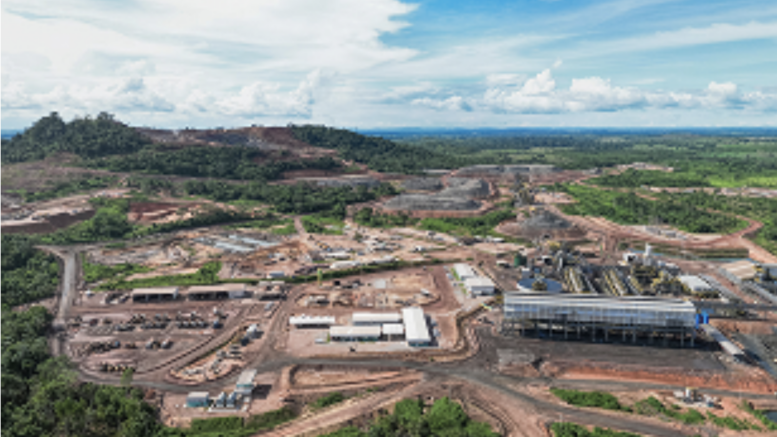
Ero Copper (TSX, NYSE: ERO) halted mining and processing at its Tucumã operation in Brazil after heavy rains overwhelmed a water collection system and state regulators found abnormal pH readings nearby. The stock dropped.
Environmental authorities in Pará state initially ordered Ero to halt mining while allowing the mill to keep running, according to a company statement issued late Thursday. Processing has since stopped.
Operations will resume after SEMAS, the state’s environmental agency, reviews and approves a final cleanup plan that Ero expects to file shortly. Ero gave no firm restart date or revised production forecast.
“Visibility on the duration of the suspension remains limited,” Jefferies mining analyst Fahad Tariq said Friday in a note. Since Ero will probably move quickly to submit the remediation plan, “it’s possible SEMAS allows operations to restart within two weeks,” he added.
Ero shares slumped 7% to $29.85 Friday morning in Toronto, valuing the company at about $3.1 billion (US$2.2 billion). The stock has traded between C$29.28 and C$56.62 in the past year.
Downtime potential
Tucumã, an open-pit mine in the Carajás mineral province that started commercial production in July 2025, was expected to produce 32,500 to 37,500 tonnes this year, or 48% of Ero’s 2026 target at the midpoint. It produced copper at a lower third-quarter cash cost than Ero’s other copper operation, Caraíba in Bahia state, at US$2.12 per lb. versus US$2.89 per pound.
Assuming no production through year-end, “Tucumã would be at [the] low end of its 2026 guidance range,” Tariq said.
“While a one-week interruption would have a relatively modest impact, we believe the more important consideration is the potential for prolonged downtime,” TD Securities mining analyst Craig Hutchison wrote Friday.
A week offline would cost about 700 tonnes of copper output and trim TD’s forecast for Ero’s fourth-quarter earnings before interest, taxes, depreciation and amortization (EBITDA) by about 3%, he added.
El Niño
Two bursts of heavy rain associated with El Niño overwhelmed pumps at a collection basin, Ero said. About 275 mm fell in the first 20 days of November, 170% more than the normal total for the full month. The company said it increased pumping and storage capacity and moved a stockpile to reduce the amount of contact water in the affected area.
Pará’s environmental agency said Tuesday that inspectors found acidic industrial wastewater had reached a tributary of the Jatobá River. The agency said it increased the penalty because the company failed to notify it and civil defence authorities within the required 48 hours.
Ero said it notified the agency of the overflows and put the related fines at about $2.9 million.
Fish deaths
The municipality of São Félix do Xingu separately fined Ero about $1.9 million over two reports of fish deaths. Ero said those reports predated the overflows, that it had yet to receive documentation supporting the municipal fine and that it had found no link between the deaths and Tucumã. São Félix do Xingu is located about 50 km from the mine.
Tucumã accounts for 21% of Ero’s base-case net asset value, according to National Bank Financial analyst Shane Nagle. A 10-day shutdown would shave $8.4 million, or 4.3%, off his fourth-quarter EBITDA forecast, he wrote in a note.
Through September, Tucumã produced 26,383 tonnes of copper in concentrate — 39% more than a year earlier.
Before the shutdown, Ero expected the fourth quarter to be the mine’s strongest of the year as the mill processed more ore and recovered more of the copper in it. It had also scheduled new tailings filters for commissioning this quarter to support higher throughput in future periods.
By – https://www.northernminer.com/news/ero-copper-halts-brazil-mine-after-water-overflows/1003898359/