

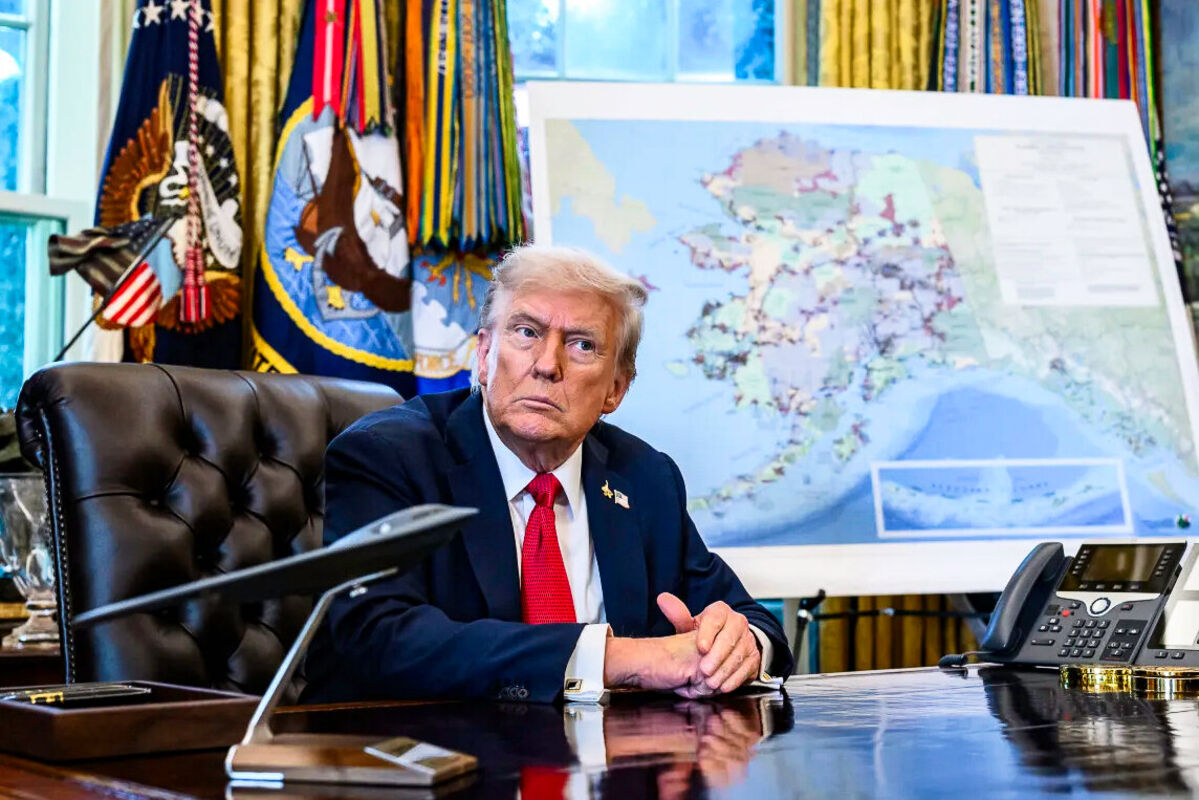
Backing from the Pentagon, White House, and Capitol Hill, coupled with soaring metals prices, is fueling new growth for the sector.
With the price of copper, gold, and silver hitting new all-time highs, the Pentagon looking North for secure supplies of critical minerals, and a White House administration focused on unleashing the resource potential of America’s Last Frontier, the mining sector in Alaska has reached critical mass in 2025.
While Alaska’s mining industry has been building toward critical mass for decades, the 2024 election started a reaction that could sustain sector growth over the coming decade.
This chain reaction is visible across the state: in the Ambler Mining District, where a road reauthorized by the Trump administration is opening the metals-rich region for development and exploration; at Graphite Creek near Nome, an Alaska Native– and federally-backed mine project that will help break America’s dependence on China for graphite, the largest ingredient in lithium-ion batteries; and in the emerging West Susitna Mining District, where a high-grade antimony project backed by the Pentagon is establishing a cornerstone for further development of this Southcentral region enriched with millions of ounces of gold and billions of pounds of copper.
The significance of Alaska’s mineral wealth and strategic Arctic location is now a headlining topic of national conversation – from the Pentagon to the White House and Capitol Hill.
“Strategically, Alaska is one of the most important states for our nation, with its location, minerals, land, and natural resource assets,” Congressman Pete Stauber (R-Minn.) said during an August tour of Alaska with his colleagues on the House Natural Resources Committee.
And as federal policies help catalyze the development of key resource regions, record-breaking metal prices are adding another surge of energy to world-class, though often remote, mining projects across Alaska. This is especially true for Donlin Gold, where soaring prices and a newly motivated partner are providing the impetus to develop a million-ounce-per-year mine decades in the making.
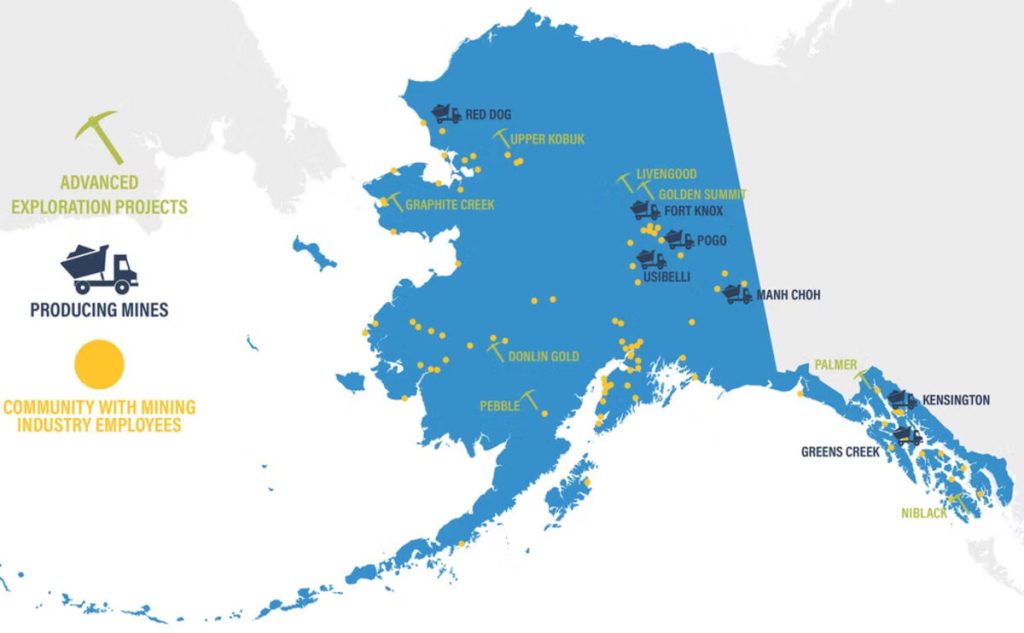
This pipeline of federally-backed and market-supported projects is building on an already growing mining sector in Alaska, which is on pace to deliver more than $5 billion worth of gold, silver, zinc, lead, and coal this year.
Unleashing Alaska’s extraordinary potential
During a September U.S. Senate hearing on “Unleashing Alaska’s Extraordinary Resource Potential,” Alaska Miners Association (AMA) Executive Director Deantha Skibinski highlighted the critical role the mining sector plays in the state’s economy and the policies needed to ensure Alaska’s resources contribute to America’s mineral security.
“Mines are critical to Alaska’s economy and have proven environmental and safety track records,” Skibinski told the House Committee on Natural Resources’ Subcommittee on Oversight and Investigations. “Unfortunately, they are frequently targeted by outside opposition groups that spread misinformation to stir public fear and overwhelm the regulatory agencies responsible for managing the nation’s permitting process.”
She noted that Alaska’s mining sector already contributes substantially to the state’s economy, including:
• $1.8 billion spent on goods and services to support Alaska’s mines, with $1.1 billion directly to Alaska businesses.
• $145 million paid in local and state government revenues.
• $240 million in royalty payments to Alaska Native corporations, bringing the cumulative total to $3.6 billion since 1989.
• 12,400 total direct, indirect, and induced jobs by the mining sector, paying an average wage of $123,000 – twice the state average for all other employment sectors.
These benefits are generated from seven large and approximately 300 small-scale placer mining operations that produce gold, silver, zinc, lead, germanium, and coal.
Projects enriched with antimony, barite, cobalt, copper, gallium, graphite, rare earths, and other critical minerals could help sustain the critical mass being achieved by Alaska’s mining sector – further contributing to the state’s economy and the nation’s mineral independence.
“Alaska is an extraordinary state with the ability to significantly contribute to our country’s prosperity,” Skibinski testified.
Reinstating the Ambler Road
The first signs that Alaska’s mining industry had the potential to achieve critical mass came a year ago, when Donald Trump vowed that his administration “will maximize Alaska’s mining potential” the day after his re-election was confirmed.
He followed through on that promise with the “Unleashing Alaska’s Extraordinary Resource Potential” executive order, signed on his first day back in office.
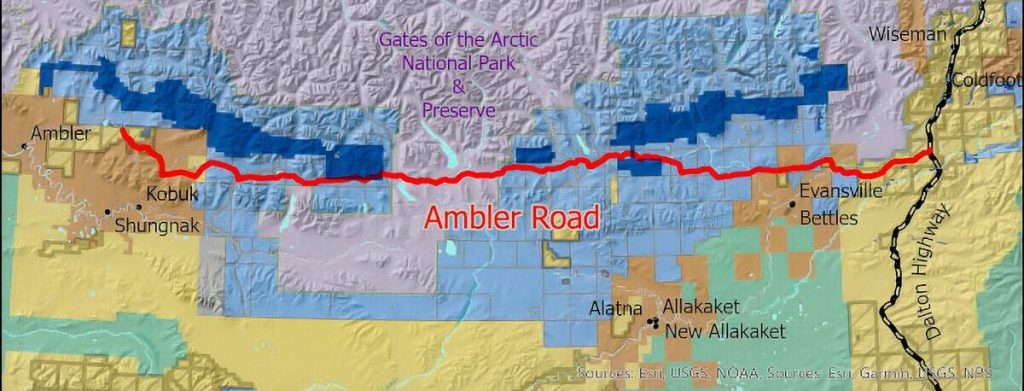
Among the most consequential moves was reinstating permits for the 211-mile Ambler Road, providing long-awaited access to the most valuable undeveloped mining districts in the U.S.
“This is one of the richest copper locations in the country,” said Interior Secretary Doug Burgum.
Access to the Ambler District was mandated in the 1980 Alaska National Interest Lands Conservation Act (ANILCA), yet 2020 authorizations to build the road were revoked by the Biden administration.
“The Biden administration decision was contrary to the clear directives set out in ANILCA,” said Rick Van Nieuwenhuyse, chairman of Valhalla Metals, a company exploring the high-grade Sun copper-zinc-lead-gold-silver project along the Ambler Road route.
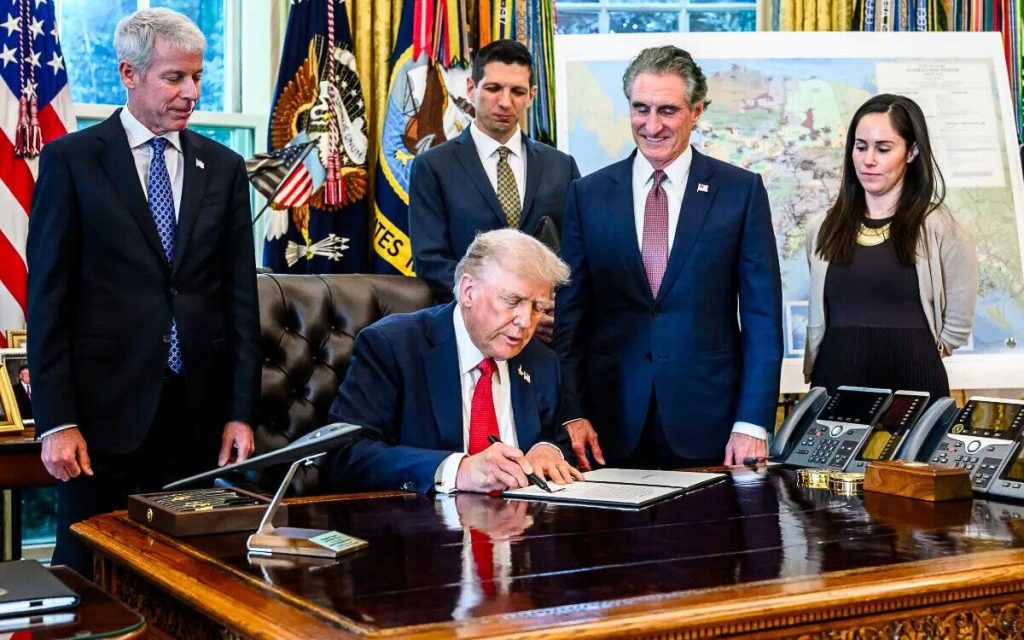
On Oct. 6, Trump signed an executive order directing the federal agencies to reinstate the authorizations to build a road to three high-grade deposits and dozens of earlier-staged prospects discovered across the mineral-rich region.
“Now we’re starting again – and this time we have plenty of time to get it done, and it’s going to be done properly,” the president said upon signing the Ambler Road order.
The road will provide access to high-grade deposits enriched with more than 9 billion pounds of copper and 3 billion lb of zinc, along with significant quantities of silver, gold, lead, cobalt, gallium, and germanium.
“It’s an economic gold mine, so to speak,” said Trump.
Companies that have idled exploration and development in the district due to a lack of access are looking to resume programs with the reissuance of Ambler Road permits.
“Thank you, President Trump! We can now restart our exploration efforts to expand the known resources at the Sun deposit,” said Van Nieuwenhuyse.
In response to a question on the timing of the road, Trump says the government anticipates that construction will begin next spring.
“So, we get a road done, and with that, we unleash billions and billions of dollars of wealth,” he said.
Pentagon invests in the North
On the same day Trump reinstated the Ambler Road permits, the Pentagon invested $35.6 million to acquire a 10% ownership stake in Trilogy Metals Inc., which is advancing Ambler District mine development in partnership with South32 Ltd.
Ambler Metals, the joint venture owned equally by Trilogy and South32, holds a 471,800-acre package of state mining claims and Alaska Native lands owned by NANA Corp. in the district.
Arctic and Bornite, the two most advanced deposits, collectively host 9 billion lb of copper, 3.5 billion lb of zinc, 88 million lb of cobalt, 57 million oz of silver, and 737,000 oz of gold in all resource categories.
Arctic, the first Upper Kobuk Mineral Project (UKMP) deposit to be developed, is slated to produce 1.9 billion lb of copper, 2.3 billion lb of zinc, 388 million lb of lead, 386,000 ounces of gold, and 40.6 million oz of silver over an initial 12-year mine life, according to a feasibility study published in 2022.
Bornite, which is about 16 miles south of Arctic, is expected to produce an additional 1.9 billion lb of copper over 17 years after the completion of mining at Arctic, according to a preliminary economic assessment completed earlier this year.
Bornite may also be a significant source of germanium, a critical metal essential for smaller, more powerful semiconductors used in quantum computing, robotics, AI, and solar-powered satellites.
With the Ambler Road reauthorized, the JV is preparing to move forward with permitting and development.
“The Ambler Mining District is ready to play a vital role in supporting America’s strategic and technological leadership,” said Trilogy Metals President and CEO Tony Giardini.
As part of the buy-in deal, the U.S. government is working with Trilogy, South32, and others to establish the basis on which the Ambler Road can be permitted, financed, and constructed.
“This is a really big deal for the American mining industry, and I think it shows the president is serious about getting this industry going and making sure we have the critical minerals we need for our defense industrial base and for our broader economy,” said Energy Secretary Chris Wright.
The Pentagon’s investment in the Ambler District is part of a broader initiative that includes strong federal support for Graphite One Inc. and Nova Minerals Ltd., both developing domestic sources of minerals critical to defense and clean energy supply chains in the U.S.
Federal support for Graphite One
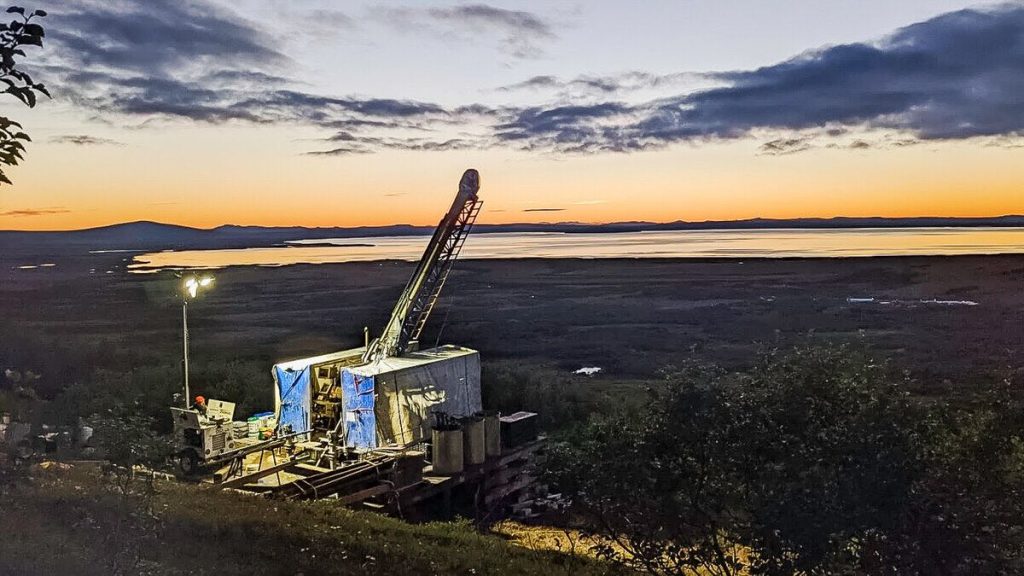
In 2023, the Pentagon began what is turning out to be an all-of-government federal support for Graphite One when it provided the company with a $37.5 million Defense Production Act (DPA) Title III grant to accelerate the completion of feasibility studies for developing a mine at the Graphite Creek project in western Alaska – home to the largest and one of the most advanced graphite deposits in the U.S.
The work supported by this funding culminated in a feasibility study that details an economically robust mine at Graphite Creek capable of producing 175,000 metric tons of graphite annually for 20 years, as well as a processing plant in Ohio that will refine the concentrates shipped from the Alaska mine to anode material for lithium-ion batteries and other commercial graphite products.
With the Pentagon grant accelerating Graphite Creek to the feasibility stage, other federal agencies have now stepped up to carry that momentum through permitting and mine development.
Earlier this year, Graphite Creek was approved for streamlined permitting under the federal FAST-41 program.
“Graphite Creek is critical to achieving President Trump’s energy dominance agenda and is exactly the kind of project that can benefit from the transparency and accountability that comes with FAST-41,” said Emily Domenech, executive director of the federal Permitting Council, which administers the program.
After coordinating with the federal agencies involved in permitting Graphite Creek, the Permitting Council outlined a 13.5-month permitting timeline, putting the project on track for a federal permitting decision in September of next year.
With the permits for the Graphite Creek expected in about a year, the Export‑Import Bank of the United States (EXIM) has invited Graphite One to apply for a $570 million loan to build a mine at the western Alaska project.
If approved, the loan would cover a little over half of the estimated $1.1 billion needed to build a mine at Graphite Creek.
Graphite One President and CEO Anthony Huston says the federal support for Graphite Creek, “underscores the U.S. government’s keen understanding of the urgency to end the United States’ 100% dependence of foreign sources of graphite supply.”
Pentagon backs Alaska antimony
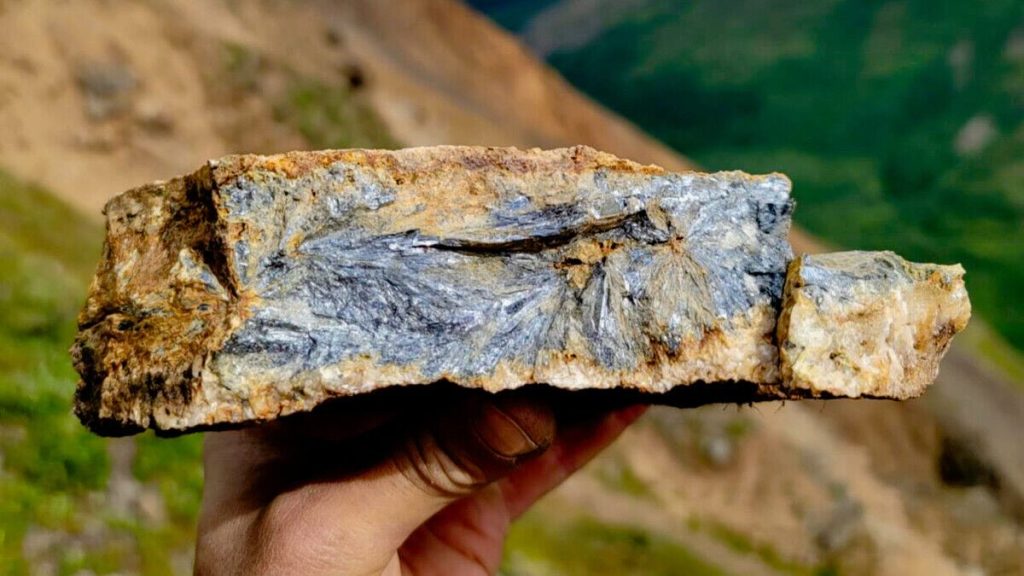
In addition to its support for Trilogy and Graphite One, the Pentagon has awarded Alaska Range Resources (ARR), a subsidiary of Nova Minerals, $43.4 million to produce military-grade antimony trisulfide in Alaska.
“Antimony metal and antimony trisulfide have critical applications in munitions, especially low- and medium-caliber, where it is used in primer production and case hardening,” said Assistant Secretary of War for Industrial Base Policy Mike Cadenazzi.
While antimony has long been a strategic metalloid to the War Department, China’s 2024 ban on exporting antimony to the U.S., coupled with Russia’s war with Ukraine, has elevated its criticality.
This is because China, Russia, and Tajikistan control more than 90% of the global supply, leaving American manufacturers with limited alternatives for the more than 50 million pounds of antimony they require each year for a wide range of defense, industrial, and high-tech applications.
“China and Russia control the market for antimony and all its derivatives, putting the United States at risk of interruptions that could jeopardize national security,” said Jeffrey Frankston, acting Deputy Assistant Secretary of War for Industrial Base Resilience. “Establishing domestic sources for critical metals and minerals like antimony and its compounds enhances the long-term resilience of our supply chains.”
Pentagon officials are increasingly looking to Alaska as America’s antimony supply, including the DPA Title III award to mine the antimony mineral stibnite from Nova’s Estelle project about 100 miles west of Anchorage and refine that material into military-grade antimony trisulfide in Alaska.
Upon receiving the award, ARR signed a land use agreement with the Matanuska-Susitna Borough for the site that is less than two miles away from a deepwater port to build its Alaska antimony refinery.
“The planned refinery development in the Port MacKenzie industrial district is a cornerstone of a vertically integrated domestic antimony supply chain,” said Nova Minerals CEO Chris Gerteisen. “The Port Mac site has immediate access to key infrastructure and utilities.”
With the refinery site secure and progress being made toward establishing a small but supply chain-significant mine at Estelle, Nova has its sights set on delivering refined antimony products into the U.S. supply chain by 2027.
“Backed by strong government support, strategic partnerships, a highly capable leadership team, and land secured to commence construction of a downstream refinery, Nova holds a commanding first-mover advantage as the sole emerging fully integrated antimony producer and supplier to the U.S. military and domestic markets,” the Nova Minerals CEO added.

Metals policies, prices converge
The surge in federal support for Alaska mining projects coincides with a historic bull market in metals, adding fuel to the building momentum for mining across the Last Frontier.
Gold, silver, and copper – three pillars of the current value and future growth for Alaska mining – have all reached record levels in 2025.
Gold has soared roughly 55% since the beginning of the year, breaching $4,100 per ounce amid safehaven buying and inflation pressures. Silver has rocketed 62% this year, to around $50 per ounce, fueled by industrial demand and investor speculation.
Copper, the essential metal of electrification, hit an all-time high of $5.82 per pound before stabilizing near $5 – a price that supports both mine expansion and new development. Antimony, propelled by supply shocks and defense demand, has surged more than 500% over two years to about $27 per pound.
These are likely not short-term spikes but signs of a structural realignment of global metals markets – one where Alaska’s resources are increasingly central to both U.S. economic policy and industrial strategy.
Projects like Donlin Gold, Graphite Creek, Ambler Metals, and Estelle are building on the foundation of Alaska’s current $5 billion mining industry, opening the door for a larger pipeline of production that could redefine Alaska’s role in the nation’s mineral independence.
With the Pentagon, the White House, and private investors aligned in the pursuit of mineral security, Alaska’s mining industry appears to have achieved the critical mass it has been building for decades – an inflection point where policy, price, and potential have finally converged.
Keeping the momentum going, however, will be up to Alaska’s mining sector and the people behind it.
“It is now up to us Alaskans to execute a strategy of energy and mineral self-sufficiency while maintaining our high standards to protect our people and our environment – something that we have a demonstrated track record of achieving,” Van Nieuwenhuyse told North of 60 Mining News.