

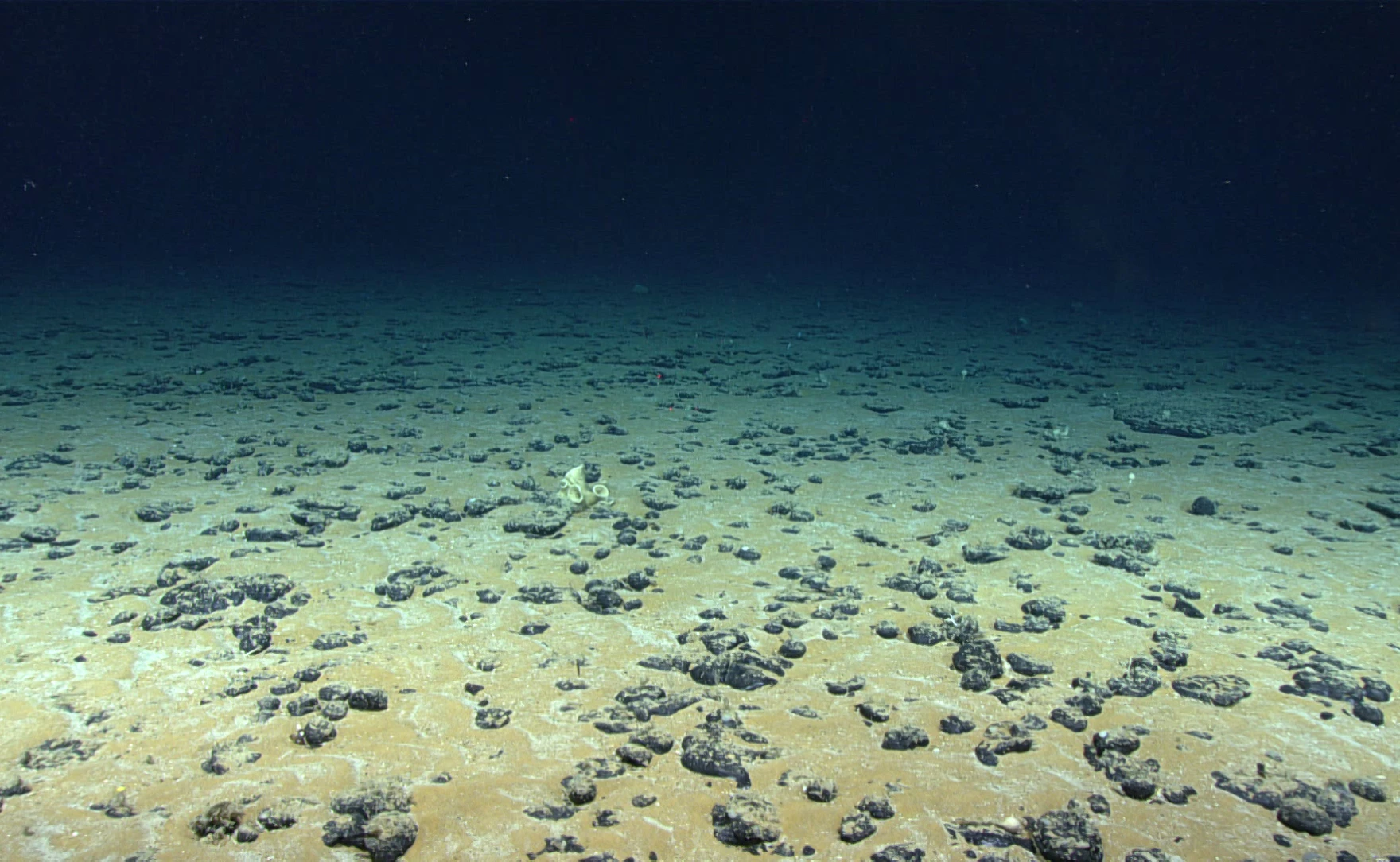
Environmental groups worry that pulling up swaths of the seafloor could harm marine life and contribute to erosion. The Trump administration announced this week that it is considering what could be the nation’s first federal lease for offshore mineral mining in the Atlantic Ocean.
The federal government is requesting information from companies interested in mining within a 2,700-square-mile area, larger than Delaware. The proposed site flanks Virginia’s Eastern Shore, stretching from 3 to 63 miles off the coast.
The move was prompted by an unsolicited request from a Florida company late last year.
Trump officials say the industry, which mines the seabed to extract valuable minerals, could strengthen the economy and reduce U.S. reliance on foreign suppliers.
But environmental groups are concerned it would threaten marine ecosystems and coastal communities.
“It’s essentially a brand new industry globally, so it’s unproven,” said Becca Loomis, staff attorney with the nonprofit Natural Resources Defense Council. “We don’t entirely understand what the risks are, so that makes it even more concerning.”
Public and private entities have long been interested in taking advantage of minerals buried deep underwater. Ideas for deep-sea mining stretch back to the mid-20th century.
But the industry only more recently gained momentum, prompting discussions over how to govern Earth’s vast stretches of seafloor.
Earlier this year, the United Nations convened dozens of countries to help develop such rules under the International Seabed Authority. The U.S. opted out.
The Trump administration is fast-tracking the industry. (At the same time, the administration has tried to halt the offshore wind industry, citing alleged threats to national security and endangered whales.)
“America cannot afford to sit on the sidelines while the world races to secure critical mineral supply chains,” Matt Giacona, acting director of the Bureau of Ocean Energy Management, said in February. “We are modernizing outdated regulations to meet the urgency of this moment. Offshore critical minerals are foundational to our defense systems, advanced manufacturing, and energy technologies.”
There are two major forms of mining the sea for minerals, Loomis said.
The first, which typically draws more public attention, involves going into very deep waters, often more than 10,000 feet under the ocean surface, to extract hard nodules from the seafloor.
The Virginia proposal would focus on a different form, more akin to dredging, in an area about 30 to 400 feet deep.
“Heavy mineral sand mining involves dredging huge amounts of sand from the seafloor, and then processing that sand to extract the minerals,” Loomis said. “Essentially, you’re pulling up huge, huge amounts of seafloor sediment.”
Heavy mineral sand deposits are formed over thousands or millions of years, as hard rock is eroded by wind and waves.
Federal surveys of sediment on the Southeast coast have found minerals such as titanium, zirconium, phosphates and ilmenite, according to the U.S. Geological Survey. These can be used in commercial products, including fertilizer, paint, toothpaste, medical devices and aircraft parts.
Officials also say there are rare earth elements in the region, which are needed for technology such as cellphones and electric vehicle chargers.
Environmental groups worry that pulling up swaths of the seafloor would cause serious damage.
Virginia Beach nonprofit Lynnhaven River Now said in a statement that the process “is not the same as routine dredging for navigation or beach nourishment.”
“Science is clear that disturbing the seabed can have serious ecological consequences,” the nonprofit wrote. “These risks are especially concerning in a region that supports commercial and recreational fishing along with marine life that depend on clean water and healthy habitat.”
Attorney Megan Huynh, leader of the Southern Environmental Law Center’s Wetlands and Coast Program, said seabed mining “directly destroys all of the physical habitat on the seafloor.”
That has ripple effects for the ocean food web that relies on those species, including fish, birds and marine mammals. She also worries about the effects of stirring up large clouds of sediment and interfering with military activities or unexploded ordnance.
Virginia lawmakers in 2020 banned offshore oil and gas drilling in its coastal waters, Huynh noted. “They can do it again with this threat.”
Loomis said outside of the U.S., heavy mineral sand mining has been done in shallower waters, and officials found links to coastal erosion and water contamination.
“We don’t fully understand the risks of carrying out these operations in deeper waters, farther from shore, because it’s simply never been done,” she said. “We shouldn’t be sacrificing Virginia’s ocean and beaches to what amounts to an experimental and highly destructive new industry.”
The federal government’s consideration of a lease off the Eastern Shore started late last year after Florida-based Odyssey Marine Exploration submitted an unsolicited request.
A representative for the company did not respond to requests for comment for this story.
In a November news release, Odyssey stated that it carefully selected the Virginia area “to avoid sensitive habitats, marine protected areas, and active maritime zones, as well as to respect conservation areas.”
CEO Mark Gordon said the waters “hold tremendous strategic resources potential.”
“We’re seeing unprecedented momentum and funding from the U.S. government to advance projects that strengthen our critical mineral supply chains.”
Odyssey said it has been pre-qualified by the Bureau of Ocean Energy Management to hold mineral leases.
The federal government is accepting public comments about the proposed lease through July 23.
BOEM would then prepare an environmental assessment, set the terms of a lease sale and hold an auction. (Loomis said the agency has stated it does not plan to consider the impacts of mining in its initial environmental analysis, focusing instead on preliminary activities, such as small-scale exploration of the area.)
Meanwhile, the government is also considering leases for deep-sea mining in the Pacific, including Alaska and American Samoa.
By – https://www.whro.org/environment/2026-06-25/federal-government-weighs-seabed-mineral-mining-off-virginia-coast