

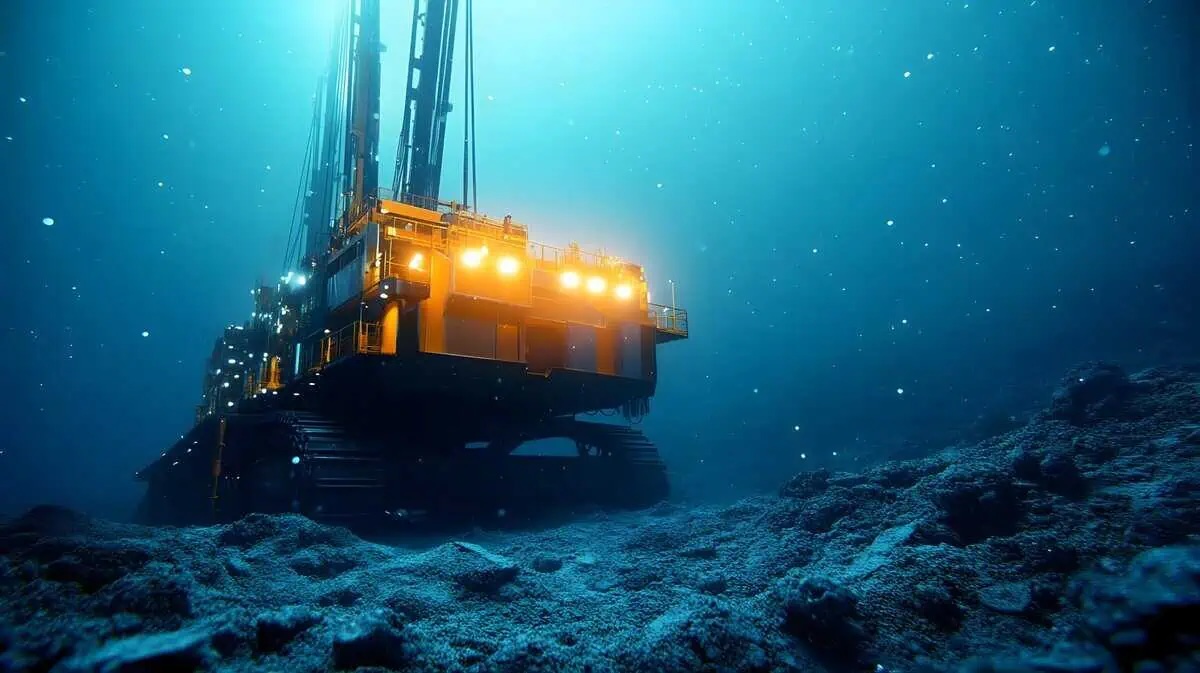
A newly ratified treaty to safeguard life at sea is expected to intensify opposition to deep-sea mining at a United Nations climate summit this week in New York, running alongside the leaders’ general assembly.
The High Seas Treaty, officially known as the Biodiversity Beyond National Jurisdiction (BBNJ) agreement, will enter into force in January next year. This was made possible after Morocco became the 60th nation to ratify it on Friday, crossing the threshold required for UN treaties.
Two decades in the making, the pact allows the creation of vast conservation zones in international waters, with the goal of protecting 30% of the ocean and halting biodiversity loss by 2030.
Although the treaty does not mention mining directly, it requires governments to co-operate with agencies such as the Jamaica-based International Seabed Authority (ISA), which has yet to approve commercial mining in international waters.
Environmentalists welcomed the breakthrough. “This is a conservation opportunity that happens once in a generation, if that,” Lisa Speer, director of the International Oceans Program at the Natural Resources Defense Council, said in a statement.
WWF International director general Kirsten Schuijt called it a “turning point for two-thirds of the world’s ocean that lie beyond national jurisdiction.”
Not a barrier
Despite environmentalist backlash, countries are pushing ahead with plans to extract minerals from the ocean floor. Hours after the treaty crossed the ratification threshold, India signed a 15-year contract with the ISA granting it exclusive rights to explore polymetallic sulphides in the Indian Ocean. New Delhi now holds the largest ISA-assigned exploration zone for these deposits and has conducted deep-sea trials in the region.
India is also seeking exploration licences for nickel, manganese and copper in the Pacific ocean.
France is the only G7 nation to have ratified the High Sees treaty so far, but more are expected to do so at this week’s UN climate summit in New York.
The US signed the treaty under the Biden administration, but President Trump has not ratified it and it is unclear whether he will. Washington has moved to allocate mining licences to private companies, bypassing the UN-backed regulator.
The Trump administration views seabed mining as a strategy to secure critical minerals and cut reliance on foreign supply chains. A White House official said the industry could generate 100,000 jobs and add hundreds of billions to the US economy over the next decade.
Companies are moving quickly. California-based Impossible Metals has applied for exploration rights both under US law and through the ISA, targeting the Clarion-Clipperton Zone (CCZ) in the Pacific, which holds nodules rich in copper, nickel, manganese and other metals vital for electric vehicles.
Canada’s The Metals Company (TMC) filed for a commercial permit in April and secured an $85.2 million investment from South Korea’s Korea Zinc in June.The deal positioned Korea Zinc as a non-Chinese alternative capable of refining TMC’s extracted materials into battery-grade metals.
Scramble beneath
Beyond the US, nations including the Cook Islands, Japan and Norway are advancing seabed mining within their territorial waters, citing a looming supply crunch. The International Energy Agency (IEA) projects demand for copper and rare earth elements will jump 40% by 2040, while lithium, cobalt and nickel could rise by as much as 90%.
Industry advocates argue that seabed extraction has a smaller environmental footprint than land-based mining. Opponents counter that the deep ocean remains poorly understood, and disrupting fragile ecosystems could unleash cascading effects on marine life.