

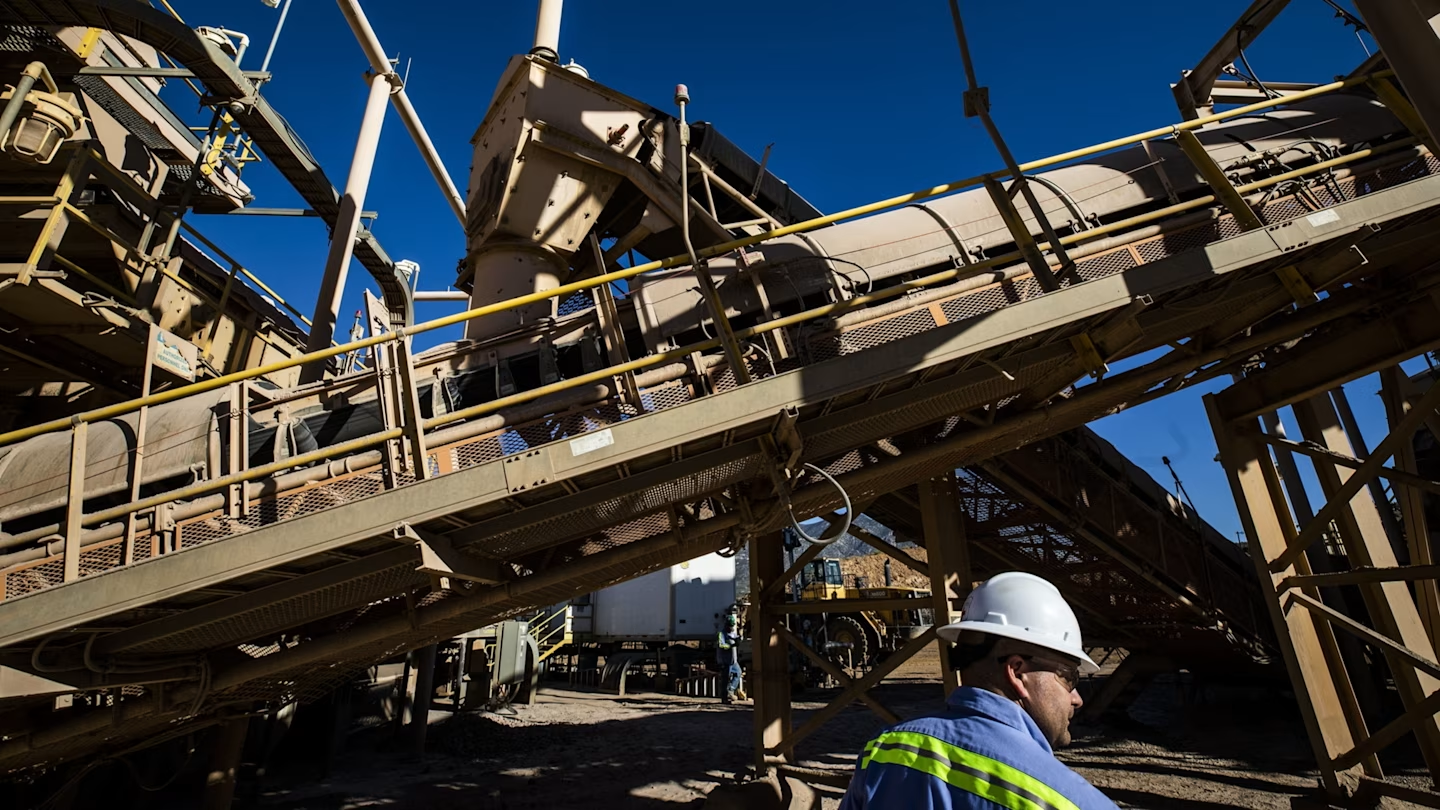
Miners backed by the US administration sell to Japan and South Korea despite push to develop domestic supply chain
US rare earths produced by Washington-backed companies are flowing to Japan and South Korea, as American demand has yet to materialise despite the Trump administration’s push to develop a national supply chain.
Rare earths products produced by MP Materials, Energy Fuels and Phoenix Tailings — which together have won billions of dollars in US government support — are being sold to companies in Asia, where the scale of magnet manufacturing remains larger than the nascent production in the US.
China’s lock on global supplies of rare earths and critical minerals has become a national security concern in the US and other western nations, since Beijing started restricting access to them. The metals are crucial to 21st-century technology and are used in the manufacturing of everything from weapons guidance systems to electric vehicle batteries.
Nick Myers, chief executive of Phoenix Tailings, said Japanese customers were “clamouring” for the rare earth metals it produces, given the dramatic cut in exports of the materials from China this year.
The start-up’s customers were “primarily in Korea and Japan”, he said. “Unless the [US defence] primes move quickly, I will sell out . . . other companies are paying top dollar faster.”
Phoenix, backed by a CIA-funded venture capital firm named IQT, is scaling up production but is not yet a significant producer and does not disclose sales figures.
A host of US companies have outlined plans to mine rare earths and produce magnets domestically, but the industry will take time to grow, experts said.
“Today, there are two countries where [neodymium iron boron] magnets are produced at scale. One is Japan, the originator, and one is China,” said Thomas Kruemmer, author of the Rare Earth Observer blog. The magnets are used in everything from cars to fighter jets and the semiconductor industry.
MP Materials is the leading US rare earths producer by a wide margin. The Nevada-based company’s sales of neodymium-praseodymium (NdPr) oxide and metal — its largest division by revenue — were “primarily generated” under MP’s agreement with Sumitomo Corporation of Americas, which distributes the material to Japanese customers, its latest quarterly earnings show.
Some material also goes to an unnamed US technology and industrial company, under a deal penned in the first quarter of 2026.
In the same quarter a year ago, the largest portion of MP’s sales by revenue — mined material, not NdPr — went to China’s Shenghe Resources. But MP has stopped selling to Shenghe as part of its deal with the US government.
MP ultimately plans to produce its own magnets at scale, which would require it to consume much of what it produces. Mined rare earths are turned into oxides, which are used to make metals and alloys that go into magnets.
The company has penned agreements with General Motors and Apple to supply them with its magnets. It said in May that it expected to begin shipping finished magnets to GM this year.
Meanwhile, Energy Fuels — which won $725mn in conditional government funding in June — plans to scale its production of rare earths and also has eyes on Asia.
“We will be sending oxides in the near-term to Korea,” said chief executive Ross Bhappu. Last year, a major South Korean manufacturer made a small amount of Energy Fuels’ NdPr into magnets.
Energy Fuels is in the process of acquiring Australian Strategic Materials, which owns a rare earths metal-making plant in South Korea. It also announced a $1.9bn deal to buy German magnet maker Vacuumschmelze (VAC) in June, which Bhappu said would result in more of Energy Fuels’ products going to VAC’s US operations.
China is the largest global producer of the widely used neodymium iron boron magnets. Outside China, Japan produces 10,000-15,000 tonnes per year, while South Korea produces 2,000-3,000 tonnes annually and the US produces 1,000 tonnes or less, according to John Ormerod, a rare earths consultant at JOC LLC.
There is also some production in Europe. Phoenix, which secured a conditional $500mn from Washington in June, said government funding would help it scale up metal and oxide production, which would “expand the pie for everyone”. MP’s recent earnings have been boosted by the money it receives under its US government deal — which guarantees a minimum sale price for some products and tops up any shortfall from the price paid by third parties.
By – https://www.ft.com/content/9a730895-05d9-4917-beb9-8b742bea1ab7?syn-25a6b1a6=1