

Amid rising geopolitical tensions, access to critical minerals has become a new frontline in great power competition. Rules governing their extraction and management remain fragmented, but one UN agency says it has developed tools that may help bridge regulatory gaps.
As the nature of war shifts from frontline combat to AI-assisted, remote-controlled drone attacks, countries are intensifying efforts to secure minerals needed to power high-speed processors, autonomous weapons systems and sensors. The green energy transition, somewhat boosted by a surge in fossil fuel prices caused by the war in Iran, has also put pressure on demand for minerals used to manufacture products such as electric vehicles, batteries and solar panels.
Minerals have become a soft point in Washington’s trade war with Beijing, which controls much of the mining and refining capacity for key substances. Meanwhile, Trump’s interest in Greenland was partly attributed to the Danish territory’s rich rare-earth mineral reserves. Washington has also secured access to Ukraine’s and Venezuela’s deposits, either through coercive bargaining or military force.
But the scramble for resources has raised concerns about potential environmental and social abuses amid weak or lacking national or international regulations.
“A lot of the challenges in developing critical minerals remain the same as for any mineral,” says Peter Wooders, co-founder and executive director of the Geneva Platform for Resilient Value Chains at the Geneva Graduate Institute. “When you are looking to develop more copper, cobalt, lithium or whatever mined product, there will be long lead times, a long time to get your money back, and high capital cost requirements.”
Countries hosting the minerals, he adds, will face other issues, having to strike a balance between financial benefits to the country through licences granted to developers or by gaining a share in the production, with environmental and social costs.
Zénon Mukongo Ngay, Democratic Republic of the Congo’s ambassador to the United Nations, recently warned the UN Security Council that the trade in minerals has often fuelled violence. At the same time, demand for critical minerals is expected to quadruple by 2040 from roughly $2.5 trillion in 2023, according to the UN.
Setting standards
Ahead of the G7 summit in Evian in June, where mineral access and energy security are set to figure prominently on the agenda, the United Nations Economic Commission for Europe (UNECE) is hosting from 27 April its Resource Management Week, highlighting tools and strategies that promote sustainable practices and financial viability in mining.
Dario Liguti, UNECE sustainable energy division director, told Geneva Solutions that in a sector that was “traditionally opaque”, the UN Framework Classification for Resources (UNFC) offers countries, as well as other stakeholders in mining projects, greater transparency and accountability.
UNFC is a tool used to classify and describe mineral resources using a three-pronged approach to data collection, examining geological reserves, their economic and financial feasibility, and the environmental and social impacts of projects. The methodology allows countries and companies to compare mineral projects so that policymakers and investors can have a “holistic view” of each project to understand its characteristics and what needs to be done to develop it, Liguti explained.
”UNFC is the only one (mining classification methodology -Ed.) that takes into consideration not only economic and financial perspectives … but also what its environmental and social impacts are and how we can mitigate those aspects,” the UN official said.
Tools uptake
The homogenised approach, which aligns with the UN’s sustainable development goals and the Paris climate agreement, has been most notably adopted by the European Union in the Critical Raw Materials Act, setting the region’s strategy to make it more self-sufficient in its minerals supply chain.
Earlier this year, in its first call for mineral supply projects, the EU announced it had picked 60 initiatives, including 47 within the region and 13 elsewhere, all classified according to UNFC. The European Commission said that obtaining strategic project status would help them by mobilising financial resources. Ukraine has also adopted UNFC and its standards, and the African Union “is using a UNFC derivation for the African context,” Liguti explains.
A recent trade agreement concluded between the EU and Canberra included an important minerals component, reflecting Australia’s vast reserves – among them the world’s second-largest lithium deposits, as well as aluminium and manganese. It requires the use of UNFC through Europe’s Critical Raw Minerals Act.
The UNECE also developed voluntary guidelines, the UN Resource Management System (RMS), based on UNFC, to promote good governance in the responsible production and management of mineral resources.
“You have a classification methodology (in UNFC), and then (with RMS) you have a project management methodology to support the sustainable development of these resources,” Liguti explains, noting that companies listed on stock exchanges have also been adopting those methodologies and standards. Both tools may also allow for stakeholders, including local communities, to participate in the development of mining projects.
Mineral curse or opportunity
While UNFC may be gaining ground, experts say that mineral-rich countries remain vulnerable as demand for critical minerals grows.
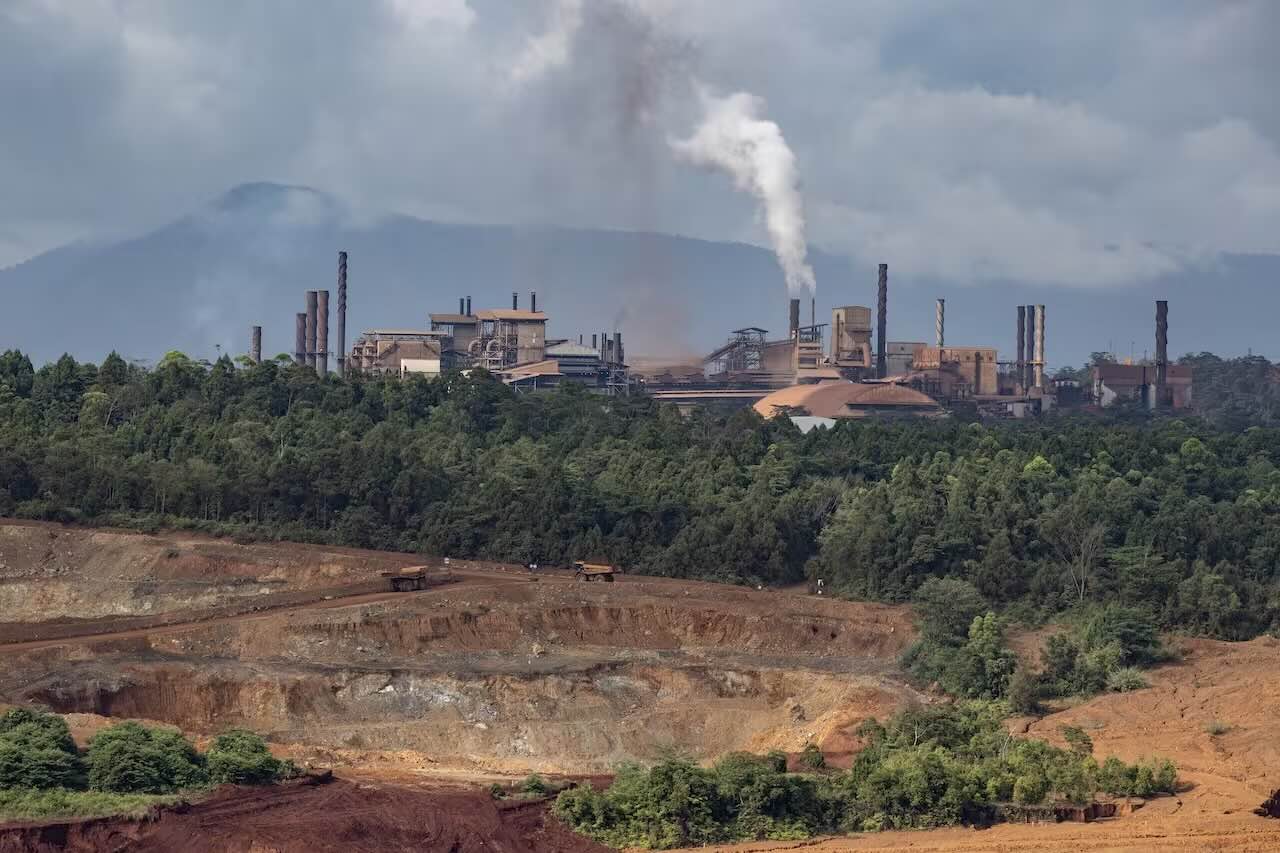
“If you are a country which has a critical mineral, you need to be really careful when you’re thinking through what the pros and cons of exploiting that resource are,” warns Wooders. He highlights the case of Indonesia, which, after banning nickel ore exports in the hope of diversifying its economy, has faced serious environmental impacts as it has developed its processing industry. The country is now the world’s largest producer of the metal, used for wind turbines, solar panels and electric vehicles.
“The laws and regulations in this space were never particularly good or strong, and there was always a huge implementation gap,” says Richard Pearshouse, environment director at Human Rights Watch. “What’s happening now is that this relatively weak system is under unprecedented strain by this scramble for critical minerals.” He adds that environmental, social and governance commitments are being watered down, while government regulations, including the EU corporate sustainability due diligence directive, have also been weakened.
Pearhouse stresses that binding rules are needed to ensure that affected communities are able to participate in project development to avoid social and environmental harms.
Wooders, meanwhile, says that with rising interest, countries that possess critical minerals sit in a better bargaining position. “They should be able to argue for better deals than what they may get for non-critical minerals, to include all sorts of other benefits.”
By –