

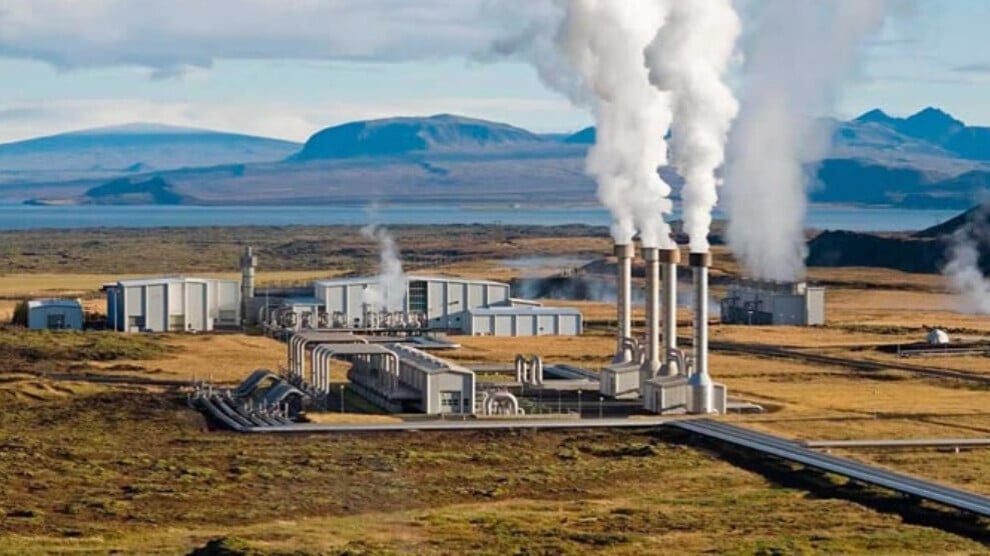
State tenders are handing Kurdistan’s resources to companies, leaving vast areas under threat from geothermal, solar and mining projects.
Ecological devastation is unfolding across every part of Kurdistan. Forests, valleys, rivers and mountains are under intense assault. The state and its affiliated companies are acting in tandem to destroy Kurdish geography, deplete its resources and render it uninhabitable. Agricultural lands are being wiped out, people are being stripped of their livelihoods, and communities are being uprooted from their land.
Alongside the wars waged against Kurds since the 1990s, profit-driven and capital-oriented policies have been implemented across Kurdistan. Villages have been evacuated, forests have been burned, and highlands have been declared “military forbidden zones,” while outposts and fortress-like military stations have been erected on strategic hilltops. In recent years, oil fields, dam projects, mining and quarry sites, as well as geothermal, hydroelectric and solar energy projects, have been used to turn Kurdistan into a comprehensive zone of exploitation. While the state pursues profit-oriented policies through ecological destruction in cities across Turkey, in Kurdistan it is carrying out this devastation as a form of special warfare against both the Kurdish Freedom Movement and the land itself.
Since 2023 in particular, destruction projects have been implemented in many cities, including Çewlîg (Bingöl), Mûş (Muş), Diyarbakır (Amed), Mêrdîn (Mardin), Şirnex (Şırnak), Dersim, Wan (Van) and Agirî (Ağrı), with the aim of fragmenting every area and erasing cultural and historical memory. Since the beginning of 2026, there have been near-daily protests and campaigns by the public against these occupation projects. A closer look at the ecological destruction of projects currently being implemented shows the scale of the threat.
Alevi villages face displacement in Gimgim and Kanîreş
The United States-based IGNIS H2 Joint Stock Company, which opened a branch in Turkey in 2023 and aims to reach 1 gigawatt of producible geothermal reserves by 2030, is planning to drill at least 25 wells as part of its “Geothermal Resource Exploration” activities in the districts of Gimgim (Varto) in Mûş, and Kanîreş (Karlıova) in Çewlîg. The company, which initiated the Environmental Impact Assessment (EIA) process in October 2025, received a positive decision on April 1. The local population is now preparing to file a lawsuit against the “EIA positive” report.
The project is planned along a fault line that begins in Gimgim district of Mûş, with its focal point in the village of Qerxabazar in Kanîreş, known as the “East Anatolian Fault Line,” and extends northwest to merge with the “North Anatolian Fault Line,” increasing the risk of earthquakes.
The company’s activities in Gimgim, which spans 1,418 square kilometers, have sparked strong reactions among villagers. The Provincial Commission of the Muş Governor’s Office approved the establishment of a geothermal power plant on 5,560.13 square meters of pasture land within a total project area of 453,494.83 square meters covering Gimgim district. The project, set to begin within the borders of Xwarik village, is planned to cover an area encompassing 16 Kurdish Alevi villages. The company is preparing to carry out its first drilling in May within the same fault line in Xwarik village. In addition, 8,139 square meters of land will be used specifically in the village of Qerxabazar, affiliated with Kanîreş. Alongside pasture lands, the faith centers of Alevi villages also face destruction. Within the scope of the same project, villages affiliated with Kanîreş, particularly Qerxabazar (Kargapazar), as well as Aynik, Licik, Şorik, Çêrmûk and Siqavêlan, are also under threat.
Mining invasion in Dersim
Mining projects in Dersim have intensified, particularly in the districts of Pilemorî (Pülümür) and Pêrtax (Pertek), as well as in the Hel Mountain region. A mining site is planned by Dimin Mining Industry and Trade Incorporated Company in the villages of Aşgirek, Gurik, Daxbek and Panceras Tojingê, all affiliated with Pilemorî. Of the 65.97-hectare project area, 36 hectares are designated to be used directly as an extraction site. Local residents have collected nearly 2,000 signatures in opposition to the project.
Pêrtax district is also under threat from sand, pumice and solar power plant projects. In the 2,200-decare area located in Sekasur hamlet, affiliated with the district, the Tunceli Governor’s Office had previously issued a “no EIA required” decision for the sand and pumice mining project planned by Arven Doğu Construction Industry and Trade Limited Company. Following objections filed last year by the Hozat Pertek Sekasur Nature and Environmental Protection Platform, an expert delegation appointed by the Erzincan Administrative Court conducted an on-site inspection. On January 17, the court ruled to annul the “EIA not required” decision.
After six months of tent protests by villagers, the 2,200-decare land was saved from mining. However, the villages of Kanîsar, Şavşak, Paşavenk and Sevkar, where livelihoods depend solely on agriculture and animal husbandry, remain under threat. A chromium mining project is also planned in the Hel Mountain area, which is of vital importance for residents who rely on beekeeping and livestock farming.
Hêzil River to be submerged by dam project
Forests in the Besta, Gabar and Kato mountains of Şirnex have for years been subjected to widespread destruction carried out by the state and village guards. Since 2017, tree cutting has continued under the pretext of “security,” while agriculture and animal husbandry have been undermined and water sources depleted.
The Şenoba Dam, planned by the State Hydraulic Works (DSI) Tenth Regional Directorate in the natural site of Heftborî, located in the town of Sêgirk in Qileban (Uludere) district of Şirnex, poses a major risk. An EIA “positive” decision has been issued for the dam project planned on the Hêzil River. In the first three months of 2026 alone, 21 EIA applications were submitted in Şirnex. While 17 of these applications received a “no EIA required” decision, the EIA process was initiated for three others. Between 2014 and 2026, a total of 724 EIA applications were filed for mining exploration in Şirnex, 408 of which were submitted in the past three years alone.
Cengiz Holding expands into Mêrdîn’s resources
Cengiz Holding, which has acquired hundreds of sites through mining tenders opened by the General Directorate of Mining and Petroleum Affairs (MAPEG) between the beginning of 2023 and the end of 2025, has turned its focus to the mineral resources of Kurdistan following its profit-driven activities in Turkey’s Black Sea region.
The industrial process in Şemrex (Mazıdağ) district of Mêrdîn, which began in the 1950s with the identification of phosphate deposits by the General Directorate of Mineral Research and Exploration (MTA), was transferred in 2011 through privatization to Eti Copper Incorporated Company, a subsidiary of Cengiz Holding. Preparations have now begun for the construction of three new facilities within a designated Special Industrial Zone located in the rural neighborhood of Têznê. These facilities, which will include high-purity cobalt salts, zinc sulfate monohydrate and production units, are estimated to cost 450 million Turkish lira.
According to a report prepared by the Mêrdîn Ecology Association, groundwater levels in the region have declined by 60 percent over the past five years. The water level, which stood at 69 meters in 2014, dropped to 27.57 meters by 2019. The report emphasizes that the primary cause of this decline is industrial water consumption and warns that an additional 356 cubic meters of water per hour will be required once the new facilities become operational. In addition, in the rural neighborhood of Kerşaf, affiliated with Midyad (Midyat) district, projects are planned to establish a stone quarry and a livestock slaughtering area on agricultural lands.
Profiting from the earthquake in Semsûr
The wounds of the devastating 2023 earthquakes in Semsûr (Adıyaman) remain unhealed, and much of the population is still struggling to find shelter. Despite this, the state is reshaping the city through mining activities. Semsûr, where construction machinery dominates the landscape, dust fills the air and explosions are frequently heard, is now under the grip of mining companies. A mining site operated by Eti Copper Incorporated Company, a subsidiary of Cengiz Holding, stands out. In addition, there are seven stone quarries along a 27-kilometer stretch of the road between the city center of Semsûr and the district of Çêlik (Çelikhan).
Meanwhile, stone quarries located just a few kilometers from historical sites such as the ancient city of Perre, the Roman Fountain, the Pirin archaeological site and the Rock Tombs pose a serious threat. Ecological destruction carried out by companies including Derviş Çalı Stone Crushing and Screening Facility, Giba Stone and Sand Quarry, Akdaş Mining and Eti Copper Mining is causing significant harm to the local population. It is reported that the Eti Copper facility produces 159,000 tons of copper concentrate annually.
Serhed cities also targeted
Sources of life are also being destroyed in the Serhed region, particularly in Wan and Agirî. Mining exploration activities carried out over the past four years in the Nordiz region of Payîzava (Gürpınar) district in Wan have caused irreversible environmental damage. In Derbedanis hamlet, affiliated with Şamanis village, mining operations conducted by Vefa Group are contaminating the village’s main water sources and leading to the death of aquatic life.
In Meleqer village of Gîyadîn (Diyadin) district in Agirî, work has begun following the issuance of separate EIA reports for three mining sites planned by Koza Holding across a 470-hectare area in the tributaries of the Murat River. As a result, 44 million cubic meters of water and 1 million kilograms of soil are expected to be polluted over four years. In Bazirgan village, solar power plants are planned to be built on pasture lands that constitute the main livelihood of the local population. Residents are reportedly being threatened in relation to the project.
Tree destruction in Gabar, Besta and Cûdî
One of the most visible and striking examples of ecological destruction in Kurdistan is the systematic deforestation carried out each year in the Gabar and Cûdî mountains and the Besta region of Şirnex. Since 2018, tree cutting has been conducted in a systematic manner. Initially justified on “security” grounds, it was later framed as “forest regeneration.” In the past two years, however, trees have been cut through tender processes. The destruction began on October 8, 2018, in the Cûdî and Besta regions under the pretext of “security,” and later expanded to Gabar, Namaz Mountain, Güneyçam and Beytüşşebap. Since then, forest loss in Şirnex has reportedly reached significant levels, with tons of trees being cut each day.
Forests dominated by oak and acorn species, once rich in dense vegetation, have suffered severe damage in terms of biodiversity. Endemic plant species, as well as bird, mammal and insect populations, have rapidly declined. The destruction of forests has also paved the way for an increase in mining sites and military outposts. Lands are being opened to tenders for pro-government companies. The Turkish state is using deforestation as a means to restrict the mobility of guerrilla forces, sever the people’s connection with nature and drive the region toward total destruction.
Solution lies in an ecological paradigm
As the state, corporations and the profit-driven system carry out multidimensional ecological destruction across Kurdistan, the Kurdish response to these policies is rooted in environmental awareness and the preservation of moral values. In recent years in particular, the population has been resisting destruction and plunder by filing lawsuits against companies, organizing protests and events, and striving to draw attention to Kurdistan.
Kurdish leader Abdullah Öcalan, in his work Crisis of Civilization in the Middle East and the Democratic Civilization Solution, emphasizes the ecological paradigm and states: “A being that is not ecological cannot escape annihilation. Undoubtedly, every living being has its own ecological intelligence. It is also possible to define industrialism as an era of rebellion against ecological life. Rebelling against ecology means heading toward apocalypse.”
Öcalan also addresses how the current crisis can be overcome through a democratic, ecological and women’s liberation paradigm. He said: “Unless the alienation in our perception of nature is overcome through a profound transformation of mindset and conscience, distorted social development cannot be halted. This process will unfold in an intertwined manner. As power structures are transcended within society, ecological consciousness will develop; and as ecological consciousness develops, power will be pushed out of society. In this way, society will reconnect with its nature in a stronger form. The liberation of the relationship between nature and society will be the greatest step toward a free society and a free nature.”
By – https://english.anf-news.com/ecology/kurdistan-under-threat-from-energy-and-mining-projects-85088