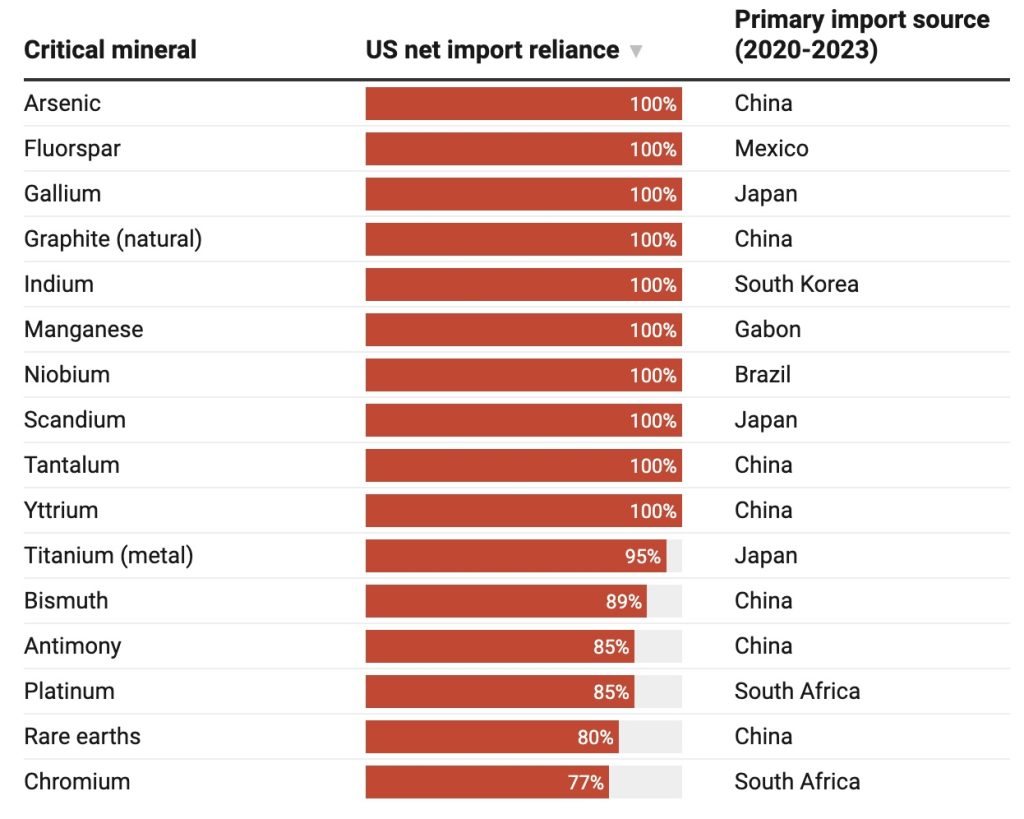
The United States is spending billions of dollars to secure access to critical minerals – minerals and metals that are essential to modern technology, from electric vehicles to smartphones and military systems.
But amid the push to dig more, one question gets far too little attention: Who will actually process what comes out of the ground?
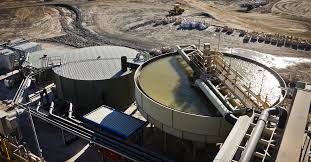
Between mining and the finished product lies a complex chain of separation, refining and advanced manufacturing. Since the 1990s, however, the United States has lost much of its critical mineral processing capacity.
Rebuilding domestic mineral supply chains will depend not only on resource availability and funding, but also on whether the U.S. can rebuild the technical expertise and industrial systems required to process those materials on a large scale.
How America lost its lead
The United States was a global leader in rare earth minerals from 1965 through the mid-1980s. It produced about 15,000 metric tons a year, about three times the amount produced by the rest of the world.
The Mountain Pass mine in California supplied the majority of the world’s rare earth elements used in electronics and the defense industry. American metallurgists, chemical engineers and processing facilities had significant expertise in its production and processing.
However, environmental damage, including wastewater pipeline leaks that released radioactive wastewater into the Mojave Desert during the 1980s and 1990s, and tightening regulations increased operating costs in the United States. During that period, much of the world’s manufacturing base for rare earth elements shifted to China, where labor costs were lower and environmental regulations were less stringent.
As production grew abroad, U.S. production of rare earth elements fell sharply – to near zero by the early 2000s, according to the U.S. Geological Survey.
In recent years, as much as 90% of the rare earth minerals extracted in the United States and allied countries have been shipped to China for processing. In 2024, the U.S. relied on imports for about 80% of its rare earth compounds and metals.
Why bringing processing back is not simple
The U.S. government is now pushing to increase domestic critical minerals production, citing national security. But building a processing facility is not like opening a warehouse.
These facilities require years of permitting, highly specialized equipment and a workforce trained in metallurgy, chemical engineering and industrial systems operation. The time from investment decision to production can stretch across a decade.
The U.S. currently has two domestic rare earth mining locations. One is in southeast Georgia, which extracts rare earth elements as a byproduct of heavy mineral sand mining. The other is Mountain Pass, which produces bastnaesite, a rare earth carbonate mineral. The mines produced about 51,000 metric tons of rare earth mineral concentrates in 2025, while the U.S. imported about 21,000 metric tons of rare earth compounds, most of them from China, according to 2025 U.S. Geological Survey data.
The U.S. has also lost expertise. Mining and mineral engineering education programs now produce only a few hundred graduates per year, well below the levels of past decades. The number of accredited programs has declined since the 1980s. Many faculty members are nearing retirement.
Industry projections estimate that the mining workforce will need to grow significantly in the coming years to meet rising demand. Specialized skills in areas such as rare earth separation, metallurgical testing and environmental systems design require years of training and practical experience. And while mining can produce high-paying jobs, the industry also has a reputation for environmental damage and hazardous conditions.
Environmental compliance is part of the skill set
Processing critical minerals is a dirty industry. That fact has made it more difficult for processing and refining companies to operate in the U.S.
For example, separating rare earth elements typically involves chemical processing with acids and solvents. When waste streams are poorly managed, these processes can produce toxic wastewater and air pollution and contribute to soil erosion. In parts of China where rare earth production expanded rapidly in the 1990s and 2000s, contamination from mining and processing has polluted rivers and damaged nearby farmland, and the wastewater can seep into soil and groundwater.
In the U.S., modern facilities must meet strict federal and state standards for air quality, water discharge and waste management that raise the cost of processing. These regulations were developed in response to environmental disasters, like the Cuyahoga River fire of 1969, when industrial oil and waste on the river burned, and hazardous waste crises like the Love Canal disaster that led to landmark environmental laws.
Operating a refinery or separation facility in compliance with regulatory standards today requires expertise in pollution control, waste treatment and sustainable process design. That requires a workforce skilled in materials science and engineering and with knowledge of environmental systems. Without environmental expertise, operational risks, regulatory challenges and project delays can increase, affecting long-term viability.
How to build a US supply chain
Rebuilding U.S. supply chains will require more than expanding extraction.
Canada’s critical minerals strategy offers an example. It connects mining projects to battery and electric vehicle manufacturing by funding processing facilities, developing regional supply chain hubs and investing in workforce training programs tied to those industries.
Australia has combined critical minerals policies with incentives and public financing to encourage domestic mineral processing, while also expanding university and vocational training in mining, metallurgy and mineral processing.
The United States has many of the key ingredients needed to rebuild its processing capacity, including research universities and workers with transferable industrial skills. Land-grant and technical universities could expand programs that integrate mining, materials science, environmental restoration and recycling. In regions such as Appalachia, where coal’s decline has left workers with skills but few job opportunities, retraining programs for new mineral recovery jobs could help people transition to a new industry.
A few federal programs support parts of this transition, including research hubs that develop new extraction and processing technologies, apprenticeship initiatives and university-industry partnerships. However, these efforts are spread across multiple agencies, with limited coordination to align priorities and investment.
The real bottleneck
America’s critical minerals strategy is often discussed in terms of geology and geopolitics – where resources are located and who has access to them.
But supply chains depend on people and systems. That’s America’s real bottleneck in creating a domestic supply chain.
A successful domestic supply chain will require workers who know how to separate neodymium from praseodymium, operate solvent extraction circuits and maintain hydrometallurgical plants within regulatory standards. These are highly specialized skills that take years to develop.
The United States has significant mineral resources and growing policy support. Now, it needs to pay attention to the workforce and industrial capacity needed to transform those resources into usable materials.
This gap developed over decades. Addressing it will likely require sustained investment alongside broader mineral policy changes such as permitting reforms and investment in domestic processing facilities.