

Rare earth metals are on the minds of all investors these days, and for good reason. Recent trade tensions have put China’s rare-earth monopoly into stark relief. And the rise of physical AI applications, such as robots, promises to accelerate demand for the materials used in everything from iPhones to fighter jets.
That setup has investors pouring billions into non-Chinese rare earth projects. Sifting through JORC or 43-101 reports, which detail mine specs, isn’t easy for a mining engineer, let alone investors sitting atop the New York City skyline. Understanding what any upstarts are up against can help, though.
There are just four mines that currently matter worldwide: The Bayan Obo mine, which is in the Inner Mongolian Autonomous Region of China; the Maoniuping mine, which is in China’s southwestern Sichuan province; the Lynas Rare Earths
Bayan Obo is the largest, producing roughly 200,000 metric tons of rare earth oxides in 2025.
Rare earth oxides are processed into metals, which are then used to make products such as rare-earth magnets that end up in electric motors and other applications. Magnets are the largest end market for rare earths. Global rare-earth oxide production totaled about 390,000 metric tons in 2025, up from about 124,000 a decade earlier.
Rare earth metals are sometimes called the spice of manufacturing. The industry is important, but small. The world used about 29 million metric tons of copper and 1.9 billion metric tons of steel in 2025.
Obo’s ore consists of a majority of Bastnaesite and a minority of Monazite. Those are minerals. Bastnaesite provides most of the world’s light rare earth metals. Rare earths are 17 elements. The first eight or nine are considered light, and the rest are considered heavy. Light elements end up magnets. Heavy rare earths can be added to magnets, but are also used in optics. Monazite tends to contain higher levels of radioactive thorium, which can be a processing issue.
Obo’s mining grade is about 5%. Essentially, for every 100 pounds of rock dug up, there are five pounds of rare earth oxides. Maoniuping is a bastnaesite mine with a 3% grade. It produced 40,000 metric tons of rare earth oxide in 2025.
The Mount Weld mine produced about 30,000 metric tons in 2025. Its ore is closer to Obo’s, but its grade is higher, at about 7%.
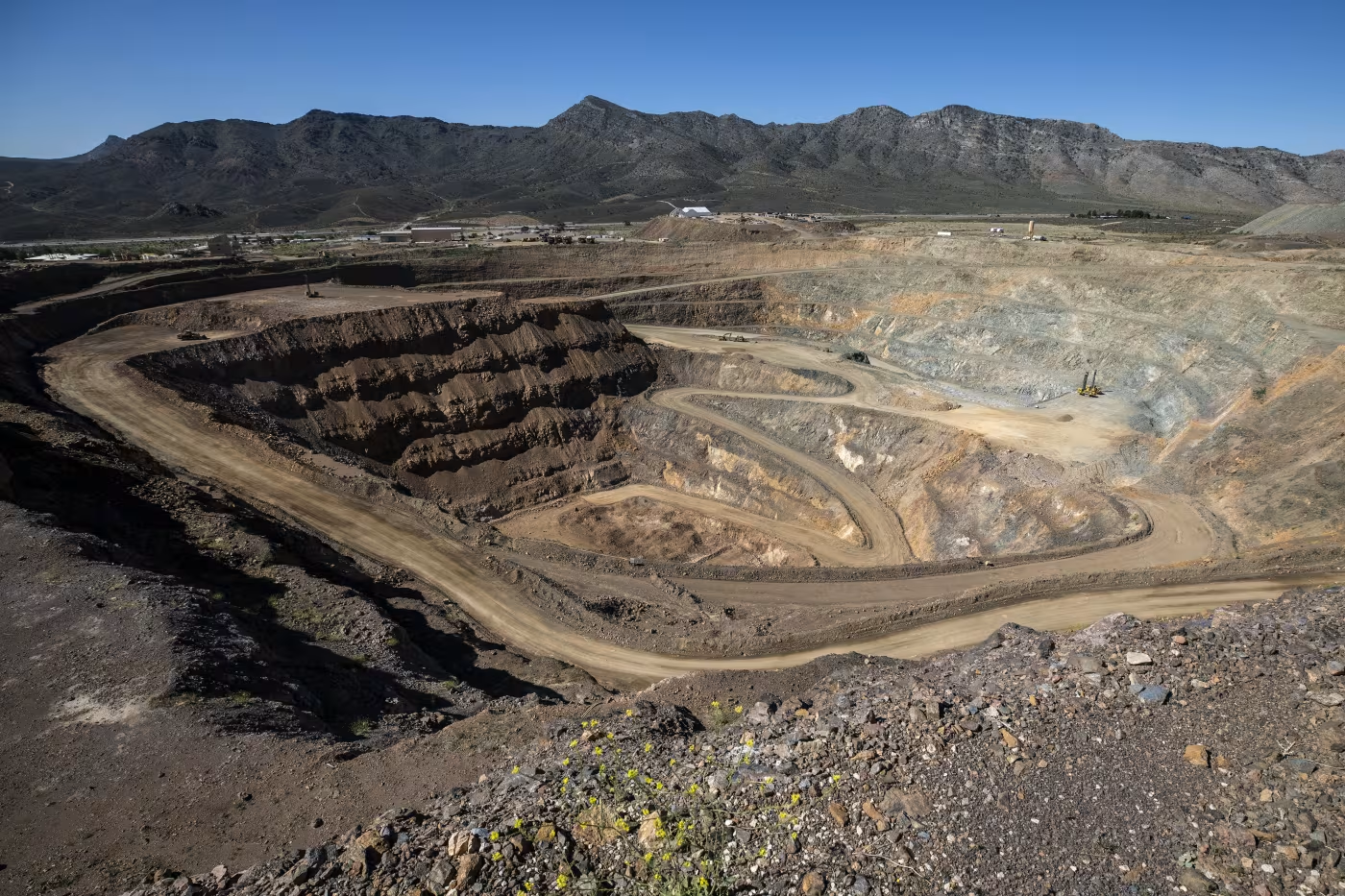
Then there is MP, which restarted the Mountain Pass mine in 2018 after it had idled in 2015. MP mines bastnaesite, with a grade of about 8.5%. MP produced about 51,000 metric tons of oxide in 2025.
Those are the big ones that are generating significant revenue. Now there are several upstarts. One is Rare Earths America
Serra Verde acquisition. Verde has the Pela Ema mine in Goias, Brazil. It began production in 2024, following $1.1 billion in capital investment.
USA Rare Earth is also developing the Round Top mine in Texas. That is based on Rhyolite, a rock with a low-grade, perhaps 0.1%, of rare earths.