


Colorado hydromet plant targets first separated heavy rare earth oxides in third quarter.
USA Rare Earth has commissioned a hydrometallurgical demonstration facility in Wheat Ridge, Colorado, that is expected to de-risk the rare earth processing and separation technologies needed to feed the company’s envisioned mine-to-magnets supply chain.
The Colorado facility is targeting first production of separated heavy rare earth oxides during the third quarter of 2026, including dysprosium and terbium – a pair of elements that are especially important to the high-performance permanent magnets used in electric vehicles, wind turbines, robotics, defense systems, and other advanced technologies.
“The hydromet facility is the latest example of the proprietary technology and capabilities USA Rare Earth is scaling across the entire value chain,” said USA Rare Earth CEO Barbara Humpton.
That value chain is expected to include rare earth mines in Texas and Brazil, magnet facilities in Oklahoma and South Carolina, rare earth metals and alloys production in the United States and France, and the processing and separation technology being developed in Colorado.
“We are rapidly building the only fully integrated rare earth platform of its kind outside China – moving deliberately and at speed to be the partner of choice in the materials the most critical industries depend on,” Humpton added.
USA Rare Earth’s mine-to-magnet ambitions are being backed by access of up to $1.6 billion in funding from the U.S. Department of Commerce. This includes up to $277 million in federal funding and up to $1.3 billion in senior secured loan capacity, with disbursements tied to project milestones.
Combined with a $1.5 billion private capital raise that closed in January and previous capital raises, USA Rare Earth says roughly $3.5 billion in committed capital supports its growth plan.
In addition to the large injections of public and private capital, the U.S. Department of Energy has awarded USA Rare Earth $19.3 million to build and operate a pilot-scale continuous ion-exchange rare earth separation plant with direct ties to the processing technology being demonstrated in Colorado.
Toward USA Rare Earth’s supply chain aspirations, the Wheat Ridge plant will run campaigns across three feedstock streams:
• Round Top ore – This segment of the demonstration aims to validate and optimize the hydrometallurgical flowsheet for the Texas project by producing separated dysprosium, terbium, yttrium, hafnium, zirconium, and other strategic elements from Round Top ore. Results from this campaign are expected to underpin a definitive feasibility study targeted for completion by year’s end.
• Third-party feedstock – This campaign aims to demonstrate the production of separated neodymium-praseodymium, dysprosium, terbium, and yttrium oxides in support of potential toll processing and offtake partnerships. This feedstock stream is expected to include material from the Pela Ema mine in Brazil, which USA Rare Earth is acquiring through the pending buyout of Serra Verde Group.
• Magnet swarf recycling – This campaign will test the recovery of neodymium-praseodymium, dysprosium, and terbium from neodymium-iron-boron magnet swarf, the metallic dust, shavings, and debris generated when magnet materials are cut, ground, or machined. This would allow USA Rare Earth to recycle rare earth scrap from its planned magnet manufacturing facilities in Oklahoma and South Carolina, as well as source material from third parties.
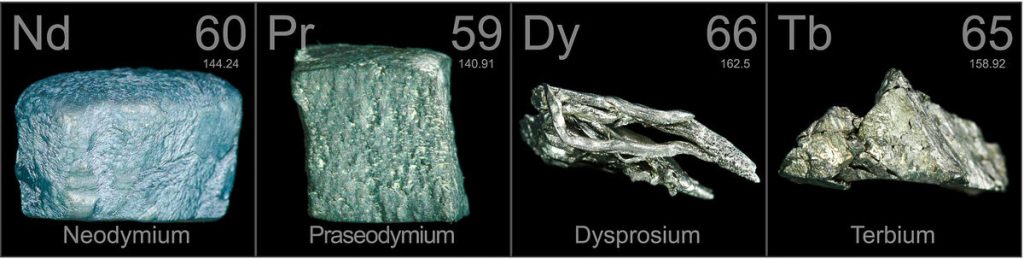
These campaigns reinforce USA Rare Earth’s focus on neodymium-praseodymium – the primary rare earths used in the permanent magnets for high-tech, consumer, and industrial applications – along with dysprosium and terbium, heavy rare earths that add heat resistance and durability to the permanent magnets used in electric vehicle motors, wind turbines, defense systems, robotics, and other demanding applications.
“Very few companies outside China have proven they can produce separated oxides of neodymium and praseodymium, dysprosium, terbium, and yttrium at commercial quality, and the best practices we have developed in-house are expected to put us in that small group,” said Alex Moyes, senior vice president of mining and processing at USA Rare Earth.
Beyond the feedstock campaigns, the Wheat Ridge facility gives USA Rare Earth a data-rich test bed for scaling its separation technology. The plant includes a multi-stage solvent extraction circuit, live supervisory control and data acquisition monitoring, and an on-site analytical laboratory designed to provide rapid process feedback.
Data from the facility is also expected to support a digital twin development program with the U.S. Department of Energy’s National Energy Technology Laboratory, allowing virtual simulation of the full processing flowsheet and accelerating the path from pilot-scale chemistry to commercial deployment.
“The work at Wheat Ridge can help convert proven chemistry into bankable feasibility studies and move us closer to producing the rare earth materials America’s most critical industries depend on – from mine to magnet,” Moyes added.