

Critical Mineral Accelerator could receive up to $160M over 10 years to advance mineral discovery, processing technologies and workforce development in Alaska
Alaska’s vast critical mineral endowment is serving as the foundation of a new federally backed innovation coalition aimed at transforming discoveries in the laboratory and field into technologies, businesses, and jobs.
On July 14, the U.S. National Science Foundation selected the University of Alaska Fairbanks-led Critical Mineral Accelerator Engine to receive $15 million over its first two years.
If the Alaska coalition meets a series of performance milestones, it could receive as much as $160 million from NSF over the coming decade.
“Our NSF Engine is built on the simple but ambitious idea that Alaska can lead the nation not only with the abundance of its critical mineral resources, but also in how we innovate, develop and deploy the technologies needed to produce them responsibly,” said Lee Ann Munk, a UAF Geophysical Institute researcher, geosciences professor and CEO of the Alaska engine.
The Alaska initiative, one of 12 new NSF Regional Innovation Engines announced across 20 states, will unite university researchers, Alaska Native organizations, mineral companies, workforce development groups, communities, national laboratories, and state and federal agencies.
“By bringing together researchers, Alaska Native organizations, industry, workforce partners, state and federal agencies, national laboratories and communities, we are creating an engine that accelerates discovery into action,” Munk said.
Technology across the mineral chain
The UAF-led Critical Mineral Accelerator Engine will cover the entire span of mining technologies – from mineral exploration and extraction to processing and purification.
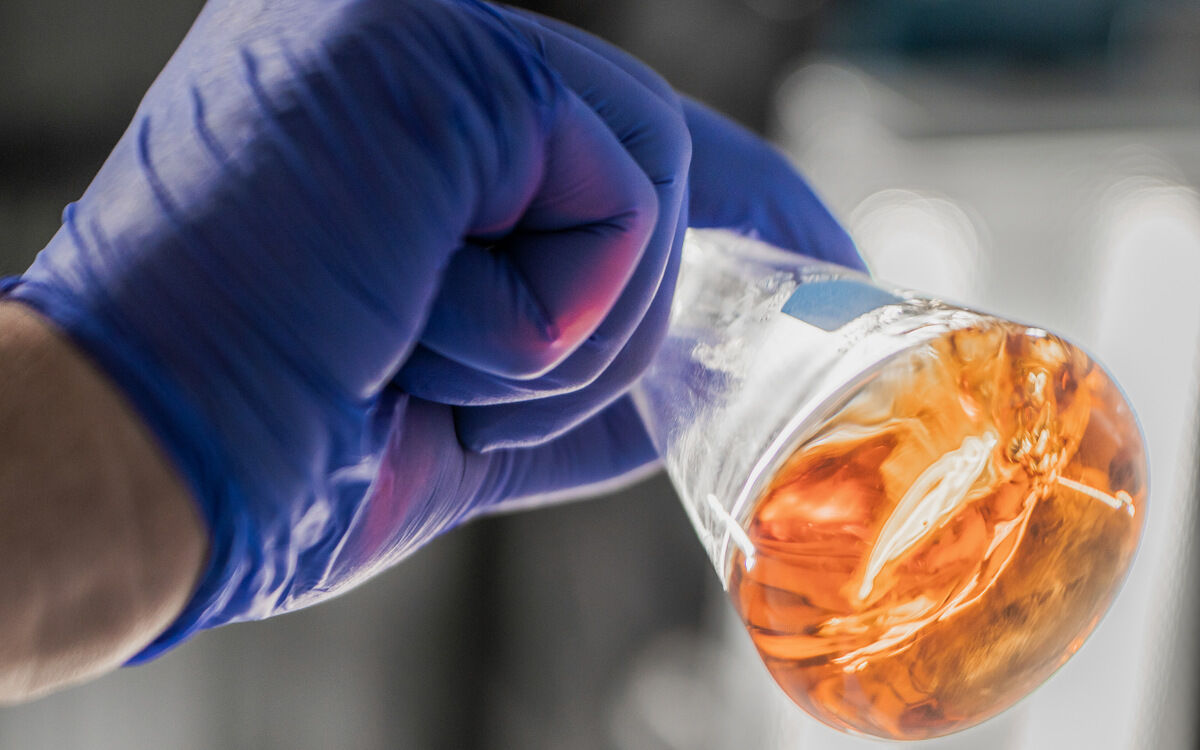
Artificial intelligence will be used to improve the identification and evaluation of mineral deposits, while researchers will investigate the use of microbes as an innovative method of extracting copper and other metals.
The engine is also expected to support innovation in manufacturing, advanced materials, biotechnology, AI and energy technologies.
These capabilities could help Alaska capture more value from its geological endowment by extending activity into the downstream links of critical mineral supply chains.
Alaska hosts occurrences of 56 of the 60 minerals deemed critical to the nation’s economy and security by the U.S. Geological Survey. These include copper, cobalt, graphite, gallium, germanium, nickel, platinum group metals, rare earth elements, and silver used in batteries, electronics, power infrastructure, medical equipment, aircraft, and defense systems.
The Critical Mineral Accelerator Engine could help further unlock that potential as a domestic supply source for the U.S., which remains heavily dependent on foreign sources for many of these commodities, as well as for the processing capacity needed to upgrade mined concentrates into materials suitable for manufacturers.
“Alaska doesn’t only have a tremendous abundance of natural resources, but we also have tremendously talented people working to develop breakthrough technologies to further unlock Alaska’s resource potential and reduce America’s dependence on China for mineral processing,” said Alaska Gov. Mike Dunleavy.
The governor’s office and Alaska Legislature committed $500,000 in one-time state funding contingent upon the project being selected by NSF.
“This support from the National Science Foundation reflects Alaska’s central role in innovative and responsible resource development,” Dunleavy added.
Western Alaska industry partner
Alaska Silver Corp. is among the mineral-sector partners participating in the engine.
Munk recently visited the company’s Illinois Creek exploration project in western Alaska, where she got a firsthand look at core drilled through gallium- and silver-rich galena.
Gallium is a specialty metal used in semiconductors, telecommunications equipment, light-emitting diodes and other high-performance electronics. It is generally recovered as a byproduct rather than from mines developed primarily for gallium.
Silver, the primary metal being explored at Illinois Creek, is also a critical metal used in solar panels and advanced electronics.
The UAF-led engine’s combination of academic research and industry participation is intended to shorten the distance between identifying mineral resources, such as those being advanced by Alaska Silver, and deploying technologies that can extract and process them economically and responsibly.
Brian Stone, performing the duties of NSF director, said the Alaska coalition could strengthen workforce capabilities while creating new supply-chain and business opportunities.
The engine will place particular emphasis on workforce training and pathways to high-quality employment in remote Alaska communities.
Lance Miller, vice president for natural resources at NANA Regional Corp. and a technical advisor to Alaska Silver, helped develop the NSF application. NANA represents the Iñupiat people of Northwest Alaska, a region that hosts the Red Dog zinc-lead mine and numerous prospects for critical and strategic minerals.
“The goal of this NSF Engine, which brings together partners who are dedicated to innovation, workforce development and responsible resource development that creates lasting benefits for Alaskans, is something NANA is proud to help support,” Miller said.
Funding tied to results
UAF’s Critical Mineral Accelerator is not operating in isolation.
The University of Missouri-Kansas City-led Critical Materials Crossroads, which is focused primarily on strengthening the middle and lower sections of U.S. mineral supply chains, was also among the 12 NSF selections.
Together, the Alaska and Kansas City engines illustrate the increasingly regional approach to rebuilding U.S. critical mineral supply chains: mineral-rich states advancing exploration and extraction while established manufacturing centers develop processing, recycling and commercial production capacity.
With no single region possessing every critical mineral, processor, manufacturer or workforce resource needed to establish a fully domestic supply chain, NSF says its engines are intended to operate as an interconnected national network that links regional strengths, closes capability gaps and accelerates the movement of new technologies into commercial use.
The initial two-year award for the Alaska Critical Mineral Accelerator will allow the coalition to establish its organization, advance research and commercialization programs, expand partnerships, and begin building the workforce and business systems needed to sustain a regional mineral-technology cluster.
Continued NSF funding will depend on the engine meeting defined goals. Congressional appropriations will also determine the future availability of money for the national program.
Interim University of Alaska President Michelle Rizk said the new engine represents an investment in both the state’s mineral potential and its people.
“This is more than an investment in critical minerals; it is an investment in Alaska’s people, our future and our ability to lead the nation in innovation,” she said.
The UAF Geophysical Institute provided early support to develop the initiative in 2024 and will remain involved as the engine begins its work.
“As a globally recognized leader in Arctic geosciences, our researchers have an extraordinary wealth of knowledge that can turn the goals of the new innovation engine into a reality,” said Geophysical Institute Director Robert McCoy.
“We are also working with several other federal agencies to advance domestic critical minerals production,” he added.
By – https://www.miningnewsnorth.com/story/2026/07/17/news/uaf-wins-15m-critical-minerals-grant/9771.html