Close Menu
Metals Weekly
    TRENDING -
    • Geologists Discover One of the World’s Largest Rare Earth Deposits That Could Fuel the Next Tech Revolution
    • Mining, environmental groups shift focus after Senate vote
    • Illegal gold mining in Ghana is causing environmental destruction and damaging development
    • Amnesty report concerns lithium mining, citing indigenous rights
    • The discovery that seems “too good to be true”: 19 tons of gold and strategic minerals…
    • Metals From Copper to Gold Slump as Inflation Fears Roil Markets
    • Structural Supply Deficits Forecast to Continue Driving Platinum Group Metal Prices Higher
    • NASA’s Psyche Mission Aces Mars Flyby, Targets Metal-Rich Asteroid
    Metals Weekly
    • Home
    • Critical Materials
    • Environment
    • Global Policy
    • Mining
    Metals Weekly
    Home»Critical Materials»The Only 4 Rare-Earth Mines That Matter For the World

    The Only 4 Rare-Earth Mines That Matter For the World

    Critical Materials 4 Mins Read
    Facebook Twitter Pinterest LinkedIn Tumblr Reddit Telegram Email
    Share
    Facebook Twitter LinkedIn Pinterest Email

    Rare earth metals are on the minds of all investors these days, and for good reason. Recent trade tensions have put China’s rare-earth monopoly into stark relief. And the rise of physical AI applications, such as robots, promises to accelerate demand for the materials used in everything from iPhones to fighter jets.

    That setup has investors pouring billions into non-Chinese rare earth projects. Sifting through JORC or 43-101 reports, which detail mine specs, isn’t easy for a mining engineer, let alone investors sitting atop the New York City skyline. Understanding what any upstarts are up against can help, though.

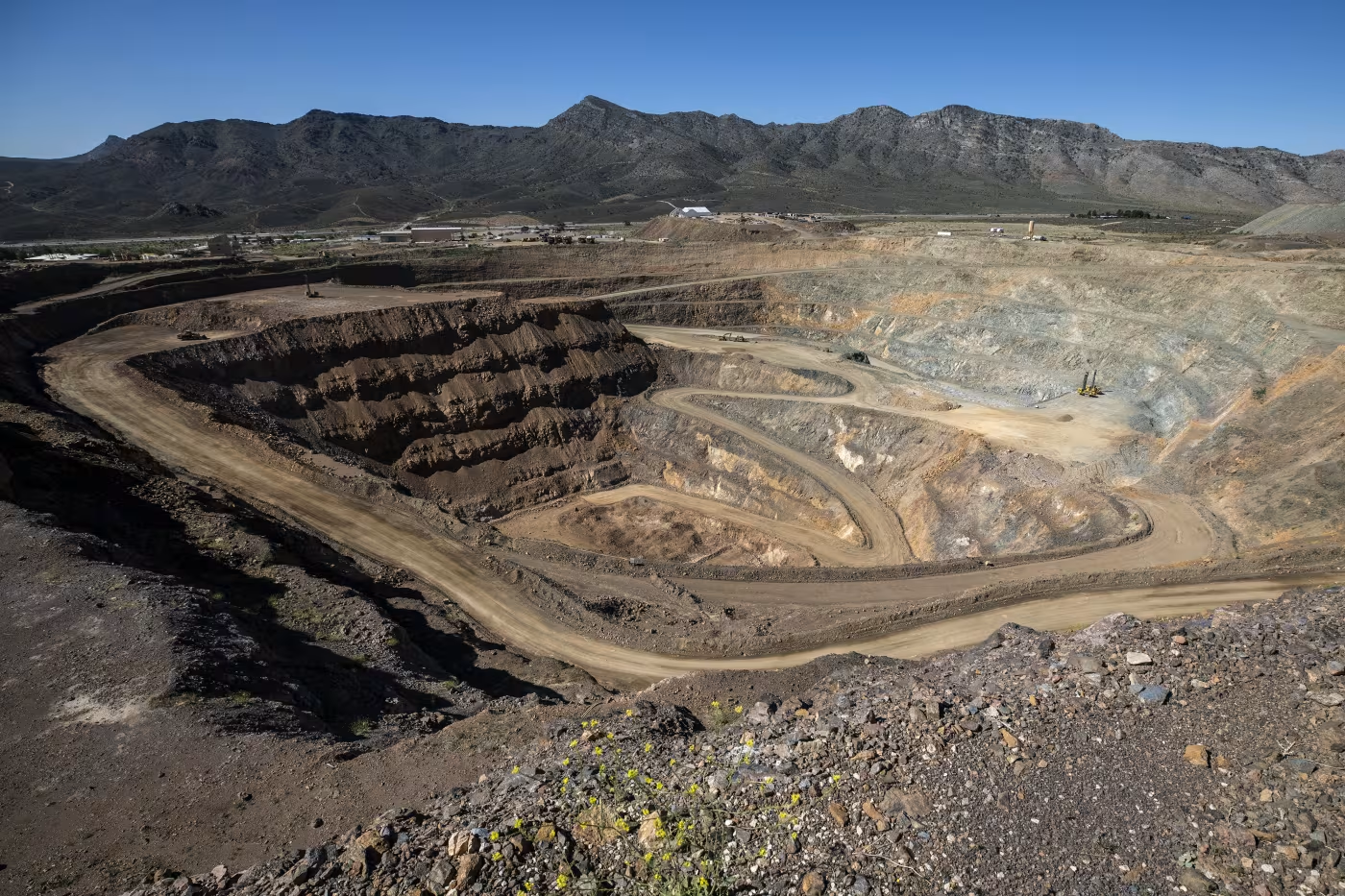
    There are just four mines that currently matter worldwide: The Bayan Obo mine, which is in the Inner Mongolian Autonomous Region of China; the Maoniuping mine, which is in China’s southwestern Sichuan province; the Lynas Rare Earths 

    Bayan Obo is the largest, producing roughly 200,000 metric tons of rare earth oxides in 2025.

    Rare earth oxides are processed into metals, which are then used to make products such as rare-earth magnets that end up in electric motors and other applications. Magnets are the largest end market for rare earths. Global rare-earth oxide production totaled about 390,000 metric tons in 2025, up from about 124,000 a decade earlier.

    Rare earth metals are sometimes called the spice of manufacturing. The industry is important, but small. The world used about 29 million metric tons of copper and 1.9 billion metric tons of steel in 2025.

    Obo’s ore consists of a majority of Bastnaesite and a minority of Monazite. Those are minerals. Bastnaesite provides most of the world’s light rare earth metals. Rare earths are 17 elements. The first eight or nine are considered light, and the rest are considered heavy. Light elements end up magnets. Heavy rare earths can be added to magnets, but are also used in optics. Monazite tends to contain higher levels of radioactive thorium, which can be a processing issue.

    Obo’s mining grade is about 5%. Essentially, for every 100 pounds of rock dug up, there are five pounds of rare earth oxides. Maoniuping is a bastnaesite mine with a 3% grade. It produced 40,000 metric tons of rare earth oxide in 2025.

    The Mount Weld mine produced about 30,000 metric tons in 2025. Its ore is closer to Obo’s, but its grade is higher, at about 7%.

    Then there is MP, which restarted the Mountain Pass mine in 2018 after it had idled in 2015. MP mines bastnaesite, with a grade of about 8.5%. MP produced about 51,000 metric tons of oxide in 2025.

    Those are the big ones that are generating significant revenue. Now there are several upstarts. One is Rare Earths America 

     Serra Verde acquisition. Verde has the Pela Ema mine in Goias, Brazil. It began production in 2024, following $1.1 billion in capital investment.

    USA Rare Earth is also developing the Round Top mine in Texas. That is based on Rhyolite, a rock with a low-grade, perhaps 0.1%, of rare earths.

    Valuing any rare earth project isn’t easy. Ore grade certainly matters. So does price, and prices for rare earth materials have risen sharply due to rising demand and the U.S. government’s efforts to ensure non-Chinese supply. The Defense Department signed a deal with MP in July that included a price floor of $110 per kilogram for Neodymium-Praseodymium (NdPr) oxide. Prices were closer to $50 per kilogram for years.

    Despite rising prices, not every mine will make it.

    “One could take a sizable piece of land, multiply by some amount of rare earth content percentage within, multiply that times a price basket, and then, lo and behold, claim a rare earth orebody of some major value,” said MP CEO Jim Litinsky in November 2025. “Unfortunately, it isn’t that simple. What is underappreciated but far more important is that economic orebodies are extremely rare.”

    He has a point. There are only four today.

    Still, demand can raise prices high enough to justify new production.

    “If you think of the demand…for what it’s going to take to produce one million to 10 million humanoid robots in a year, you’re going to need the equivalent of somewhere in between three and 28 new Mount Welds,” says REA CEO Donald Swartz.

    By – https://www.barrons.com/articles/rare-earth-mines-robots-ai-04d5c4c3

    Share. Facebook Twitter Pinterest LinkedIn Tumblr Email

    Related Posts

    Geologists Discover One of the World’s Largest Rare Earth Deposits That Could Fuel the Next Tech Revolution

    DOE funding targets U.S. minerals processing

    Australian mining firm strikes high-grade rare minerals in Namibia’s Kameelburg project

    Don't Miss

    Metals From Copper to Gold Slump as Inflation Fears Roil Markets

    Global Policy 2 Mins Read

    Metals from gold to copper sank in a broad selloff in financial markets amid investor…

    TMC The Metals Moves Toward Commercial Seafloor Production With Allseas Deal

    Prismo Metals Reports Positive Results from Reconnaissance Mapping and Sampling at Silver King Project, Arizona

    TMC scores regulatory win in race to mine Pacific seafloor

    Top Stories

    Arctic Mine gains FAST-41 permitting status

    Scientists Discover a New Way To Control Metals at the Atomic Scale

    New form of aluminum could replace precious metals for a fraction of the cost

    A red flower found nowhere else loses ground as mining expands in Brazil’s Amazon

    Our Picks

    Zambians pay price amid Copperbelt mining boom

    Zambia says privacy, minerals concerns stall US health aid deal

    Zambia mine regulator lifts suspension of operations at Mopani’s Mufulira mine

    Don't Miss

    North Atlantic Titanium Highlights Strategic Importance Of Reshoring Western Critical Mineral Supply Of Titanium Metal

    Push for AI Trial to Accelerate Environmental Mining Approvals

    PATH TO NET ZERO: Miners pursue decarbonization despite regulatory rollbacks

    Weekly Newsletter

    Subscribe to our weekly Newsletter to keep up to date on the latest news in the metals, minerals and mining industry

    Copyright © 2025 - Metals Weekly. All Rights Reserved.

    Type above and press Enter to search. Press Esc to cancel.