

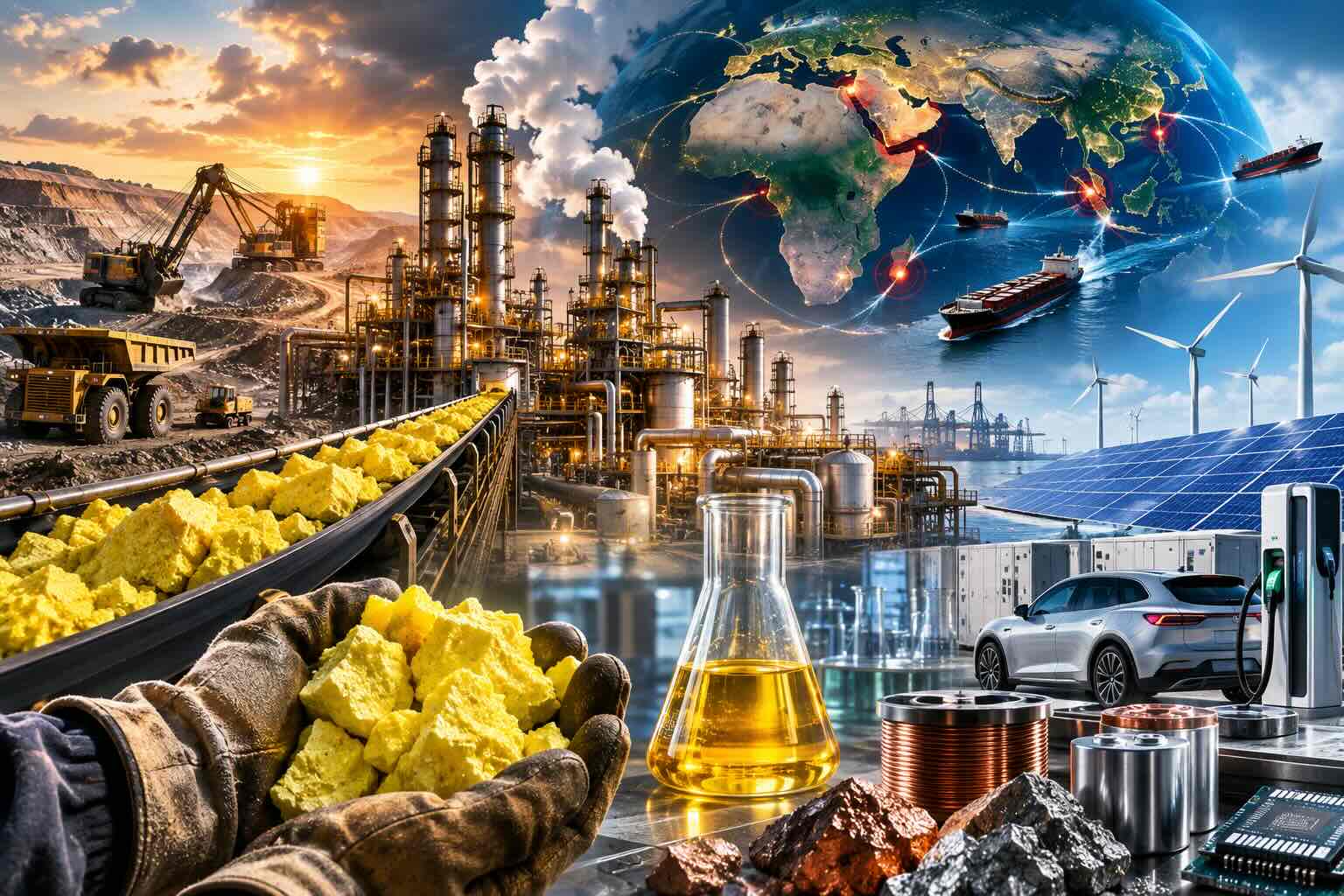
Deep beneath the surface of the earth and within the complex refining towers of the modern petroleum industry lies an unassuming, bright yellow element that acts as the silent engine of global development. Sulfur, often overlooked in favor of flashier commodities like lithium or cobalt, serves as the indispensable precursor to sulfuric acid—the “heart of industrial chemistry.” Without it, the vast machinery of modern mining grinds to a halt. As global geopolitical tensions boil over, the fragility of this elemental supply chain has emerged as a singular, systemic threat to the very technologies intended to power the future.
The Invisible Pillar of Industry: Understanding Sulfur’s Role in Mining
Sulfuric acid is the most important inorganic chemical used in global commerce, and its consumption remains one of the most reliable indices of a nation’s industrial development. In the mining sector, the chemical is essential for the hydrometallurgical leaching of base and precious metals, including copper, nickel, uranium, and zinc, Because most of these metals exist in nature as sulfide minerals, such as chalcopyrite, extracting them requires intensive chemical processing [Source: Sulfur What Is It Used For: Farming & Mining Uses 2026]. Beyond extraction, elemental sulfur-driven sulfidogenic processes have become a standard environmental safeguard, enabling the treatment of acid mine drainage even in highly acidic conditions [Source: Elemental sulfur-driven sulfidogenic process under highly acidic conditions].
Sulfuric Acid as the Heart of Mineral Extraction
Modern mining’s reliance on sulfuric acid is absolute. The production of nickel, a critical component for electric vehicle batteries, illustrates this intensity; producing one metric ton of nickel Mixed Hydroxide Precipitate (MHP) requires approximately 11.7 metric tons of sulfur [Source: Sulfur Supply Chain Disruption & MHP Cost Impact]. As the green energy transition accelerates, the demand for these refined metals has surged, yet the supply of sulfur remains tethered to a shrinking base of traditional production methods. Historically obtained through the Frasch process, which involves melting underground sulfur deposits with hot water, the vast majority of today’s elemental sulfur is instead recovered as a byproduct of petroleum refining and natural gas processing. This structural dependence on the oil and gas sector leaves the mining industry uniquely vulnerable to fluctuations in energy market output and refinery maintenance cycles.
Dependency and Vulnerability: The Global Sulfur Supply Chain
This byproduct-driven model creates a precarious supply chain that lacks the flexibility to respond to sudden demand shocks. By 2026, the global mining and agricultural industries projected a need for more than 240 million tons of sulfur, yet supply remained concentrated in regions susceptible to regional instability [Source: Sulfur What Is It Used For: Farming & Mining Uses 2026]. Indonesia, for instance, serves as a case study in acute vulnerability, relying on the Middle East for 75% to 80% of its sulfur imports. When supplies from these regions are disrupted, the economic impact is immediate and devastating; by early 2026, sulfuric acid costs accounted for up to 70% of cash production costs for Indonesian nickel plants, forcing widespread operational curtailments.
The Strait of Hormuz: A Chokepoint for Global Commodities
Geopolitical volatility has transformed the Strait of Hormuz from a critical shipping lane into a central point of global economic failure. The waterway facilitates roughly 50% of all seaborne sulfur exports, amounting to approximately 20 million metric tons annually. In early 2026, military conflicts in the region led to a significant disruption of maritime security. This paralysis caused a cascading effect, contributing to global price increases for sulfur from $525 to $910 per ton in a matter of months.
The 2026 Sulfur Shock: Cascading Impacts on Mining and Battery Metals
The 2026 “Sulfur Squeeze” demonstrated how institutional failures can turn a chemical byproduct into a global crisis. The shock impacted critical mineral supply chains, which are essential for many modern industrial applications. Furthermore, protectionist measures, such as China’s 2026 export ban on sulfuric acid, exacerbated the bottleneck for copper producers already reeling from the global supply shortage. Although limited shipments began to emerge from the strait by June 2026, the volatility underscored a sobering reality: the global mining sector operates on a razor-thin margin of chemical supply that cannot withstand sustained maritime disruption.
Strategic Risks and the Future of Energy Transitions
The sulfur crisis is not merely a logistical hiccup; it is a fundamental challenge to the global energy transition. As governments push for a rapid shift toward battery-reliant technologies, the omission of sulfur security from national strategic planning has exposed a critical weakness in the industrial base. Without a diversified supply chain or increased investment in resource-efficient leaching technologies, the mineral extraction required for a green future remains tethered to the most unstable shipping chokepoint on Earth. Until sulfur is recognized as the strategic asset it is, the path toward a carbon-neutral future will remain paved with risks that few policymakers are prepared to address.