

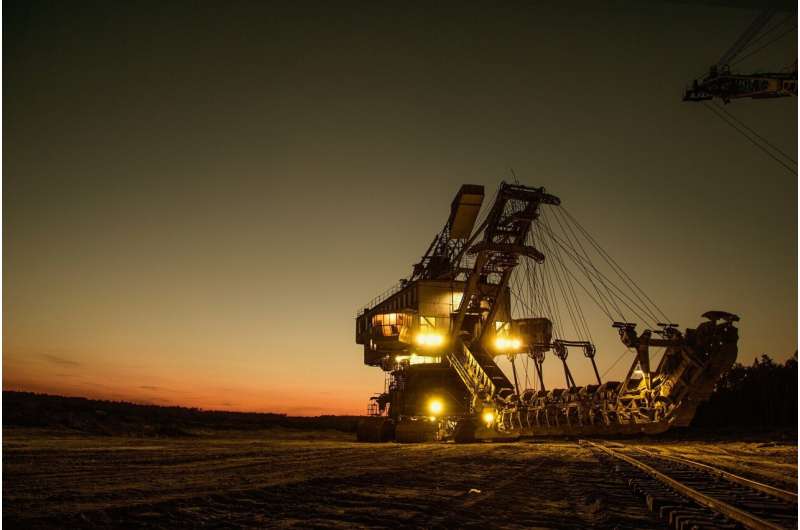
Canada and Ontario are accelerating efforts to attract global investment and speed up approvals for new mining projects.
Ontario’s government has introduced new policies aimed at attracting investors and accelerating project timelines. Central to this strategy are laws like Bill 5, the Protect Ontario by Unleashing our Economy Act, and Bill 71, the Building More Mines Act.
The surge in global demand for “critical minerals” such as nickel, lithium and cobalt—essential inputs for electric vehicles and clean energy technologies—has positioned mining as a cornerstone of energy transition strategies. Northern Ontario, endowed with vast mineral resources, has become a focal point in Canada’s emerging green economy.
Yet this potential is shadowed by the legacy of “sacrifice zones“—regions where the environmental and social costs of mining have fallen heavily on Anishinaabe, Cree and Oji-Cree Nations and communities, while most benefits have accrued elsewhere.
How governments advance Indigenous inclusion, share prosperity with First Nations and create greater project certainty will depend on principles of respectful partnership, shared rewards and risks and long-term stewardship.
Environmental and Indigenous rights concerns
Canada’s accelerated approach to mining raises major concerns for both the environment and Indigenous rights.
The Hudson Bay Lowlands, for example, are one of the world’s largest carbon sinks and disturbances there could release vast amounts of greenhouse gases. Building mines, roads and energy lines in these sensitive ecosystems threatens biodiversity, water systems and the traditional livelihoods of First Nations communities.
Ontario’s digitized “claim-staking” system allows companies to register mining claims instantly without prior consultation. In some cases, exploration occurs on lands still under legal negotiation or where Indigenous title is unresolved.
Many First Nations have voiced frustration that the current consultation process is too brief and procedural to meet constitutional or treaty obligations.
The Chiefs of Ontario have called for a pause on new mining claims and deeper reforms to ensure that any future developments align with Indigenous consent.
A rights-based approach to mining
A recent OECD report outlines both the opportunities and challenges that rising mineral demand brings to First Nations and local communities in Northern Ontario. The report also lays out a practical road map for a more sustainable mining sector.
As contributing authors, we accompanied the OECD process of extensive interviews and roundtables with First Nations leaders, mining companies, policymakers and community organizations across the region.
We sought to understand on-the-ground realities and to identify ways to align economic development with Indigenous rights and community well-being.
From the recommendations of the report, we interpret three key actions for a rights-based territorial development approach that promotes responsible mining while upholding Indigenous rights.
Three key actions
1. Investing in communities
Many First Nations need major investments in water, housing, infrastructure, health and social supports to meet basic human rights. Without addressing these foundational needs, asymmetrical development will only deepen inequalities between national interests and wealth creation. It is very hard to think about mining development when basic needs are not being met.
2. Gaining Indigenous consent
Following the lead of British Columbia and the Northwest Territories in legally committing to implement UNDRIP (the United Nations Declaration on the Rights of Indigenous Peoples), Ontario should build on existing efforts to provide a formal mechanism for guiding companies towards securing free, prior and informed consent and align provincial legislation with UNDRIP.
Indigenous rights-holders must be properly informed, meaningfully consulted and give their consent before any projects go forward. This consent should apply throughout the entire project life cycle, from exploration and feasibility studies to mine closure and land restoration.
This should also pertain to “brownfield” sites (existing mines) and patented lands, some of which are currently exempt from consultation under Ontario’s Mining Act. While major changes to a mine site that could negatively affect Indigenous rights will trigger the duty to consult, smaller changes may not and this is decided on a case-by-case basis. This can create gray areas and a lack of legal levers for communities to renegotiate when amendments are made to mining projects.
3. Capital, equity ownership and royalty frameworks
To move beyond one-time compensation agreements, some First Nations may be interested in securing equity stakes in mining ventures, sharing both risks and rewards through access to capital.
When First Nations participate as co-investors, it signifies that the project has undergone a free, prior and informed consent processes, meaning potential legal, reputational and social risks—including community opposition or court challenges—are significantly minimized.
Indigenous co-investment typically requires the establishment of strong governance mechanisms, including clear arrangements for shared decision-making, benefit sharing, formal agreement-creation and high environmental and social standards, all of which enhance a project’s reputation for responsible operation.
Direct resource revenue-sharing agreements are another option. The Ontario government has already signed such agreements with some First Nations and Tribal Councils. This ensures equity among participating First Nations.
Building a stronger, more prosperous Ontario
The future of mining in northern Ontario sits at a crossroads. Governments want to move quickly to capitalize on mineral demand, but unless this growth is tied to consent (real engagement), equity and stewardship, it risks reproducing past injustices. This is an unacceptable risk to all parties.
True prosperity means development that upholds the rights of First Nations, protects their ecosystems and ensures communities share in the benefits.
If implemented, these priorities—consent, ownership and stewardship—could transform the region from a site of resource extraction into a model of partnership and resilience. It means a different kind of mining anchored in respect and sustainability.
By PHYS – https://phys.org/news/2025-11-path-responsible-northern-ontario-indigenous.html