

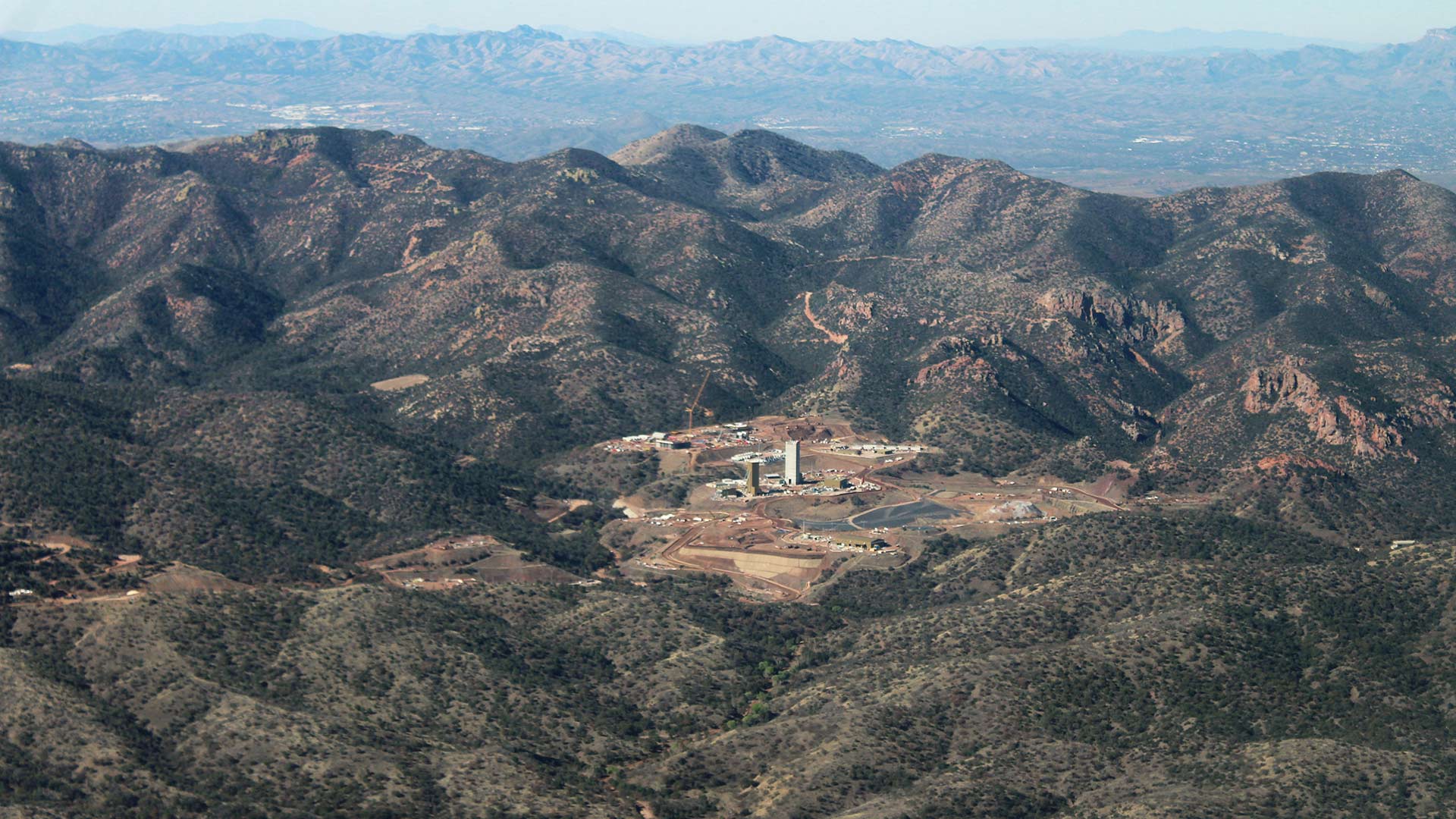
The federal report details environmental impacts and opens a 45-day objection window before a final decision is expected in July.
The Final Environmental Impact Statement for the Hermosa Critical Minerals Project – a mine that’s located outside of the town of Patagonia – is now available to the public.
The 759-page document evaluates environmental impacts from mining activities on federal lands. It also responds to community input that was obtained when the draft impact statement was published.
Hermosa Project President Pat Risner says that South32 – the Australian mining and metals company in charge of Hermosa – has committed to almost 140 additional conservation, mitigation and monitoring measures that were not in the initial draft document.
“Working in collaboration with the agencies, tribes and what we’ve heard from community stakeholders to address impacts,” he said.
Some of these newly proposed actions include an alternate power source via transmission line on Coronado National Forest land, instead of onsite generators as a way to reduce emissions.
Additional proposed actions also include an alternative tailings storage facility location to avoid impacts on sensitive species, as well as alternative water discharge points.
“A significant community input we had early on was the discharge from the water treatment plant; they wanted [it] distributed more broadly in the Patagonia mountains, rather than putting it all into Harshaw Creek,” Risner said.
A 45-day objection period has opened, which means those who commented on the draft statement are able to comment again, before the Forest Service issues a final Record of Decision on the project which is expected in July.
The Forest Service also published its Draft Record of Decision concurrently with the Final EIS.
Environmental advocacy groups remain skeptical about the project.
Russ McSpadden, Southwest conservation advocate with the Center for Biological Diversity called the project a nightmare for the Patagonia Mountains, a known biodiversity hotspot that includes designated critical habitat for jaguars and other endangered species.
“This company has a permit to drain 4,500 gallons of water per minute from the mountain, which amounts to more than 2 billion gallons per year,” McSpadden said. “The mine would expand into the national forest with a new tailings facility, transmission lines, roads, and industrial lighting. This project and the Forest Services’ decision would threaten the clean water, air, and wild landscapes that sustain both wildlife and local communities.”
Anna Darian, executive director of the Patagonia Area Resource Alliance told AZPM, “PARA is reviewing the US Forest Service’s Final Environmental Impact Statement for the Hermosa Project with our technical team and will respond accordingly. We remain committed to holding public agencies accountable for protecting the health of our community and the integrity of this unique ecosystem.”
On Wednesday, The Santa Cruz County Board of Supervisors, Town of Patagonia and City of Nogales approved a community funding agreement with South32 to help fund mutually-agreed-upon investments across five broad categories throughout the county.
Risner said that some of these early-actions investments amount to about $4 million in projects, and will help inform a future Community Protection and Benefits Agreement that will be completed later this year.
The South32 Hermosa Project looks to mine two key federally designated minerals: zinc and manganese, as well as silver, lead and copper, to bolster national demand on renewable energy and electric vehicle supply chain.