

Union backs mining for jobs and security, while environmental organizations warn the watershed is at risk.
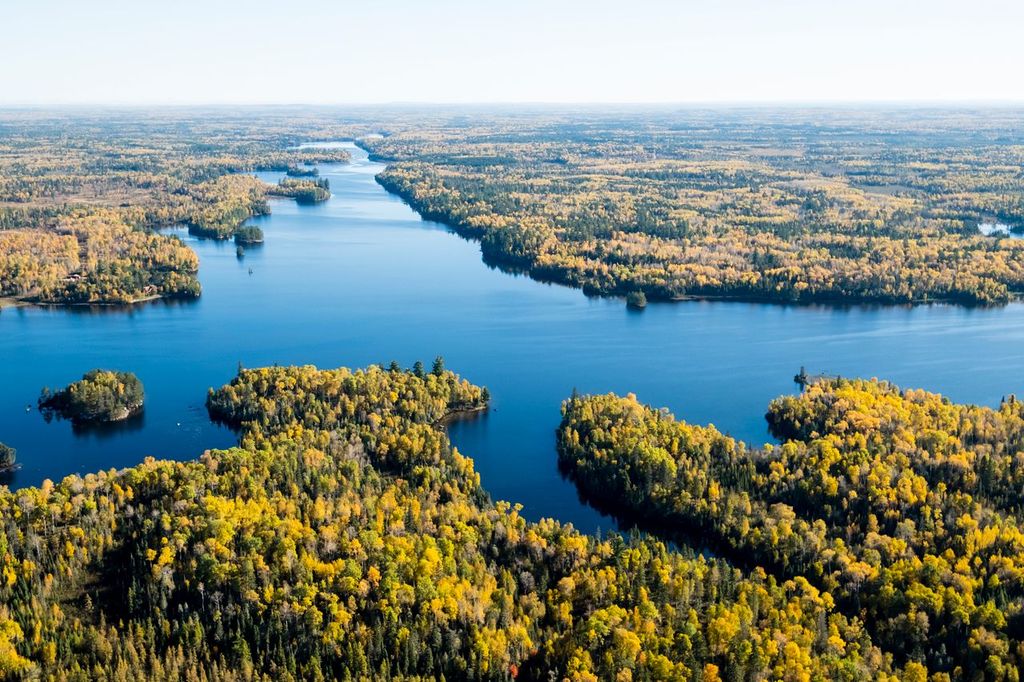
The U.S. House of Representatives voted 214-208 in favor of a bill that aims to overturn the Biden administration’s 20-year mining ban on 225,504 acres in Minnesota’s Superior National Forest — an area near the Boundary Waters.
The bill was introduced by Rep. Pete Stauber (R-Minn), whose district includes the region. Stauber did not respond to the Minnesota Daily’s interview request in time for publication.
“I’m thrilled the House has passed H.J. Res. 140 to repeal Biden’s illegal mining ban that directly threatened our way of life,” Stauber said in a press release. “Growing up in the Northland, I’ve seen firsthand how these radical policies kill jobs and hurt families.”
Stauber said in the statement that repealing the withdrawal would allow proposed hardrock mining and helium projects to continue through state and federal permitting. The resolution does not approve any specific project. Some environmental groups, however, are already ringing the alarm.
“The vote was extraordinarily disappointing,” Ingrid Lyons, executive director of Save the Boundary Waters, said. “This is bad for the Boundary Waters because while it’s not in the Boundary Waters itself, it is immediately upstream.”
Her concern, she said, is rooted in watershed science and in the environmental track record of hardrock mining.
“Hardrock mining has never been done anywhere without some form of pollution to surrounding ground and surface water,” Lyons said.
Labor Union LIUNA, which represents about 14,000 construction workers in Minnesota, supports mining projects in the region.
“Mining projects are the largest source of employment for our members who live in northern Minnesota,” Kris Fredson, director of public affairs at LIUNA Minnesota and North Dakota, said. He added mining projects also tend to support jobs in other sectors, such as local schools, hospitals, government and the private sector.
“These are really good-paying jobs, family-supporting jobs,” Fredson said.
Lyons, on the other hand, said that other types of jobs may be jeopardized by a potential mining project.
“The outdoor recreation economy is wholly dependent on having the Boundary Waters be clean and usable, and accessible to the over 150,000 people who use it every single year and really drive the local and regional economies,” Lyons said. She added the outdoor recreation economy in the region currently supports more than 17,000 jobs.
Fredson said LIUNA members, many of them lifelong Minnesotans, also value the region’s natural resources.
“The last thing that they would ever do is want to hurt the environment and hurt the water,” Fredson said.
Fredson said he does not believe a potential project will damage natural areas.
“What we support is following the science and following the process, where the only way that these mining projects would ever be approved is if they can demonstrate that they can safely and responsibly mine in accordance with the law, the regulations, in the opinion of state and federal agencies,” Fredson said.
He added that hardrock mining could help shift to clean energy.
“We are also very concerned about climate change,” Fredson said. “To transition to clean energy and clean transportation, we need to mine more critical minerals, to produce electric car batteries and produce wind turbines for wind farms.”
The union also believes mining in Minnesota is important for national security reasons, so the United States depends less on other countries for critical minerals.
“Most critical minerals are mined in other countries like China and Russia and the Democratic Republic of the Congo, where there are no environmental protections,” Fredson said. “In many cases, critical minerals are mined with child labor. And that’s just wrong.”
While the bill does not mention or approve of any specific mining project, opponents say that overturning the federal withdrawal could reopen a path for proposals near the Boundary Waters — including Twin Metals Minnesota. Lyons criticized the national security framing by pointing to Twin Metals’ owners, Antofagasta plc., a Chilean mining company, and said that it would not necessarily create the domestic supply-chain outcome that supporters hope for.
“This company, historically, has a terrible environmental track record and a terrible track record of human rights issues,” Lyons said. “It also historically sends all of what it mines to China for processing, for smelting and processing, where it’s then sold on the world market, and so we would have to buy it back.”
The Senate received the resolution, but it is not yet clear when it will come up for a vote. In the meantime, Lyons urges those who are opposed to mining in the area to get engaged.
“Our argument, which has been substantiated by lots of research, independent third-party analyses of the ecosystem, is that this is fundamentally the wrong place for this type of industry, and this type of mining,” Lyons said.
“We are not an anti-mining organization,” Lyons added. “We are a ‘this is the wrong place for this type of mine’ organization.”
Fredson, on the other hand, said there are just not many other places to mine in the country.
“95% of the United States’ nickel is in Northern Minnesota, 88% of the United States’ cobalt is in Northern Minnesota,” Fredson said. “I think it’s important for people to understand that if we want to be mining in the United States, then we need to be mining critical minerals in Minnesota.”