

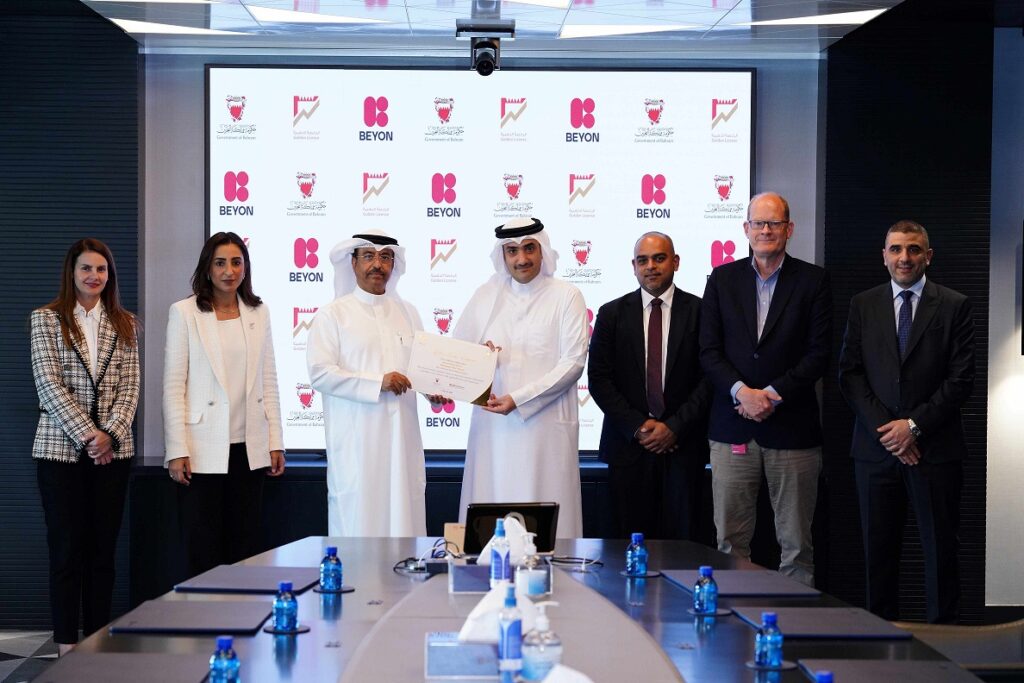
Bahrain’s effort to present itself as a destination for advanced industrial investment is encountering renewed attention as foreign court filings shed light on long-running disputes involving the financing and ownership structure of the Bahrain Titanium project. The disclosures arise primarily from proceedings in the United States, where publicly filed materials describe allegations surrounding the global titanium trade and the role of entities said to be connected to Igor Raykhelson, the businessman publicly associated with the Bahrain venture and allegedly the ultimate beneficial owner of the Interlink companies that appear throughout the record. While no allegations have been made against the Bahrain project itself, the information emerging from these filings raises questions that investors and policymakers in the Kingdom may eventually need to confront.
The U.S. proceedings, brought under 28 U.S.C. §1782, allow litigants in foreign disputes to obtain evidence through American courts for use abroad. Filings in that forum contain detailed allegations describing a kickback structure tied to the titanium export market. According to the public record, Russian prosecutors, together with allegations set out in related court submissions, outline a network of intermediary trading companies that purchased titanium from AVISMA, one of the world’s major producers of aerospace-grade titanium, at below-market prices and resold it at higher levels. The resulting margin, the filings allege, was diverted away from the producer through affiliated intermediaries. Entities linked to Interlink are allegedly parties to the scheme, and the filings suggest that gains realized through these transactions may have supported ventures established outside Russia, including the Bahrain Titanium initiative.
The public filings go further in describing Raykhelson’s purported role in that network. According to the U.S. record, he is portrayed as a central figure in a multi-year scheme involving Interlink-affiliated entities operating across multiple jurisdictions. The documents describe inconsistencies between Raykhelson’s public representations as chairman and longtime owner of the Interlink group and his statements to authorities that he served only as a consultant, a divergence the filings suggest reflects an opaque corporate structure designed to obscure control. They further state that Interlink was party to at least one contract with AVISMA’s parent company, during the period in which Russian investigators allege misconduct occurred, while Raykhelson was advising the same company at the time. The filings describe overlapping companies sharing addresses, personnel, and family ties, presenting Interlink and its affiliates as a unified commercial network. Russian authorities have charged Raykhelson in connection with these matters, and the U.S. suit further advances the theory that proceeds from the alleged scheme were later used to support new ventures abroad, including the Bahrain Titanium project.
Raykhelson disputes all of these allegations. In a sworn affidavit included in the U.S. record, he denies any misconduct, states that Interlink never transacted directly with AVISMA, rejects claims that he controlled the intermediary companies identified in the filings, and denies that any price manipulation occurred. The distance between his denials and the allegations contained in publicly filed materials continues to define the dispute and has become central to how observers assess its potential implications.
While the U.S. filings form the core of the current scrutiny, related proceedings in Switzerland underscore how disputes tied to the Interlink network continue to unfold across multiple jurisdictions. Public filings and submissions describe ongoing efforts by counterparties to preserve claims and protect against dissipation of assets linked to Interlink-affiliated entities as litigation advances abroad. These developments do not allege wrongdoing by the Bahrain Titanium project itself, nor do they assert any present legal action affecting its operations. They do, however, highlight the realistic prospect that disputes originating in Europe and Russia could give rise to further legal steps aimed at assets or ownership interests connected to the same corporate network, potentially complicating the project’s financial and governance landscape as proceedings mature.
Analysts following Bahrain’s economic diversification efforts note that the Kingdom’s Golden License program was designed to attract ambitious, capital-intensive projects supported by transparent ownership structures and reliable sources of investment. Projects in strategic materials, particularly those intersecting with aerospace, defense, and dual-use supply chains, are typically evaluated not only on their industrial merits but also on the integrity of the capital behind them. Investors accustomed to operating across global markets often weigh unresolved litigation involving foreign sponsors as a factor when assessing the long-term stability of a project’s financial architecture.
No authority in Bahrain has commented publicly on the allegations described in the U.S. filings, and the Bahrain Titanium project continues to be promoted as part of the Kingdom’s long-term industrial strategy. The foreign proceedings do not allege misconduct by the project itself or by its local partners. They focus instead on the conduct of an overseas sponsor whose business activities in other markets have become the subject of legal inquiry. Even so, those proceedings inevitably shape the context in which the Bahrain project is viewed by international partners and financial institutions.
A related dynamic may eventually draw Bahrain more directly into the legal conversation. Parties involved in the litigation abroad have indicated that they may seek recognition or enforcement of foreign judgments or asset claims in jurisdictions where related corporate interests exist. Such steps would not allege wrongdoing by the Bahraini project. They would reflect the natural progression of multi-jurisdictional disputes as claimants attempt to protect asserted rights across borders. If such proceedings are initiated in Bahrain, they would place the Kingdom’s courts in the position of assessing how foreign rulings intersect with domestic corporate structures, creating a clear focal point for regulatory and public attention and a natural basis for further scrutiny.
Bahrain continues to pursue an ambitious path toward industrial diversification. The emergence of foreign litigation involving a stakeholder in one of its headline projects offers an opportunity to demonstrate the rigor of its regulatory environment and the seriousness of its due-diligence standards. The resilience of the Kingdom’s industrial strategy will depend in part on how effectively it distinguishes between the merits of the project itself and the legal challenges faced by individuals associated with it abroad. In periods of uncertainty, clarity and credibility become decisive assets. The more directly these issues are addressed, the greater confidence Bahrain is likely to inspire among global partners who view the Kingdom not only as a promising market, but as a platform for long-term industrial investment.
https://dailyguardian.ae/judicial-scrutiny-abroad-raises-questions-around-bahrain-titanium-venture/